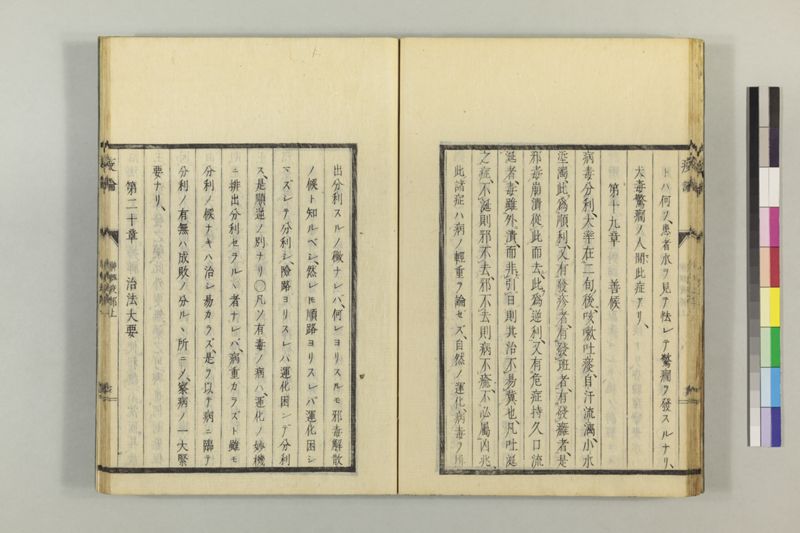
翻刻
トハ何ソ、患-者水ヲ見テ怯レテ驚癇ヲ発スルナリ、
犬-毒驚-癇ノ人 間(マヽ)此症アリ、
第十九章 善候
病毒分利、大-率在_二 二旬 ̄ノ後_一 ̄ニ、咳-嗽吐-痰、自-汗流-漓、小-水
垽-濁、此 ̄ヲ為_二順利_一、又有_二発_レ疹者_一、有_二発_レ班者_一、有_二発_レ癰者_一、是
邪毒崩-潰従_レ ̄シテ此而去 ̄ル、此 ̄ヲ為_二逆利_一、又有_二危症持久口流
_レ涎者_一、毒雖_二外 ̄ニ潰_一、而非_レ ̄サレハ引_レ ̄ニ日則其治不_レ昜_レ冀也、凡吐涎
之症、不_レ涎則邪不_レ去、邪不_レ去則病不_レ癒、不_三必属_二凶兆_一、
此 ̄ノ諸症ハ病ノ軽重ヲ論ゼズ、自然ノ運化、病毒ヲ排
出分-利スルノ徴ナレバ、何レヨリスルモ邪毒解-散
ノ候ト知ルベシ、然レ𪜈順路ヨリスレバ運-化困シ
マズシテ分利シ、険路ヨリスレハ運-化困ンデ分利
ス、是順-逆ノ別ナリ○凡ソ有毒ノ病ハ、運化ノ妙機
ニ排出分利セラルヽ者ナレバ、病重カラズト雖モ
分利ノ候ナキハ治シ昜カラズ、是ヲ以テ病ニ臨テ
分利ノ有無ハ成敗ノ分ルヽ所ニシテ、察病ノ一大緊
要ナリ、
第二十章 治法大要
現代語訳
とは何か。患者が水を見て怯えて驚癇を発するのである。狂犬病による驚癇の人にもこの症状がある。
第十九章 良候
病毒が分離する時期は、大体二十日後にあり、咳嗽して痰を吐き、自然に汗をかいて流れ、小便が濁るのを順利とする。また発疹する者もあり、斑点が出る者もあり、腫瘍ができる者もある。これは邪毒が崩潰してこれによって去るもので、これを逆利とする。また危険な症状が長く続いて口から涎を流す者もある。毒は外に潰出するといえども、日を引かなければ、その治療は容易に期待できない。およそ涎を吐く症状は、涎が出なければ邪気は去らず、邪気が去らなければ病気は治らないが、必ずしも凶兆に属するわけではない。
これらの諸症状は病気の軽重を論じず、自然の運化によって病毒を排出分離する徴候であるから、どれによっても邪毒解散の兆候と知るべきである。しかし順路によるものであれば運化が困ることなく分利し、険路によるものであれば運化が困って分利する。これが順逆の別である○およそ有毒の病は、運化の妙機によって排出分利されるものであるから、病気が重くないといえども分利の兆候がないものは治しにくい。これをもって病気に臨んで分利の有無は成敗の分かれるところであって、病気を察する一大緊要事である。
第二十章 治法大要
英語訳
What is this? It is when patients become frightened upon seeing water and develop convulsive fits. People with convulsive fits from rabies also have this symptom.
Chapter 19: Favorable Signs
The separation of disease toxins generally occurs after twenty days, with coughing and expectoration of phlegm, spontaneous sweating and perspiration, and turbid urine being considered favorable progression. There are also those who develop rashes, those who develop spots, and those who develop abscesses. This is the pathogenic toxin collapsing and departing through these means, which is called "reverse favorable progression." There are also those with persistent dangerous symptoms who drool from the mouth. Although the toxin ulcerates outward, if it does not extend over days, the treatment cannot easily be expected to succeed. Generally, in symptoms of drooling, if there is no drooling, the pathogenic qi will not depart; if the pathogenic qi does not depart, the disease will not heal, but this does not necessarily belong to ominous signs.
These various symptoms, regardless of the severity of the disease, are signs of natural transformation expelling and separating the disease toxin, so any of these should be known as signs of pathogenic toxin dispersion. However, if it occurs through the smooth route, the transformation proceeds without difficulty and separation occurs; if it occurs through the dangerous route, the transformation encounters difficulty and separation occurs. This is the distinction between favorable and unfavorable progression ○ Generally, toxic diseases are expelled and separated by the subtle mechanism of transformation, so even if the disease is not severe, those without signs of separation are difficult to cure. Therefore, when confronting illness, the presence or absence of separation is where success and failure diverge, and is a matter of utmost importance in examining disease.
Chapter 20: Essential Points of Treatment Methods