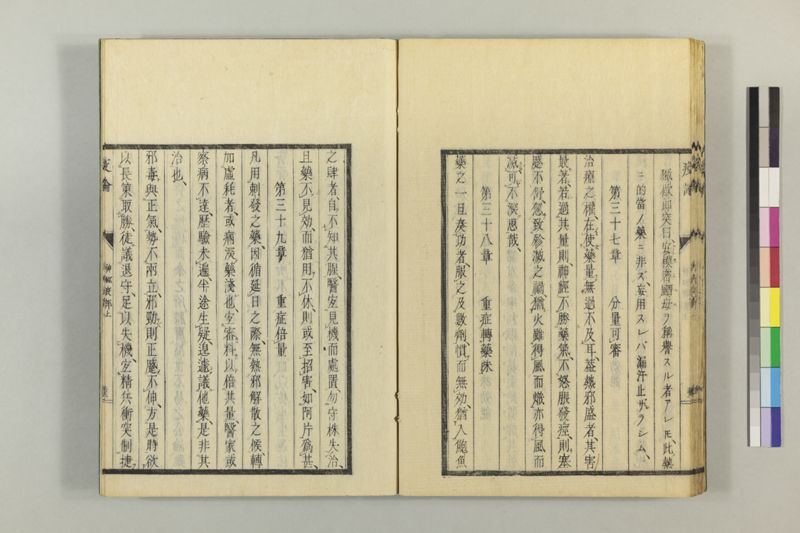
翻刻
翼-歇-郎-突曰、安(アン)-模(モ)-密(ミ)-□(ユ)-母(ヘ)ヲ称誉スル者アレ𪜈、此 ̄ノ熱
ニ的-当ノ薬ニ非ズ、妄用スレバ漏-汗止ザラシム、
第三十七章 分量可_レ審
治療之権、在_レ ̄ノミ使_下_二 ̄ルニ薬-量_一 ̄ヲシテ無_中過-不-及_上耳、蓋熱-邪盛者、其害
最 ̄モ著 ̄シ、若 ̄シ過_二其量_一則、神-経不_レ勝_二薬-気_一、不_二怒-脹発-痙_一、則 ̄チ塞
蹙不_レ舒、忽 ̄チ致_二殄-滅之禍_一、猶_下 ̄シ火雖_二得_レ風而熾_一亦得_レ風而
滅_上 ̄スルカ、可_レ ̄ンヤ不_二深 ̄ク思_一哉、
第三十八章 重症転_二薬味_一
薬之一旦奏_レ功者、服_レ之及_二数剤_一、慣 ̄テ而無_レ効、猶_下入_二鮑-魚
之肆_一者、自 ̄ラ不_上_レ知_二其腥_一、医宜_二見_レ機而処置_一、勿_二守-株失_一_レ治、
且薬不_レ ̄シテ見_レ効、而猶用 ̄テ不_レ休、則或至_レ招_レ害、如_二阿片_一為_レ甚、
第三十九章 重症倍_レ量
凡用_二刺-発之薬_一、因-循延_レ日之際、無_二熱-邪解-散之候_一、転
加_二虚耗_一者、或病深 ̄ク薬浅 ̄シ也、宜_三審 ̄カニ料 ̄テ以 ̄テ倍_二其量_一、医家或
察-病不_レ達、歴-験未_レ遍、半-途生_レ疑、遑-遽 ̄トシテ議_二 ̄ル他薬_一、是非_二其
治_一也、
邪毒 ̄ト与_二正気_一、勢不_二両立_一、邪勁 ̄ケレハ則正蹙 ̄シテ不_レ伸、方_二是時_一欲_下
以_二長-策_一取_上_レ勝、徒 ̄ニ議_二退守_一、足_二以失_一_レ機、宜_三精-兵衝-突制_二捷 ̄ヲ
現代語訳
ヴィーガロー(医師名)は言う、「アンモニウムを称賛する者がいるが、これはこの熱病に適当な薬ではない。妄用すれば発汗が止まらなくなる」と。
第三十七章 分量は審らかにすべし
治療の要諦は、薬の分量に過不及がないようにすることにある。蓋し熱邪の盛んな者は、その害が最も著しく、もしその量を過ぎれば、神経が薬気に勝てず、怒脹発痙を起こさないまでも、塞蹙して舒びず、たちまち殄滅の禍を招く。それはちょうど火が風を得て燃え盛るが、また風を得て消えるのと同じである。深く思わないでいられようか。
第三十八章 重症には薬味を転ずべし
薬が一旦功を奏したものも、これを服用して数剤に及ぶと、慣れて効果がなくなる。それはちょうど魚屋に入った者が自然にその生臭さを知らなくなるのと同じである。医師は機を見て処置すべきで、株を守って治療の機会を失ってはならない。また薬が効果を見せないのに、なおも用い続ければ、時として害を招くことがある。アヘンなどは特にそうである。
第三十九章 重症には量を倍にすべし
およそ刺発の薬を用いて、因循して日を延ばしている際に、熱邪が解散する兆候がなく、かえって虚耗を加える者は、あるいは病が深くて薬が浅いのである。審らかに考量してその量を倍にすべきである。医家が病を察すること達せず、経験が未だ遍くなく、半途で疑いを生じ、慌てて他の薬を議するのは、その治療法ではない。
邪毒と正気とは、勢い両立しない。邪が強ければ正が蹙んで伸びない。まさにこの時に長策をもって勝利を取ろうと欲するなら、徒に退守を議するのは、機を失うに足る。精鋭の兵で衝突して速やかに勝利を制すべきである。
英語訳
Végaraud (a physician) states: "Although some praise ammonium, it is not an appropriate medicine for this fever. If used recklessly, it will cause unstoppable sweating."
Chapter 37: Dosage Must Be Carefully Determined
The essence of treatment lies in ensuring that medicinal dosages are neither excessive nor insufficient. When pathogenic heat is intense, the harm is most severe. If the dosage is exceeded, the nervous system cannot overcome the medicinal effects, and even if it doesn't cause distension and convulsions, it will cause obstruction and discomfort, immediately bringing about fatal disaster. This is just like fire that blazes when it gets wind, but can also be extinguished by wind. How can one not think deeply about this?
Chapter 38: In Severe Cases, Change the Medicinal Formula
Medicine that once proved effective, when taken for several doses, becomes familiar to the body and loses its effect. This is like a person entering a fish market who naturally becomes unaware of the fishy smell. Physicians should observe the situation and adjust treatment accordingly, and must not cling to old methods and lose the opportunity for cure. Moreover, if medicine shows no effect but is still continued, it may sometimes cause harm. This is especially true for opium.
Chapter 39: In Severe Cases, Double the Dosage
When using stimulating medicines, if there are no signs of pathogenic heat dispersing during the period of procrastination and delay, and instead weakness and depletion increase, this may be because the disease is deep while the medicine is shallow. One should carefully consider and double the dosage. When physicians fail to properly assess the disease, lack comprehensive experience, develop doubts midway, and hastily consider other medicines, this is not the proper treatment method.
Pathogenic toxins and vital energy cannot coexist. When pathogenic forces are strong, vital energy becomes constricted and cannot expand. At precisely this moment, if one wishes to achieve victory through long-term strategy, merely discussing defensive retreat is enough to lose the opportunity. One should use elite forces to charge forward and quickly secure victory.