翻刻
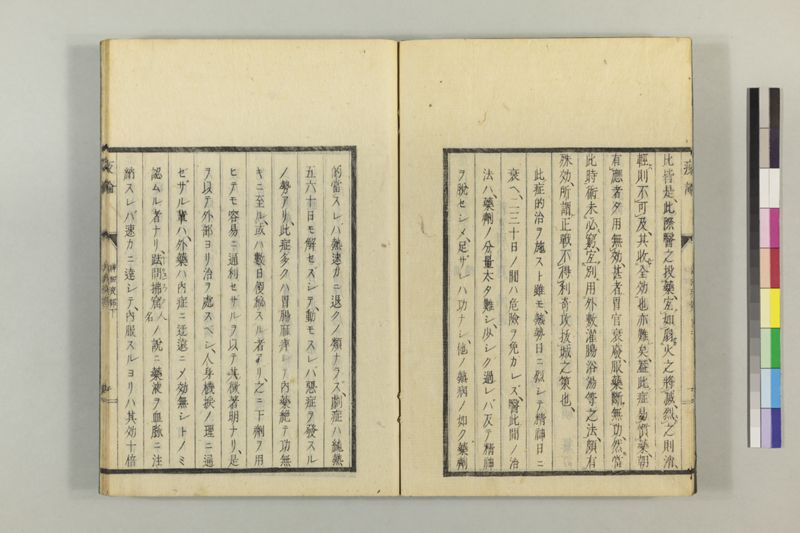
比皆是、此 ̄ノ際医之投_レ薬、宜_レ ̄ク如_レ扇_二 ̄クカ火之将_一_レ滅、烈_レ ̄スレハ之則消、
軽 ̄レハ則不_レ可_レ及、其収_二 ̄ルヤ全効_一也亦難 ̄シ矣、蓋 ̄シ此 ̄ノ症易_レ慣_レ薬、朝
有_レ応者夕用無_レ効、甚者 ̄ハ胃-官衰-廃、服-薬断 ̄テ無_レ功、然 ̄トモ当_二
此時_一術未_二必 ̄ス窮_一、宜_三 ̄タ別 ̄ニ用_二外-敷灌-腸浴-湯等之法_一、頗有_二
殊効、所-謂 ̄ル正-戦不_レ得_レ利奇-攻抜_レ城之策也、
此 ̄ノ症的-治ヲ施スト雖モ、熱-勢日ニ烈シテ精-神日ニ
衰ヘ、二三十日ノ間ハ危険ヲ免カレズ、医此 ̄ノ間ノ治
法ハ、薬剤ノ分-量太タ難シ、少シク過レバ反テ精神
ヲ脱セシメ、足ザレハ功ナシ、他ノ熱病ノ如ク薬-剤
的-当スレバ熱速カニ退クノ類ナラズ、劇-症ハ純-熱
五六十日モ解セズシテ、動モスレバ悪症ヲ発スル
ノ勢アリ、此症多クハ胃-腸麻-痺シテ内-薬絶テ功無
キニ至ル、或ハ数-日便-秘スル者アリ、之ニ下剤ヲ用
ヒテモ容易ニ通利セザルヲ以テ其 ̄ノ徴著-明ナリ、是
ヲ以テ外部ヨリ治ヲ処スベシ、人-身機-悷ノ理ニ通
ゼザル輩ハ、外-薬ハ内-症ニ迂-遠ニシテ効無シトノミ
認ムル者ナリ、䟩(レー)-問(ウヱン)-仏(フツ)-窟(ク)《割書:人|名》ノ説ニ薬-液ヲ血-脈ニ注-
納スレバ速カニ達シテ、内-服スルヨリハ其効十-倍
現代語訳
このような場合はすべてこの通りである。この際の医師の投薬は、まさに扇で消えようとする火を扇ぐようなものである。強く扇げば火は消え、弱く扇げば効果が及ばない。その完全な効果を得ることもまた困難である。思うに、この症状は薬に慣れやすく、朝に効果があった者でも夕方に用いると無効となり、甚だしい者は胃官が衰廃し、服薬しても全く効果がない。しかしながら、この時に当たって術が必ずしも尽きるわけではない。別に外敷・灌腸・浴湯等の法を用いるべきであり、かなりの特効がある。いわゆる正戦で利を得られない時は奇攻で城を抜く策である。
この症状に的確な治療を施すといえども、熱勢は日に激しくなり精神は日に衰え、二三十日の間は危険を免れない。医師がこの間の治法において、薬剤の分量は非常に困難である。少しでも過ぎれば反って精神を脱せしめ、足りなければ効果がない。他の熱病のように薬剤が的当すれば熱が速やかに退くような類ではない。劇症は純粋な熱が五六十日も解けずに、ともすれば悪症を発する勢いがある。この症状は多くは胃腸が麻痺して内薬が全く効果がないに至る。あるいは数日便秘する者があり、これに下剤を用いても容易に通利しないことで、その徴候が著明である。これをもって外部より治療を処すべきである。人身機理の理に通じない輩は、外薬は内症に対して迂遠で効果がないとのみ認める者である。レーウェン・フック(人名)の説によれば、薬液を血脈に注納すれば速やかに達して、内服するよりもその効果は十倍である。
英語訳
All such cases are exactly like this. At this point, the physician's administration of medicine is just like fanning a fire that is about to go out. If you fan too vigorously, the fire will be extinguished; if too gently, the effect will not reach it. Achieving complete efficacy is also difficult. I believe this condition easily develops tolerance to medicines - those who respond in the morning may find the same medicine ineffective when used in the evening, and in severe cases, the gastric organs become debilitated and oral medications have absolutely no effect. However, when facing this situation, medical techniques are not necessarily exhausted. One should separately employ methods such as external applications, enemas, medicinal baths, and the like, which have quite remarkable special effects. This is what is called the strategy of taking a castle through surprise attack when a frontal assault cannot gain victory.
Even when applying appropriate treatment to this condition, the fever becomes more intense daily while the spirit weakens daily, and danger cannot be avoided for twenty to thirty days. For physicians treating during this period, the dosage of medicines is extremely difficult. If even slightly excessive, it will conversely cause depletion of the spirit; if insufficient, there is no effect. It is not like other febrile diseases where fever quickly subsides when medicines are appropriately applied. In severe cases, pure fever does not resolve for fifty to sixty days, and there is a tendency to develop malignant symptoms at any moment. This condition often progresses to gastric and intestinal paralysis where internal medicines have absolutely no effect. Some patients may be constipated for several days, and even when purgatives are used, bowel movements do not occur easily, making this sign quite evident. Therefore, treatment should be administered from the exterior. Those who do not understand the principles of human bodily mechanisms only believe that external medicines are indirect and ineffective for internal conditions. According to Leeuwenhoek's theory, when medicinal solutions are injected into blood vessels, they reach their target rapidly, with effects ten times greater than oral administration.