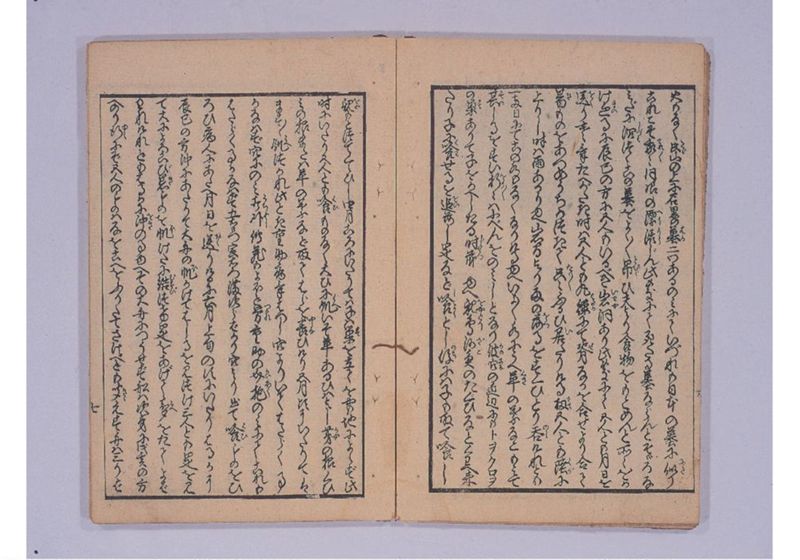
翻刻
火もなく只(たゞ)山の上に石塁?の墓(はか)二ツあるのみにていづれも日本の墓に似(にた)り
これこそ我々(われ〳〵)同様?の漂流(へうりう)じん此処にて死たる墓ならんとそゞろな
みだに沈(しづみ)つゝこの墓をよく〳〵弔(とむら)ひ夫より食物をもとめんと所々をか
け廻(まは)るに辰巳の方に五人もいるべき岩洞(いわや)あり此処にて五人とも月日を
送(をく)り寒気たへがたき時は五人とも丸 裸(はだか)にて背(せ)なかを合せより合て
着(き)のものをあつめうちかつきて只々(たゝ〳〵)ふるひ居(い)たりける扨(さて)五人とも陸(くが)に
上りし時は雨あかりゆへ岩間より雨の落(をつ)るをすくひとり呑(のみ)けれとも
一両日にてこの水もなくなりけるゆへいよ〳〵水にうへ草(くさ)の葉なともみて
其しるをすい折々(をり〳〵)は小べんをのみしとなり彼(かの)穴(あな)の近辺にもトヲクロヲ
の巣ありて子をかへしたる時節(じせつ)ゆへ親鳥(をやとり)雑魚(ざこ)?のたぐひなとくわへ来
たり子に喰(くわ)せるを追(をい)落?し是?など喰(しよく)とし後(のち)には子も取て喰し
親(をや)もとつてくらひし四月ころにいたりては子は巣(す)を立ておやも地に子よらず此
時にいたり五人とも喰(くひ)ものなく大ひに飢(うへ)いそ草あるひはよし茅(かや)の根くひ
みの根または草の葉など取てはらを養(やしな)ひけり五月頃にいたりては
ます〳〵飢(うえ)つかれ此とき重助病気はつし穴よりいてはたらく事
かなはず穴にのみ打臥(うちふし)伝蔵もよほど労(つかれ)重助の介抱(かいほう)のみにてこれも
はたらく事かなはず五右衛門寅右衛門満次郎ばかり穴より出て喰(くひ)ものをひ
ろひ病人にあたへ月日を送(おく)りけるに六月上旬の頃にいたりはるかに
辰巳の方沖にあたりて大舟の帆(ほ)かけてはしるを見つけ三人とも是?を見
て大によろこび着(き)ものを帆(ほ)けたに結(むすび)つけ是をあげて声(こへ)をたてよば
われけれどもはるかに沖(をき)の事ゆへその大舟につうせず船は次第に戌亥の方
へのり行(ゆく)にぞ五人のものはなをこへをふりたてさけべとも聞(きゝ)えす舟は三りば
現代語訳
火もなく、ただ山の上に石で作った墓が二つあるのみで、いずれも日本の墓に似ていた。これこそ我々と同様の漂流者がここで死んだ墓であろうと、そぞろに涙に沈みながらこの墓をよくよく弔い、それから食物を求めようと所々を駆け回った。辰巳の方角に五人もいることができる岩穴があり、ここで五人とも月日を送った。寒気が耐え難い時は、五人とも裸になって背中を合わせ寄り合い、着物を集めて打ちかぶり、ただただ震えていた。さて、五人とも陸に上がった時は雨明けだったので、岩間より落ちる雨をすくい取って飲んだけれども、一両日でこの水もなくなってしまったので、いよいよ水に渇き、草の葉なども噛んでその汁を吸い、時折は小便を飲んだという。その穴の近辺にもトウクロウの巣があって、雛を孵した時節だったので、親鳥が小魚の類などをくわえて来て雛に食わせるのを追い落とし、これなどを食べ物とし、後には雛も取って食べ、親も捕って食べた。四月頃に至っては、雛は巣立ちして親も地に寄らず、この時に至り五人とも食べ物がなく大いに飢え、イソ草あるいはヨシ、茅の根、ミノの根または草の葉などを取って腹を養った。五月頃に至ってはますます飢え疲れ、この時重助が病気を発し、穴より出て働くことができず、穴にのみ打ち臥し、伝蔵もよほど疲れて重助の介抱のみでこれも働くことができず、五右衛門、寅右衛門、満次郎ばかりが穴より出て食べ物を拾い、病人に与えて月日を送った。六月上旬の頃に至り、はるかに辰巳の方沖に当たって大船が帆をかけて走るのを見つけ、三人ともこれを見て大いに喜び、着物を帆桁に結びつけ、これを上げて声を立てて呼んだけれども、はるかに沖のことなのでその大船に通じず、船は次第に戌亥の方へ乗り行くので、五人の者はなお声を振り立てて叫んだが聞こえず、船は三里ほど
英語訳
There was no fire, only two stone tombs on top of the mountain, both resembling Japanese graves. Thinking these must be the graves of fellow castaways who died here like ourselves, they wept and carefully mourned at these graves, then ran about everywhere seeking food. In the southeast direction, there was a rock cave large enough for five people, and here all five spent their days. When the cold became unbearable, all five would strip naked, press their backs together, gather their clothes over themselves, and simply shiver. Now, when the five first came ashore, it was after rain, so they scooped up rainwater falling from between the rocks to drink, but after a day or two this water was gone, so increasingly thirsty, they chewed grass leaves and sucked their juice, and sometimes even drank their own urine. Near that cave there were also cormorant nests, and since it was the season when they were raising chicks, when parent birds brought small fish and the like to feed their young, they would chase these away and eat such food, and later they caught and ate the chicks too, and caught and ate the parents as well. By around April, the chicks had fledged and the parents no longer came to the ground. At this time all five had no food and were greatly famished, taking seaweed or reed and miscanthus roots, arrowroot, or grass leaves to sustain their bellies. By around May they were increasingly starved and exhausted. At this time Jūsuke fell ill and could not leave the cave to work, lying only in the cave, and Denzō was also quite exhausted and could only tend to Jūsuke, unable to work. Only Goemon, Toraemon, and Manjirō would leave the cave to forage for food to give to the sick, spending their days thus. In early June, they spotted a large ship with sails running far offshore to the southeast. All three saw this and rejoiced greatly, tying clothes to a pole and raising it while calling out, but being so far offshore, they could not reach that large ship. As the ship gradually sailed toward the northwest, the five men raised their voices even louder and shouted, but could not be heard, and the ship was about three ri away...