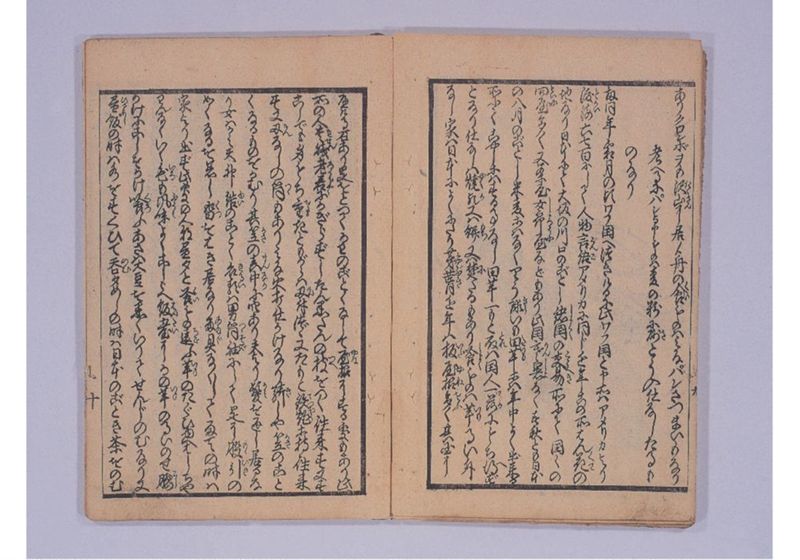
翻刻
ありクロンボヲも沢山(たくさん)に居候舟の食(くい)ものはみなパンさつまいもなり
考へるにパンと申ものは麦の粉に砂(さ)とう入仕なしたるも
のなり
扨同年霜月の頃ワフ国へつきけるに此ワフ国と申所はアメリカより
渡海(とかい)六七百にして人物 言語(ごんご)アメリカに同じ近年この所はん花(くわ)の
地なり日本にて大坂の川口のごとし諸国(しよこく)の交易(こうへき)所にて国々の
問屋(といや)多く又茶屋 女郎屋(しよろうや)などもあり此国 寒暑(かんしよ)なく春秋とも日本
の八月のごとし米麦等はなくりう球(きう)いも田芋(たいも)等は年中よく出来る
所にてこやし等はする事なし田芋一もと取(とれ)は国人一ツ荷(に)にもち得(へ)ず
となり仕なしは焼(やく)歟(か)又は餅(もち)又は焚(に)たるもあり喰(しよく)ものは芋(いも)るい外
なし家は日本によくにたり茅葺(かやぶき)近年は板屋根(いたやね)多(をふ)く其国に
へける石あり是をとつてかわのごとくなして屋根(やね)にする処もあり此
所の人 貴賎老若(きせんろうじゃく)にかぎらずしたん黒たんの杖(つへ)をつく往来す又す
こしでも身もち重(おも)きともがらは刃(けん)付づゝ又たもと鉄砲(てつほう)等持往来
す又 刃(けん)なしの筒(つゝ)もありみな火打仕かけなり騎(き)?しや【綺しや:奇妙なことに?】笠(かさ)のこと
くなるものをかむり其 笠(かさ)の真中(まんなか)に穴あり夫より髪(かみ)を通し居るな
り女はかみ天神 結(ゆい)のことく衣類(きるい)は男 筒袖(つゝそで)にして是に股引(もゝひき)の
如くなるを着し沓(くつ)をはき居なり雨具(あまぐ)なくして雨天の時は
家より出ず此処の人朝昼夕と喰(くい)もの違(ちご)ふ芋(いも)のたぐひゆへはしちや
わんなくいく色(いろ)も風味(ふうみ)よくこしらへ飯台(はんたい)にかの芋のるいのせ腰(こし)
かけにこしをかけ喰(くろ)ふあさは大豆を黒くいりてせんじのむなり又
昼飯(ひるめし)の時は水をすくひて呑(のむ)夕めしの時は日本のごとき茶をのむ
現代語訳
そこには黒人も大勢いた。船の食べ物はすべてパンとサツマイモであった。
思うに、パンというものは麦の粉に砂糖を入れて作ったもの
である。
さて同年11月頃、ハワイ国に着いたが、このハワイ国という所はアメリカから
海を渡ること六、七百里で、人々の容貌や言語はアメリカと同じである。近年この所は繁華な
土地で、日本でいえば大阪の川口のようなところである。諸国の交易所で各国の
問屋が多く、また茶屋や遊郭などもある。この国は寒暑がなく、春秋とも日本
の8月のようである。米麦等はないが、サツマイモやタロイモ等は年中よくできる
所で、肥料等をやることもない。タロイモ一株採れば、現地人一人では荷として持ち運べない
ほどである。調理法は焼くか、または餅にするか、または煮たりもする。食べ物はイモ類以外に
ない。家は日本によく似ており茅葺きで、近年は板屋根が多く、その国に
産出する石がある。これを取って瓦のようにして屋根にする所もある。この
所の人は身分の高低や老若を問わず、紫檀や黒檀の杖を突いて往来する。また少し
でも身分の重い者たちは剣付きの銃、また短銃等を持って往来
する。また剣なしの銃もあり、みな火打ち石の仕掛けである。奇妙なことに笠の
ようなものをかぶり、その笠の真ん中に穴があり、そこから髪を通している
のである。女は髪を天神結びのようにし、衣類は男性は筒袖にしてこれに股引の
ようなものを着し、靴を履いている。雨具はなくて雨天の時は
家から出ない。この所の人は朝昼夕と食べ物が違う。イモ類なので箸や茶
碗はなく、いく通りにも風味よく料理し、飯台にそのイモ類を載せ、腰
掛けに腰をかけて食べる。朝は大豆を黒く炒って煎じて飲むのである。また
昼飯の時は水をすくって飲む。夕飯の時は日本のような茶を飲む。
英語訳
There were also many black people there. The food on the ship was all bread and sweet potatoes.
I think that bread is made from wheat flour mixed with sugar.
In November of that same year, we arrived in the Hawaiian Islands. This place called Hawaii is six to seven hundred ri across the ocean from America, and the people's appearance and language are the same as America's. In recent years, this place has become a prosperous land, like Kawaguchi in Osaka in Japan. It is a trading post for various countries with many wholesale merchants from different nations, and there are also tea houses and pleasure quarters. This country has no cold or hot seasons, and both spring and autumn are like August in Japan. There is no rice or wheat, but sweet potatoes and taro grow well year-round in this place, without the need for fertilizer. When one taro plant is harvested, a single native person cannot carry it as a load. The preparation methods include roasting, making into rice cakes, or boiling. There are no foods other than root vegetables. The houses closely resemble those in Japan with thatched roofs, though in recent years board roofs are common. There is a stone that is produced in that country, which they take and use like tiles for roofing. The people of this place, regardless of social status, age, or gender, walk about carrying canes made of red sandalwood or ebony. Those of even slightly higher status carry swords attached to guns, or pistols when they go out. There are also guns without swords, all with flintlock mechanisms. Strangely, they wear something like a hat with a hole in the middle of the hat through which they pass their hair. Women arrange their hair like the Tenjin knot style. For clothing, men wear tube sleeves with something like leggings, and wear shoes. They have no rain gear and do not leave their houses during rainy weather. The people of this place eat different foods for breakfast, lunch, and dinner. Since they eat root vegetables, they have no chopsticks or tea bowls, but prepare them in many ways with good flavor, place these root vegetables on dining tables, sit on stools, and eat. In the morning, they roast black soybeans and drink the decoction. At lunch time, they scoop up water to drink. At dinner time, they drink tea like that in Japan.