翻刻
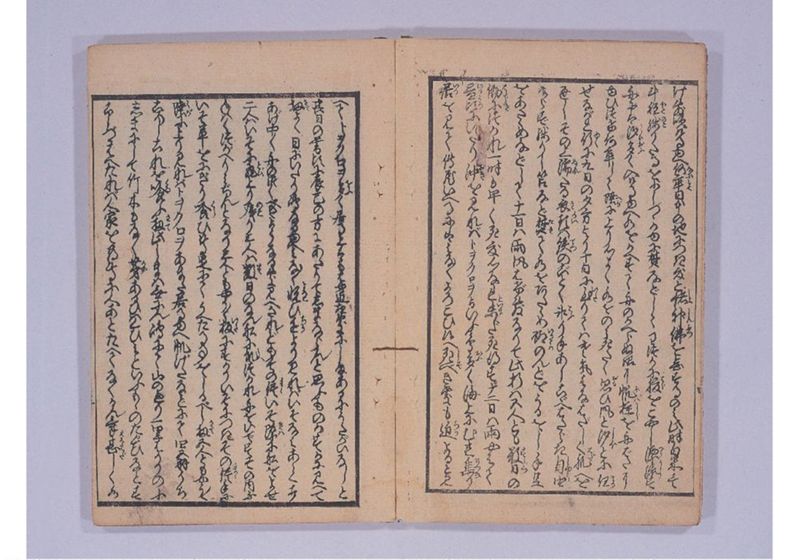
け敷吹けるゆへ何卒(なにとそ)日本の地につき度と諸神仏(しよしんふつ)を念するのみ此時白米壱
斗 程(ほと)残(のこ)りたるを少しづゝかゆに焚などしてわつかに腹(はら)をこやし漂流(へうりう)す
舟には汐(しほ)多(おほ)く入けるゆへ水をかへすて舟のかへらぬ様に帆柱(ほばしら)を舟ばたに
ゆひつけ何卒?して陸(へが)?に上り心?よく水をのみ死たく思(おも)ひ風と汐(しほ)とに任(まか)
せながれ行(ゆく)に九日の夕方より十日に至(いた)りては寒気はなはだしく肌(はだ)へを
通しその上 濡(ぬれ)たる衣類(きるい)は鉄(てつ)のごとく氷(こふ)り手あしこゞへはたらき自由(しゆう)
ならず残りし箱など焚(たき)て水をあたゝめ聊(いさゝか)のんどをうるをし手足
をあたゝめなどして十一日は雨風はげ敷なりて此折は五人とも数日(すじつ)の
働(はたらき)につかれ一時も早く死度心なれ未(といま)だ死得す十二日は雨やみて
昼頃(ひるころ)にいたり沖(おき)を見ればトヲクロヲ【藤九郎=アホウドリ】といふ鳥多(おほ)く海上にむれ集(あつま)り
居(いる)を見て伝蔵いへるにはみな〳〵よろこひ候へ死(しす)べき処も近(ちか)よると見
へてトヲクロヲ多(をふ)く居る上はもはや近き処にしまあるにうたがひなしと
其日の暮頃に辰巳の方にあたりてしまならんと思ふものかすかに見へて
扨(さて)よく日にいたり嶋なるゆへみな〳〵悦(よろこ)ひ近(ちか)より見ればいそなみあらく打
あげ中〳〵舟のつくべきようなる処見へされどもその儘(まゝ)いそ際(きは)に船をよせ
二人はいそに飛(とび)上り残(のこ)り三人は数(す)日のなん船に飢(うへ)つかれ舟をいですその内ふ
ねはくつがへりみぢんとなり三人ともやう〳〵板(いた)にすかりいそにつきその儘(まゝ)手に
いそ草をにぎり喰(くら)ひける是にてうへたる事をしるべし扨(さて)五人ともやう〳〵
陸(くが)に上り見ればトヲクロヲあまた居るゆへ帆げたなどにて四五羽うち
ころしこれを喰(くろ)ふ扨(さて)此しまは無にん嶋にて山の廻り一里はかりの小
しまにして竹木もなく茅(かや)あるひはくひみといふもゝのたぐひなとす
こしづゝはへたれば人家を尋けるに人あとたへてなくかん気甚(はなはだ)しく水
現代語訳
激しく吹いたため、何とかして日本の土地に着きたいと諸神仏に祈るばかりであった。この時、白米が一斗ほど残っていたのを少しずつ粥に炊いたりして、わずかに腹を満たしながら漂流した。
船には潮水が多く入ったため、水をかき出して船がひっくり返らないように帆柱を船縁に縛り付け、何とかして陸に上がり、心置きなく水を飲んで死にたいと思い、風と潮に任せて流されていった。九日の夕方から十日にかけては寒気が甚だしく肌を通し、その上濡れた衣類は鉄のように凍って、手足が凍え働かせることも自由にならなかった。残った箱などを燃やして水を温め、わずかに喉を潤し、手足を温めたりした。十一日は雨風が激しくなり、この時は五人とも数日の苦労に疲れ、一刻も早く死にたい心境であったが、まだ死ぬことはできなかった。十二日は雨がやんで昼頃になり、沖を見ると藤九郎(アホウドリ)という鳥が多く海上に群れ集まっているのを見て、伝蔵が言うには「皆々喜びなさい。死ぬべき場所も近づいたと見える。藤九郎が多くいる以上は、もはや近くの所に島があるに違いない」と。
その日の暮れ頃に、南東の方角に島らしいものがかすかに見えて、翌日になって島であることが分かったので、皆々喜んだ。近寄って見ると磯波が荒く打ち上げ、なかなか船を着けられるような所は見えなかったが、そのまま磯際に船を寄せ、二人は磯に飛び上がり、残り三人は数日の難船で飢え疲れて船を出たが、その間に船はひっくり返って粉々になった。三人ともようやく板につかまって磯に着き、そのまま手に磯草を握って食べた。これで飢えていたことが分かるであろう。さて、五人ともようやく陸に上がって見ると、藤九郎がたくさんいるので、帆桁などで四、五羽を打ち殺してこれを食べた。さて、この島は無人島で、山の周り一里ばかりの小島で、竹木もなく茅やあるいは久美といったような草類などが少しずつ生えていた。人家を尋ねたが人の跡は絶えてなく、寒気が甚だしく、水は
英語訳
The wind blew fiercely, so they could only pray to various gods and buddhas, hoping somehow to reach Japanese land. At this time, about one to of white rice remained, which they cooked little by little into rice gruel to barely fill their stomachs as they drifted.
Since much seawater had entered the boat, they bailed out the water and tied the mast to the gunwale to prevent the boat from capsizing, hoping somehow to reach land where they could drink water freely and die in peace. They continued drifting at the mercy of wind and tide. From the evening of the ninth day through the tenth day, the cold was severe, penetrating their skin, and moreover their wet clothes froze like iron, making their hands and feet so numb they could not move them freely. They burned remaining boxes and other items to warm water, barely moistening their throats and warming their hands and feet. On the eleventh day, the rain and wind became violent, and at this point all five men were exhausted from days of hardship, wishing to die as soon as possible, yet still unable to die. On the twelfth day, the rain stopped and around midday, looking at the open sea, they saw many birds called tōkurō (albatross) flocking together on the ocean surface. Seeing this, Denzō said, "Everyone, rejoice! It appears we are approaching a place where we should die. Since there are many tōkurō here, there must surely be an island nearby."
Around evening that day, something that appeared to be an island was faintly visible to the southeast, and the next day it was confirmed to be an island, so everyone rejoiced. When they approached closer, they saw rough waves crashing against the rocky shore, and there seemed to be no suitable place to land the boat, but they brought the boat to the water's edge anyway. Two men jumped onto the rocks, while the remaining three, weakened by hunger from days of shipwreck, left the boat, but during this time the boat capsized and was smashed to pieces. All three men barely managed to cling to planks and reach the rocky shore, immediately grabbing and eating seaweed with their hands. This shows how starved they were. Now, all five men finally reached land and saw many tōkurō, so they killed four or five birds with sail yards and ate them. This island was uninhabited, a small island about one ri around the mountain, with no bamboo or trees, only sparse growth of grass varieties such as kaya (miscanthus) or kumi. They searched for human dwellings but found no trace of people. The cold was severe, and water was