翻刻
【右丁 上段】
【囲みの中の見出し】潮汐(しほとき)暗記(そらおぼへ)之(の)法(ほふ)
其日の数に四をかけて十にみつる
ものを一時と定(さだ)め朝の五ツ時
より順(じゆん)にかぞへ端(はした)あるものは其
時の何分(なんぶ)と知るべしたとへば今
十三日のしほは何時ぞといふに
まづ十三に四をかくれば五十二
と成これを五ッ時よりくりはじ
む十(五ッ)二十(四ッ)三十(九ッ)四十(八ッ)五十(七ッ)とかぞへみ
れば十三日は七ッ二分のしほ也と
知るべし夫(それ)より四時すぎて夜(よる)
の四ッ二分を干(ひ)しほと知るべし
余(よ)はいづれもこれに同じ但し
朝しほ七ッ二分なれば夕しほも
七ッ二分と心得べし
【囲みの中の見出し】年中(ねんぢう)風雨(ふうう)之(の)考(かんがへ)
○日の出を見るに色あかきは雨色
黄なるは大風 青(あを)きは雨風くも
【左丁 上段】
多きは風くもおほくやふるゝは
雨そらあかきは風そら黄な
るは雨かみなり
○日の入を見るに雲多きは雨雲
みだるゝは風くものねなきははれ
雲の中に入りても夕やけよくすれば
ふらざることもあり日入てのち
西あかくして次第(しだい)にうすくなる
ははれあかくしてやがてくらく
なるは雨日の高入りするごとく
見ゆるはひよりかわるなり
○風雨北よりふくははれ東風は
雨但しつゆと土用(どよう)とにはふり
つゞきたる雨もあがるものなり
風くもにさき立てふくは雨雲
におくるゝははれ
○雲たちのぼりてきゆればはれ
みだれてとぶは大風みづまきは
雨一天に雲なくはれて青き
は三日の内に雨ふるなり
【右丁 下段 挿絵のみ】
【左丁 下段】
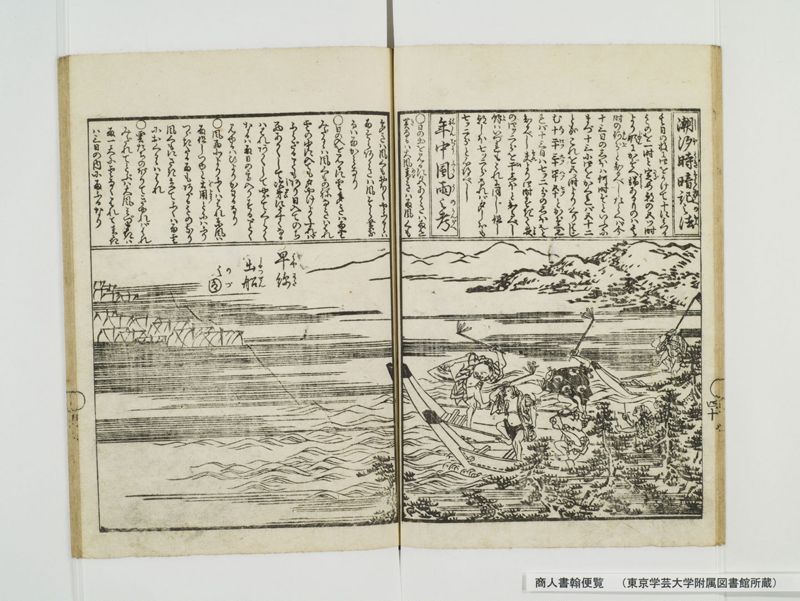
早綿(はやわた)
出船(しゆつせん)
之(の)図(づ)
現代語訳
【右丁 上段】
【囲みの中の見出し】潮の満ち引きを暗記する方法
その日の数に4をかけて10で割ったものを1時間とし、朝の午前8時から順番に数え、端数があるものはその時刻の何分かとして知るべきである。例えば今日が13日の潮はいつかというと、まず13に4をかければ52となる。これを午前8時から数え始める。10(午前8時)、20(午前10時)、30(正午)、40(午後2時)、50(午後4時)と数えてみれば、13日は午後4時20分の潮であることがわかる。それから4時間経って夜の午前2時20分を干潮と知るべきである。他の日もすべて同様である。ただし朝潮が午後4時20分であれば夕潮も午後4時20分と心得るべきである。
【囲みの中の見出し】年中の天気予報の考え方
○日の出を見ると、色が赤いのは雨の兆し、黄色いのは大風、青いのは雨風、雲
【左丁 上段】
が多いのは風、雲が多くて薄暗いのは雨、空が赤いのは風、空が黄色いのは雨や雷。
○日の入りを見ると、雲が多いのは雨、雲が乱れているのは風、雲の根がないのは晴れ。雲の中に入っても夕焼けが美しければ降らないこともある。日が沈んだ後、西が赤くして次第に薄くなるのは晴れ、赤くしてすぐに暗くなるのは雨。日が高く沈むように見えるのは天気が変わる兆しである。
○風雨が北から吹くのは晴れ、東風は雨。ただし梅雨と土用の時期には降り続いた雨も上がるものである。風が雲に先立って吹くのは雨、雲に遅れるのは晴れ。
○雲が立ち上がって消えれば晴れ、乱れて飛ぶのは大風、水巻きは雨。一面に雲がなく晴れて青いのは3日以内に雨が降る。
【右丁 下段 挿絵のみ】
【左丁 下段】
早綿
出船
の図
英語訳
【Right Page - Upper Section】
【Boxed Heading】Method for Memorizing Tidal Times
Multiply the day's number by 4, divide by 10 to get the hour unit, start counting from 5 tsu (8 AM) in order, and any remainder should be understood as minutes of that hour. For example, if asking what time the tide is on the 13th day, first multiply 13 by 4 to get 52. Start counting from 5 tsu: 10 (5 tsu/8 AM), 20 (4 tsu/10 AM), 30 (9 tsu/12 PM), 40 (8 tsu/2 PM), 50 (7 tsu/4 PM). Thus, the 13th day has a tide at 7 tsu 2 bu (4:20 PM). From then, 4 hours later at night's 4 tsu 2 bu (2:20 AM) should be known as low tide. All other days follow this same pattern. However, if the morning tide is at 7 tsu 2 bu, the evening tide should also be understood as 7 tsu 2 bu.
【Boxed Heading】Year-round Weather Prediction Methods
○Observing sunrise: red color indicates rain, yellow indicates strong wind, blue indicates rain and wind, many clouds
【Left Page - Upper Section】
indicate wind, many clouds with dimness indicate rain, red sky indicates wind, yellow sky indicates rain or thunder.
○Observing sunset: many clouds indicate rain, scattered clouds indicate wind, clouds without roots indicate clear weather. Even if the sun sets among clouds, if the sunset is beautiful, it may not rain. After sunset, if the west is red and gradually fades, it will be clear; if red and quickly turns dark, it will rain. When the sun appears to set high, the weather will change.
○Wind and rain from the north indicate clear weather, east wind indicates rain. However, during the rainy season and midsummer period, even continuous rain will stop. Wind preceding clouds indicates rain, wind following clouds indicates clear weather.
○Clouds rising and disappearing indicate clear weather, scattered and flying clouds indicate strong wind, waterspouts indicate rain. When the sky is completely clear without clouds and blue, rain will fall within three days.
【Right Page - Lower Section - Illustration only】
【Left Page - Lower Section】
Early Cotton
Ship Departure
Illustration