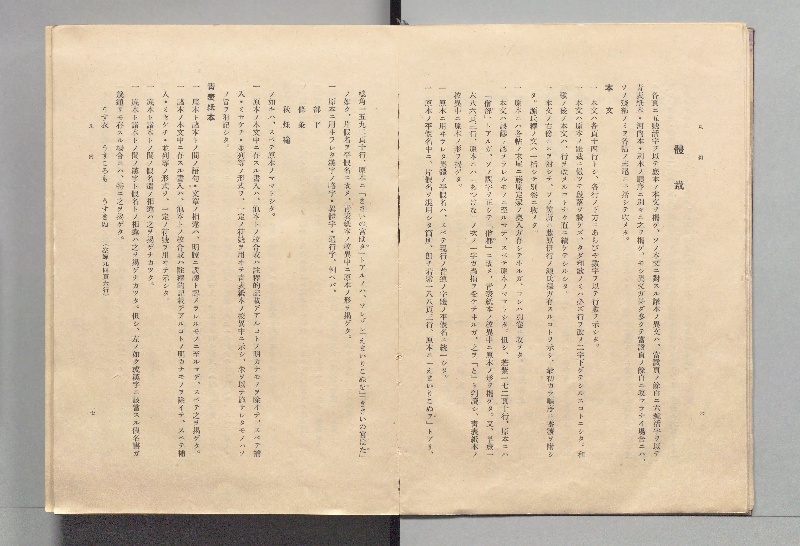
翻刻
【右丁】
凡例 六
体裁
各頁ニ五号活字ヲ以テ底本ノ本文ヲ掲ゲ、ソノ本文ニ対スル諸本ノ異文ハ、当該頁ノ余白ニ六号活字ヲ以テ
青表紙本・河内本・別本ノ順序ニ別々ニ之ヲ掲ゲ、モシ異文ガ甚ダ多クテ当該頁ノ余白ニ収マラナイ場合ニハ、
ソノ残部ノミヲ各帖ノ末尾ニ一括シテ収メタ。
本文
一 本文ハ各頁十四行トシ、各行ノ下方ニあらびや数字ヲ以テ行数ヲ示シタ。
一 本分ハ原本ノ体裁ニ倣ツテ段落ヲ設ケズ、タダ和歌ノミハ必ズ行ヲ改メ二字下ゲテシルスコトニシタ。和
歌ノ後本文ハ、行ヲアラタメルコトナク直ニ続ケテシルシタ。
一 本文ノ右傍ニ*ヲ附シテ、ソノ箇所ニ藤原伊行ノ源氏釈ガ存スルコトヲ示シ、最初カラ順序ニ番号ヲ附シ
タ。源氏釈ノ文ハ一括シテ別巻ニ収メタ。
一 原本ニハ各帖ノ末尾ニ藤原定家ノ奥入ガ存シテヰルガ、コレハ別巻ニ収メタ。
一 本文ハ誤謬ト認メラレルモノニ至ルマデ、スベテ原本ノママトシタ。但シ、若紫一七二頁十行、原本ニハ
「僧 部(◦)」トアルガ、ソノ誤字ヲ正シテ「僧 都(◦)」に改メ、青表紙本ノ校異中ニ原本ノ形ヲ掲ゲタ。又、早蕨一
六八六頁三行、原本ニハ「あつけな」ノ次ノ一字ガ虫損ヲ受ケテヰルガ、之ヲ「と」ト判読シ、青表紙本ノ
校異中ニ原本ノ形ヲ掲ゲタ。
一 原本ニ用ヰラレタ異体ノ平仮名ハ、スベテ現行ノ普通ノ字体ノ平仮名ニ統一シタ。
一 原本ノ平仮名中ニ、片仮名ヲ混用シタ箇所、即チ若紫一八八頁三行、原本ニ「えまいりこぬヲ(◦)」トアリ、
【左丁】
総角一五九二頁十行、原本ニ「きさいの宮はタ(◦)」トアルノハ、ソレゾレ「えまいりこぬ を(◦)」「きさいの宮は た(◦)」
ノ如ク、片仮名ヲ平仮名ニ改メ、青表紙本ノ校異中ニ原本ノ形ヲ掲ゲタ。
一 原本ニ用ヰラレタ漢字ノ略字・異体字・通用字、例ヘバ、
部 𠄐#1
條 条
秋 秌 龝
ノ如キハ、スベテ原本ノママトシタ。
一 原本ノ本文中ニ存スル書入ハ、他本トノ校合或ハ註釈的記載デアルコトノ明カナモノヲ除イテ、スベテ補
入・ミセケチ・並列等ノ形式ヲ、一定ノ符号ヲ用ヰテ青表紙本ノ校異中ニ示シ、朱ヲ以テ施サレタモノハソ
ノ旨ヲ附記イタ。
青表紙本
一 底本ト諸本トノ間ノ語句・文章ノ相違ハ、明瞭ニ誤謬ト認メラレルモノニ至ルマデ、スベテ之ヲ掲ゲタ。
一 諸本ノ本文中ニ存スル書入ハ、他本トノ校合或ハ註釈的記載デアルコトノ明カナモノヲ除イテ、スベテ補
入・ミセケチ・並列等ノ形式ヲ、一定ノ符号ヲ用ヰテ示シタ。
一 底本ト諸本トノ間ノ仮名遣ノ相違ハ之ヲ掲ゲナカツタ。
一 底本ト諸本トノ間ノ漢字ト仮名トノ相違ハ之ヲ掲ゲナカツタ。但シ、左ノ如ク或漢字ニ該当スル仮名書ガ
幾通リモ存スル場合ニハ、特ニ之ヲ掲ゲタ。
うす衣 うすころも うすきぬ (空蝉九四頁六行)
凡例 七
現代語訳
【右丁】
凡例 六
体裁
各ページに五号活字をもって底本の本文を掲げ、その本文に対する諸本の異文は、当該ページの余白に六号活字をもって青表紙本・河内本・別本の順序に別々にこれを掲げ、もし異文が甚だ多くて当該ページの余白に収まらない場合には、その残部のみを各帖の末尾に一括して収めた。
本文
一 本文は各ページ十四行とし、各行の下方にアラビア数字をもって行数を示した。
一 本文は原本の体裁に倣って段落を設けず、ただ和歌のみは必ず行を改め二字下げて記すことにした。和歌の後本文は、行を改めることなく直に続けて記した。
一 本文の右傍に*を附して、その箇所に藤原伊行の源氏釈が存することを示し、最初から順序に番号を附した。源氏釈の文は一括して別巻に収めた。
一 原本には各帖の末尾に藤原定家の奥入が存しているが、これは別巻に収めた。
一 本文は誤りと認められるものに至るまで、すべて原本のままとした。ただし、若紫一七二ページ十行、原本には「僧 部(◦)」とあるが、その誤字を正して「僧 都(◦)」に改め、青表紙本の校異中に原本の形を掲げた。また、早蕨一六八六ページ三行、原本には「あつけな」の次の一字が虫損を受けているが、これを「と」と判読し、青表紙本の校異中に原本の形を掲げた。
一 原本に用いられた異体の平仮名は、すべて現行の普通の字体の平仮名に統一した。
一 原本の平仮名中に、片仮名を混用した箇所、すなわち若紫一八八ページ三行、原本に「えまいりこぬヲ(◦)」とあり、
【左丁】
総角一五九二ページ十行、原本に「きさいの宮はタ(◦)」とあるのは、それぞれ「えまいりこぬ を(◦)」「きさいの宮は た(◦)」のように、片仮名を平仮名に改め、青表紙本の校異中に原本の形を掲げた。
一 原本に用いられた漢字の略字・異体字・通用字、例えば、
部 𠄐#1
條 条
秋 秌 龝
のようなものは、すべて原本のままとした。
一 原本の本文中に存する書入は、他本との校合あるいは註釈的記載であることの明かなものを除いて、すべて補入・ミセケチ・並列等の形式を、一定の符号を用いて青表紙本の校異中に示し、朱をもって施されたものはその旨を附記した。
青表紙本
一 底本と諸本との間の語句・文章の相違は、明瞭に誤りと認められるものに至るまで、すべてこれを掲げた。
一 諸本の本文中に存する書入は、他本との校合あるいは註釈的記載であることの明かなものを除いて、すべて補入・ミセケチ・並列等の形式を、一定の符号を用いて示した。
一 底本と諸本との間の仮名遣いの相違はこれを掲げなかった。
一 底本と諸本との間の漢字と仮名との相違はこれを掲げなかった。ただし、左のようにある漢字に該当する仮名書きが幾通りも存する場合には、特にこれを掲げた。
うす衣 うすころも うすきぬ (空蝉九四ページ六行)
凡例 七
英語訳
【Right Page】
Guide 6
Format
On each page, the base text is presented in No. 5 type, and the textual variants from various manuscripts for that text are separately presented in the margins of the corresponding page in No. 6 type, in the order of Aobyoshi texts, Kawachi texts, and separate texts. If there are too many variants to fit in the margins of the page, only the remainder is collected at the end of each chapter.
Main Text
1. The main text consists of fourteen lines per page, with Arabic numerals indicating the line numbers at the bottom of each line.
2. The main text follows the format of the original manuscript without paragraph breaks, but waka poems are always started on a new line with a two-character indent. The main text following waka continues directly without starting a new line.
3. An asterisk (*) is placed to the right of the main text to indicate where Fujiwara no Yukiyuki's Genji-shaku (commentary) exists, numbered sequentially from the beginning. The text of Genji-shaku is collected together in a separate volume.
4. The original manuscript contains Fujiwara no Teika's concluding notes (oku-iri) at the end of each chapter, but these are included in a separate volume.
5. The main text preserves everything from the original manuscript as is, even including what are recognized as errors. However, on page 172, line 10 of Wakamurasaki, where the original has "僧部 (sōbu)," this error was corrected to "僧都 (sōzu)," and the original form is noted in the Aobyoshi text variants. Also, on page 1686, line 3 of Sawarabi, where one character following "atsukena" in the original is damaged by insects, this was interpreted as "to," and the original form is noted in the Aobyoshi text variants.
6. All variant forms of hiragana used in the original manuscript have been standardized to the current common hiragana forms.
7. In places where katakana was mixed with hiragana in the original manuscript—namely on page 188, line 3 of Wakamurasaki where the original has "えまいりこぬヲ," and
【Left Page】
on page 1592, line 10 of Agemaki where the original has "きさいの宮はタ"—these have been changed to "えまいりこぬ を" and "きさいの宮は た" respectively, with the katakana changed to hiragana, and the original forms noted in the Aobyoshi text variants.
8. Abbreviated characters, variant characters, and commonly used characters found in the original manuscript, such as:
部 𠄐#1
條 条
秋 秌 龝
are all preserved as in the original manuscript.
9. Marginal notes existing in the main text of the original manuscript, except for those clearly identified as collations with other texts or commentary notes, are all indicated in the Aobyoshi text variants using fixed symbols to show forms such as additions, strikeouts, and parallel entries, with notes added when these were done in red ink.
Aobyoshi Texts
1. All differences in words and sentences between the base text and various manuscripts, even those clearly recognized as errors, are presented.
2. Marginal notes existing in the main text of various manuscripts, except for those clearly identified as collations with other texts or commentary notes, are all indicated using fixed symbols to show forms such as additions, strikeouts, and parallel entries.
3. Differences in kana usage between the base text and various manuscripts are not presented.
4. Differences between kanji and kana between the base text and various manuscripts are not presented. However, when there are multiple kana writings corresponding to a certain kanji as shown below, these are specifically presented:
うす衣 うすころも うすきぬ (Utsusemi, page 94, line 6)
Guide 7