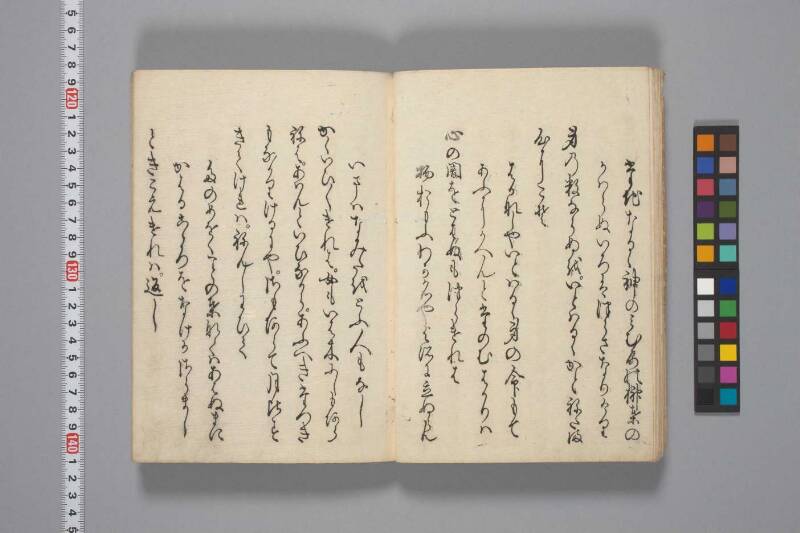
翻刻
【13コマ】
【右丁】
たちなるゝ神のみむろの榊葉の
かはらぬいろはつらさなりけり
身の数ならぬを。いとはるゝかとねたま
心にこそ
はかなしやいとはるゝ身の命もて
あふにかへんとたのむはかりは
心の闇をとはぬもつらけれは
物おもふわか名や与所に立ぬらん
【左丁】
いまはなみたをとふ人もなし
かくいひ〳〵けれは。女もいは木にしもあら
ねは。あはんといひなから。あふへきたつき
もなかりけるにや。さもあらて月比す
きてけれは。ねんしわひて
たのめをくことの葉なくはあはぬまに
かはるこゝろをなけかさらまし
ときこえけれは。返し
現代語訳
【右丁】
立ち馴るる 神のみむろの 榊葉の
変はらぬ色は つらさなりけり
(神聖な神の御室(みむろ)に馴れ親しんで立つ榊(さかき)の葉の、変わらぬ緑の色のように——あなたの変わらぬ冷たさこそが、つらいことでございます。)
自分が(人の)数にも入らぬ(取るに足らない)身であるために、嫌われているのかと妬(ねた)ましい心の内に、
はかなしや 嫌はるる身の 命もて
逢ふに換へんと 頼むばかりは
(ああ、はかないことよ——嫌われているこの身の、命をもって逢瀬と引き換えにしようと願うことだけが、今の私の望みでございます。)
心の闇(暗い思い)を(相手が)尋ねてくれないのもつらいので、
物思ふ わが名や余所に 立ちぬらん
【左丁】
今はなみだを 訪ふ人もなし
(物思いにふける私の噂が、よそに立ってしまったのだろうか——今は涙のことを尋ねてくれる人もいない。)
このように(次々と)言い続けたので、女もいきなり木石(もくせき)ではないから、「逢いましょう」とは言いながら、逢うためのよすがも手段もなかったのだろうか。そうともならないままに月日が過ぎてしまったので、(兼好は)念じわびて、
頼めおく 言の葉なくは 逢はぬ間に
変はる心を 嘆かさらまし
(「きっと逢いましょう」とお約束くださる言葉がなければ、逢えないでいる間に変わってしまうあなたの心を、(こんなにも)嘆くことはなかったでしょうに。)
と申し上げたところ、(女からの)返歌は、
英語訳
【Right Page】
*Tachinaru ru / kami no mimuro no / sakakiba no / kawaranu iro wa / tsurasa narikeri*
(Like the sacred sakaki leaves that stand ever familiar before the divine shrine, unchanging in their evergreen hue — it is your unchanging coldness that is so cruel to me.)
Feeling wretched that he was perhaps despised for being of no account in the world, within his jealous and resentful heart:
*Hakanashi ya / itowaru ru mi no / inochi mote / au ni kae n to / tanomu bakari wa*
(How fleeting and forlorn — that my only wish now is to offer up even this despised life of mine in exchange for just one meeting with you.)
Finding it also painful that she did not inquire after the darkness in his heart:
*Mono omou / waga na ya yoso ni / tachi nu ran*
【Left Page】
*Ima wa namida wo / tou hito mo nashi*
(Has the rumour of my grief-stricken brooding already spread abroad to distant ears? — There is no one now who comes to ask after my tears.)
As he continued to express himself in this way, the woman, being no block of wood or stone, said that she would meet him — yet it seemed there was no way or means by which they could actually do so. And so the months passed without it coming to pass, and, worn out with longing and prayer, he sent word:
*Tanome oku / kotonoha nakuba / awanu ma ni / kawaru kokoro wo / nagekasarамashi*
(Had you not left me with those words of promise — "I shall surely meet you" — I would not have had to grieve so over the heart that changes during these long months apart from you.)
Upon sending this, the reply came —