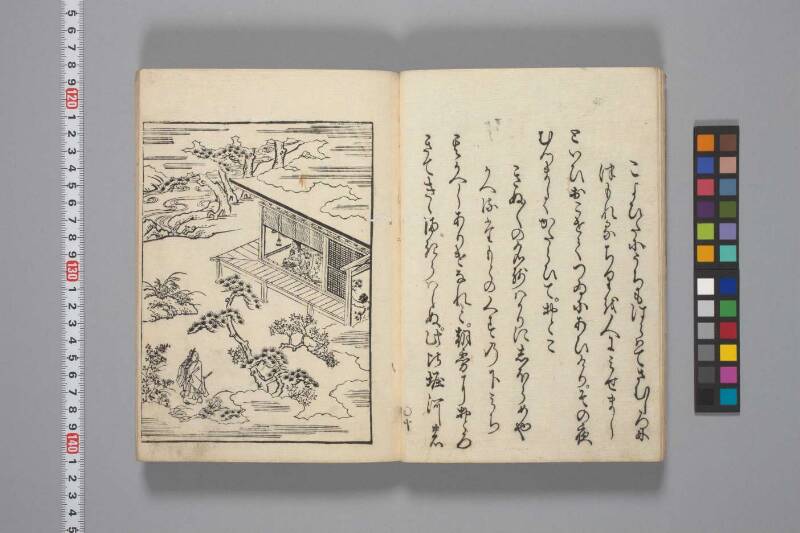
翻刻
【14コマ】
【右丁】
こよひたにうちもはらはてさむしろに
つもれるちりを人にみせまし
といひおこせてつゐにあひけり。その夜
むつましくかたらひて。おとこ
きぬ〳〵の名残はかりにしほらめや
かへるたもとのくすの下みち
其かへしありけなれと。朝霧におとろ
きてきゝまきらはらぬ。此比堀河の
【左丁 絵のみ】
現代語訳
【右丁】
今宵だに 打ち払はで さむしろに
積もれる塵を 人に見せまし
と言い送ってきて、ついに(二人は)逢うことができた。その夜(は)むつまじく語らって、男(=兼好)は(翌朝)、
衣々の 名残ばかりに しほらめや
帰る袂の 楠の下道
(あなたとの衣を重ね合わせた名残だけを胸に秘めて、しおれながら帰ることができようか——楠(くすのき)の木の下を通る帰り道を行きながら。)
その(女からの)返歌があったようであるが、朝霧に驚かされて(急ぎ立ち去ったため)、聞きまぎらわしてしまった(=きちんと聞き届けられなかった)。この頃、堀河の
【左丁 絵のみ】
英語訳
【Right Page】
*Koyoi dani / uchi-harawade / samushiro ni / tsumoreru chiri wo / hito ni mise mashi*
(If only, even this very night, I were to leave unswept the dust that has gathered on my thin rush mat — I would show it to you just as it is.)
With these words she sent word to him, and at last they met. That night they spoke together with tender intimacy, and the man — Kenkō — composed the following poem at dawn:
*Kinuginu no / nagori bakari ni / shiorame ya / kaeru tamoto no / kusunoki shitamichi*
(Could I bear to walk away wilting, carrying only the lingering memory of our robes laid together? — as I take the path home beneath the camphor trees.)
It seems there was a return poem from the woman, but startled by the morning mist, he left in haste and failed to catch it properly. Around this time, at the Horikawa...
【Left Page: Illustration only】