翻刻
【15コマ】
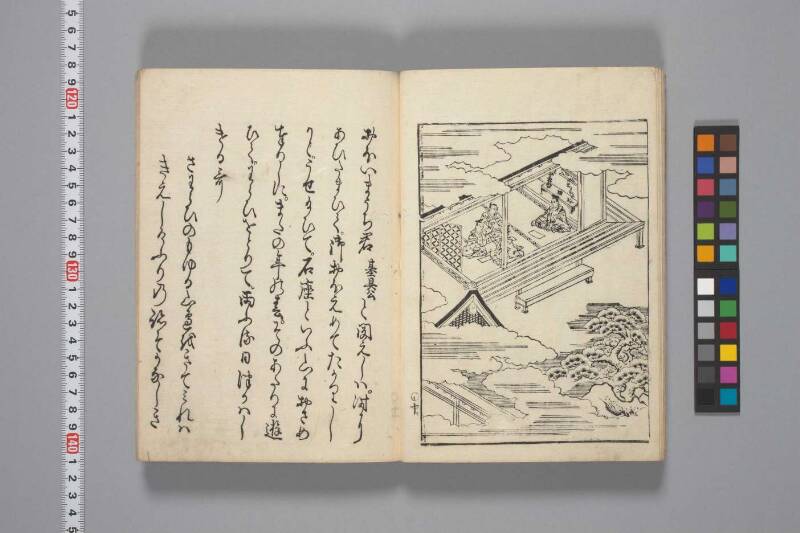
【右丁 絵のみ】
【左丁】
おほいまうち君《割書:基具公》と聞えしは。時に
あひたまひて。御おほえめてたかりし
かと。うせ給ひて。石𫝶といふ山におさめ
奉りしに。またの年の春。そのあたりに遊
ひて。わらひをとりて。雨ふる日つかはし
ける哥
さわらひのもゆる山邊をきてみれは
きえしけふりの跡そかなしき
現代語訳
【右丁 絵のみ】
【左丁】
大臣(おおいもうちぎみ)・基具公(もとともこう)と申し上げた方は、時運に恵まれ、帝のご寵愛もたいへんめでたくいらっしゃったが、お亡くなりになって、石𫝶(いわくら)という山にお納め申し上げたところ、翌年の春、その辺りに遊んで、蕨(わらび)を摘んで、雨の降る日に(かつての主君を偲んで)詠み送った歌——
さわらびの 萌ゆる山辺を 来て見れば
消えし煙の 跡ぞ悲しき
(若蕨の萌え出でる山の辺にやって来て見ると、(荼毘に付した)煙が消えたあとがまことに悲しく思われることよ。)
英語訳
【Right Page: Illustration only】
【Left Page】
The one known as the Grand Minister — Lord Mototomo — had been greatly favored by fortune and enjoyed splendid imperial favor, but he passed away and was interred upon a mountain called Iwakura. The following spring, Kenkō wandered in that vicinity, gathered some bracken shoots, and on a rainy day sent the following poem in remembrance:
*Sa-warabi no / moyuru yamabe wo / kite mireba / kieshi keburi no / ato zo kanashiki*
(Coming to the mountain's edge where young bracken fronds are just beginning to sprout, how sorrowful is the sight — the very place where the smoke of cremation once rose and then vanished away.)