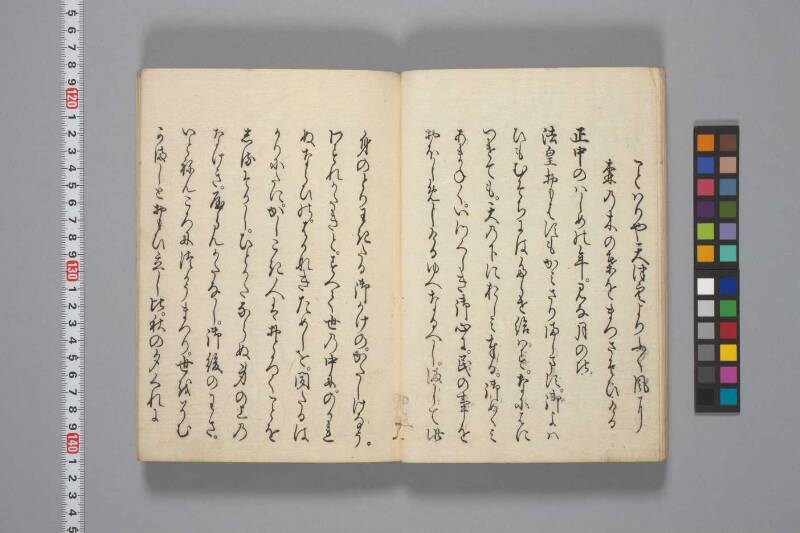
翻刻
【20コマ】
【右丁】
ことはりや天つ空よりふく風に
森の木の葉をまつさそひける
正中のはしめの年。見な月の比。
法皇おもはすもかみさりまします。御よは
ひもむそちにはたらせ給はす。なにはに
つけても。天の下におしみ奉る。御めくみ
あまねく。いつくしき御心に。民の事を
おほしめしけるゆへなるへし。まして此
【左丁】
身のとりわきたる御かけの。かたしけなう。
わすれかたきと。すへて世の中に。のかれ
ぬならひの。はかなきためしを。聞たるは
かりにたに。かしこき人はおとろくことを
しるそかし。ひとかたならぬ身の上の
なけき。やらんかたなし。御後のわさ。
いとねんころにつかうまつり。世をそむ
かましとおもひ立し比。秋の夕くれに
現代語訳
【右丁】
ことわりや 天つ空よりふく風に
森の木の葉を まず誘いけるよ
正中の初めの年、水無月(六月)の頃、法皇は思いがけずも崩御なさった。御齢もまだ六十には達しておられなかった。何につけても、天の下(天下の人々)が惜しみ申し上げるのは、御恵みが広く行き渡り、慈しみ深い御心で、民の事をお思いになっておられたゆえであろう。まして、この
【左丁】
身が格別に賜った御庇護の、もったいなくも忘れがたいこと——そもそも世の中に、逃れられない定めとして、はかない(死の)例を聞いたばかりでさえ、賢明な人は驚くことを知っている。ひとかたならぬわが身の上の嘆き、やるかたもない。御後の御法事を、まことに心を込めてお仕えし、世を捨てようと思い立ったころ、秋の夕暮れに——
英語訳
【Right Page】
*Kotowari ya / amatsusora yori / fuku kaze ni / mori no ko no ha wo / mazu sasoikeru*
(How fitting it is — that the wind blowing down from the heavenly sky should first entice away the leaves of the trees in the forest grove.)
In the first year of Shōchū, around the month of Minazuki (the sixth month), the Retired Emperor passed away unexpectedly. His Majesty had not yet reached the age of sixty. That all under heaven mourned his loss was surely because his benevolence had extended broadly and widely, and he had governed with a tender and compassionate heart, ever mindful of the welfare of the people. How much more so, then, for this
【Left Page】
humble self, who had been singled out for such particular and gracious patronage — a grace so deeply humbling and impossible to forget. In general, one knows that even the wisest of people are struck with shock upon merely hearing of a fleeting instance of that inevitable fate which none in this world can escape. The grief of one in circumstances such as mine is beyond measure, with nowhere to direct it. Having served with the utmost devotion and sincerity at the memorial rites following His Majesty's passing, and at the time when I resolved to renounce the world — on an autumn evening——