翻刻
【21コマ】
【右丁】
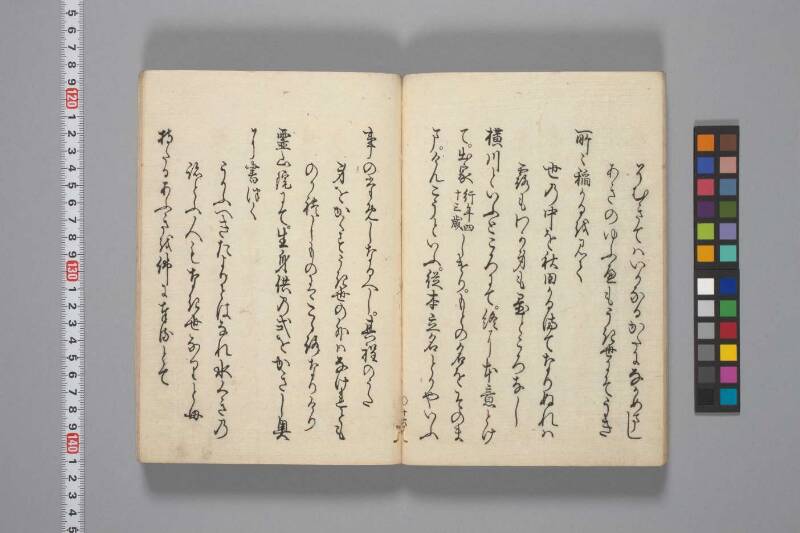
そむきてはいかなるかたになかめまし
あきのゆふへもうき世にそうき
所々稲かるを見て
世の中を秋田かるまてなりぬれは
露もわか身も置ところなし
横川といふところにて。終に本意とけ
て。出家《割書:行年四|十三歳》しけり。もとの名をそのま
ま。けんこうといふ。従本立名とかやいふ
【左丁】
事のためしなるへし。其程のうた
身をかくすうき世の外はなけれとも
のかれしものはこゝろなりけり
霊山院にて。生身供の式をかきし奥
に書つく
うかふへきたよりとはなれ水くきの
跡とふ人もなき世なりとも
持たるあふきを佛に奉るとて
現代語訳
【右丁】
背きては いかなる方に 眺めまし
秋の夕べも 憂き世にぞ憂き
(稲を刈っている様子を各所で見て)
世の中を 秋田刈るまで なりぬれば
露も我が身も 置き所なし
横川というところで、ついに本意を遂げ、出家(行年四十三歳)した。もとの名をそのまま用いて、「兼好」と称する。「従本立名(本に従いて名を立つ)」とかいう
【左丁】
事の例であろう。その頃の歌——
身を隠す 憂き世の外は なけれども
逃れしものは 心なりけり
霊山院にて、生身供の式を書きし奥に書き記す——
浮かぶべき 便りとはなれ 水茎の
跡訪ふ人も なき世なりとも
持っていた扇を仏に奉ろうとして——
英語訳
【Right Page】
*Somukite wa / ikanaru kata ni / nagamemashi / aki no yūbe mo / ukiyo ni zo uki*
(Having turned away from the world, in what direction shall I gaze? Even the autumn evening is dreary in this dreary world.)
(Upon seeing people harvesting rice in various places:)
*Yo no naka wo / akita karu made / narinureba / tsuyu mo waga mi mo / oki dokoro nashi*
(As the world has come to the point of harvesting the autumn fields, there is nowhere left for either the dew or my own self to rest.)
At a place called Yokawa, he at last fulfilled his long-held wish and entered the religious life (at the age of forty-three). He retained his original name as it was, calling himself "Kenkō." This is presumably an example of what is called *jūhon ryūmyō* — "establishing one's religious name on the basis of one's original name."
【Left Page】
From around that time, a poem:
*Mi wo kakusu / ukiyo no hoka wa / nakeredo mo / nogareshi mono wa / kokoro narikeri*
(Though there is no world outside this dreary world in which to hide oneself, what I have managed to escape is the heart that clings to it.)
Written at the end of a document recording the *shōshinku* (offering ceremony to a living image of the Buddha) at Reizanji Temple:
*Ukabu beki / tayori to wa nare / mizuguki no / ato tou hito mo / naki yo naritomo*
(Be thou a means by which I may be lifted up — even if this is a world where there is no one to seek out the traces left by my brush.)
Upon offering the fan he had been carrying to the Buddha——