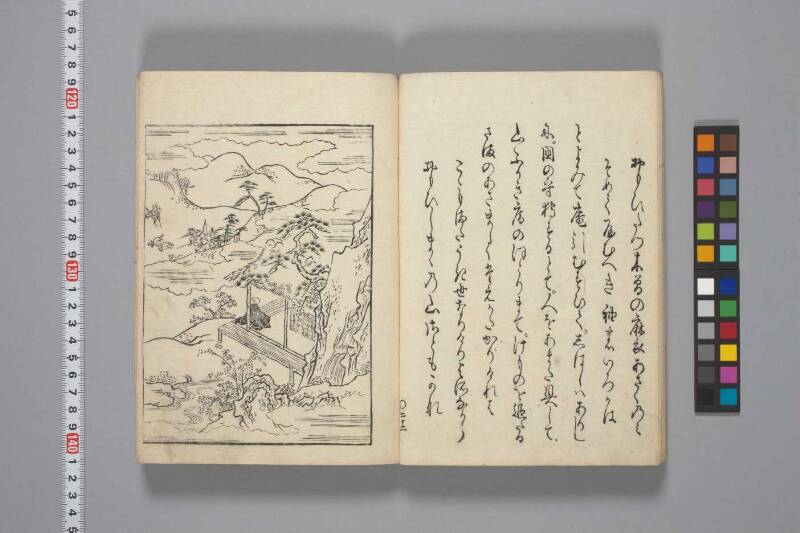
翻刻
【27コマ】
【左丁】
おもひたつ木曽の麻衣あさくのみ
そめてやむへき袖のいろかは
とよみて庵引むすひて。しはしはありし
に。国の守狩するとて。人をあまた具して。
山ふかき庵のほとりまて。けものを追たる
さまのあさましくたえかたかりけれは
こゝもまたうき世なりけりよ所なから
おもひしまゝの山さともかな
【左丁 絵のみ】
現代語訳
【左丁】
思ひ立つ木曽の麻衣浅くのみ
染めてやむべき袖の色かは
と詠んで、庵を結んでしばらくそこに過ごしていたところ、国の守(くにのかみ)が狩りをするとて、多くの人を引き連れて、山深い庵のあたりまで獣を追ってくる有様があまりにも騒がしく、堪えがたかったので——
ここもまたうき世なりけりよ所ながら
思ひしままの山里もかな
【左丁・絵のみ】
(絵のみ、本文なし)
英語訳
【Left Page】
He composed this poem:
*Omoi tatsu / Kiso no nunogoromo / asaku nomi / somete yamubeki / sode no iro ka wa*
(Having resolved to set forth, shall the sleeves of my hemp robe of Kiso be dyed only shallowly and then stop? — Surely not; my commitment to this mountain life runs deeper still.)
He then built a small hermitage and lived there for a time. But the provincial governor (国の守), having gone out hunting, brought a great number of people with him, and they came chasing game all the way to the vicinity of his remote mountain hermitage. The commotion was so dreadful and unbearable that he composed:
*Koko mo mata / ukiyo nari keri yo / tokoro nagara / omoishi mama no / yamazato mo kana*
(Even this place, too, is the sorrowful world — and yet it is a mountain village just as I had imagined it to be.)
【Left Page — Illustration only】
(Illustration only; no text.)