翻刻
【28コマ】
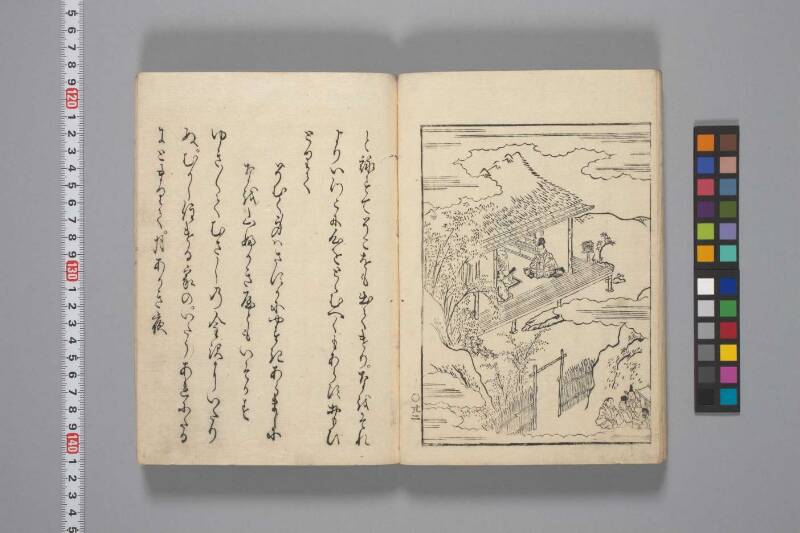
【右丁 絵のみ】
【左丁】
と詠すてそこをも出てけり。なをそれ
よりいつこに心をとゝむへくもあらすおもひ
とりて
そむく身はさすかにやすきあらましに
なを山ふかきやともいそかす
ゆき〳〵てむさしの金沢にいたり
ぬ。むかし住ける家の。いたうあれにたる
にとまりて。月あかき夜
現代語訳
【右丁・絵のみ】
(絵のみ、本文なし)
【左丁】
と詠んで、そこをも立ち去っていった。もはやどこに心を留めるべきところもないと思い定めて、
背く身はさすがにやすきあらましに
なお山深き宿もいそがず
(俗世に背を向けた身とはいえ、さすがに気楽な境遇を望む気持ちがないわけでもなく、それでもなお、山深い宿を急いで求めようともしない。)
と詠んで、どこへともなく歩き続け、武蔵の金沢にたどり着いた。かつて住んでいた家がひどく荒れ果てているのを見つけ、そこに泊まって、月の明るい夜に——
(以下次丁へ続く)
英語訳
【Right Page — Illustration only】
(Illustration only; no text.)
【Left Page】
Having composed this poem, he departed from that place as well. Feeling now that there was nowhere left in the world to which he could truly attach his heart, he resolved himself fully to wandering, and composed:
*Somuku mi wa / sasuga ni yasuki / aramashi ni / nao yamafukaki / yado mo isogazu*
(Though mine is a body that has turned its back upon the world, I cannot deny that I still harbor a longing for ease and comfort — and yet, even so, I do not hurry to seek out a lodge deep in the mountains.)
He walked on and on, until at last he arrived at Kanazawa in Musashi Province. He found the house in which he had once lived to be greatly fallen into ruin and decay, and there he lodged for the night. On a moonlit evening —
(Continued on the following page.)