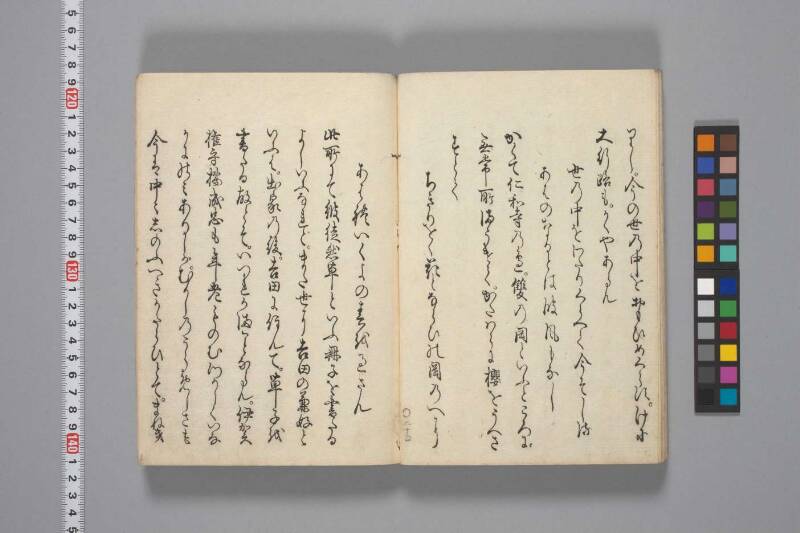
翻刻
【30コマ】
【右丁】
りし。今の世の中をおもひめくらす。けに
大行路も。かくやあらん
世の中をわたりくらへて今そしる
あはのなるとは波風もなし
かくて仁和寺の邊。雙の岡といふところに。
無常所まうけて。かたはらに櫻をうへさ
すとて
ちきりをく花とならひの岡のへに
【左丁】
あはれいくよの春を過さん
此所にて彼徒然草といふ冊子を書たる
よしいふなれど。また世に吉田の兼好と
いふは。出家の後。吉田に住んて。草子を
書たる故とそ。いつれかまことならん。伊賀
権守播成忠も年老ものむつかしくいな
かにのみありしが。むかしのうらめしさも
今は中々しのふへきかたらひとて。まねき
現代語訳
【右丁】
(舟路の旅も、波風の荒かりし)今の世の中をも思いめぐらすと、まことに大いなる人生の旅路も、さもあるらんと思われる。
世の中をわたりくらべて今ぞ知る
阿波の鳴門は波風もなし
(世の中の荒波と比べてみれば、今こそわかる——かの阿波の鳴門でさえ、波風などないも同然だと。)
こうして、仁和寺のあたり、双ヶ岡(ならびのおか)というところに、死後の住まい(墓所)を設けて、そのかたわらに桜を植えさせるとて、
ちぎりおく花とならびの岡のへに
【左丁】
あわれいくよの春を過ごさん
(あらかじめ約束しておいた花よ、ならびの岡のほとりに——ああ、いったい幾世の春を共に過ごすことになるだろうか。)
この場所で、かの『徒然草』という冊子を書いたと言われるけれど、また世に「吉田の兼好」と呼ばれるのは、出家の後に吉田に住んで草子を書いたからだとも言われる。どちらが真実であろうか。伊賀権守播成忠(はりなりただ)も、年老いてからは何かと煩わしいと思って田舎にのみこもっておられたが、昔の恨めしい思い出も今となってはかえって偲ぶべき語らいの種であるとして、(兼好を)招き——
(以下次丁へ続く)
英語訳
【Right Page】
(His travels by sea, too, amid rough winds and waves —) when he reflected upon the state of this world, it seemed to him that indeed the great journey of human life must be much the same.
*Yo no naka wo / watari kurabete / ima zo shiru / Awa no Naruto wa / namikaze mo nashi*
(Having compared my crossings of the rough seas of this world, now at last I understand — even the fearsome straits of the Naruto in Awa are nothing compared to the storms of life.)
And so, near Ninnaji, at a place called Narabinooka (the Hill of Companions), he had a resting place prepared for his death, and beside it he arranged for cherry trees to be planted, composing:
*Chigiri oku / hana to Narabi no / oka no he ni*
【Left Page】
*Aware iku yo no / haru wo sugosan*
(O cherry blossoms — I have made a promise with you here on the slopes of Narabinooka; ah, how many springs shall we spend together?)
It is said that it was in this place that he wrote the booklet known as *Tsurezuregusa*. On the other hand, the reason he is known in the world as "Yoshida no Kenkō" is said to be because, after taking holy orders, he lived in Yoshida and wrote the work there. Which account is true, one cannot say. Iga no Gonkami Harinari Tada, too, had grown old and, finding everything troublesome, had been living only in the countryside — but the old grievances and regrets had now become, on the contrary, something worth reminiscing and conversing about, and so he invited (Kenkō) —
(Continued on the following page.)