翻刻
【右丁】
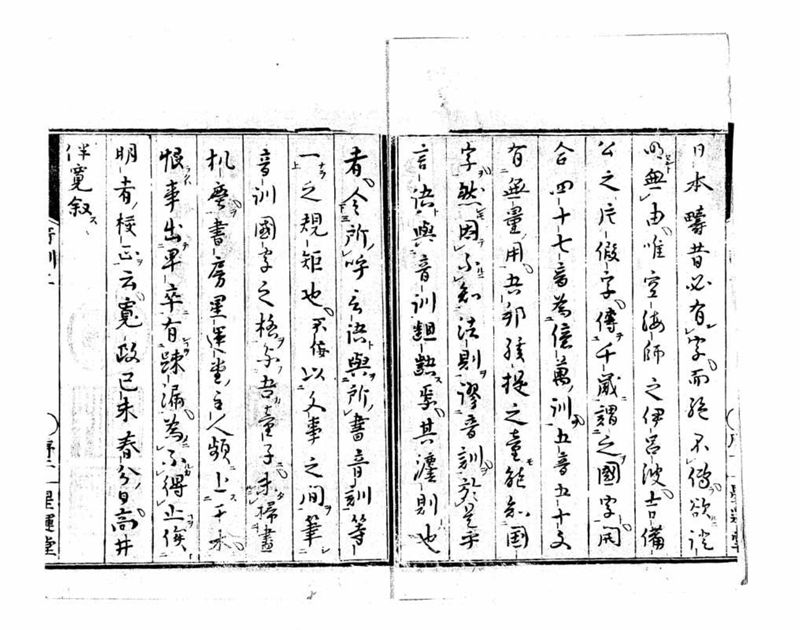
日-本疇昔必有 ̄シ_レ字。而絶不_レ伝 ̄ラ。欲 ̄ルニ証-
明 ̄セント無_レ由。唯空-海-師之伊-呂-波。吉-備-
公之片-假-字。伝 ̄テ_二千-歳 ̄ニ_一謂_二-之 ̄ヲ国字 ̄ト_一。開
合四-十-七-音為_二億-万 ̄ノ訓 ̄ヲ_一。五-音五-十-文
有_二無-量 ̄ノ用_一。吾-邦孩-提之童 ̄モ能知_二国-
字 ̄ヲ_一。然 ̄レトモ因 ̄テ_レ不 ̄ルニ_レ知_二法-則 ̄ヲ_一謬_二音訓 ̄ヲ_一。於_レ是乎
言-語 ̄ト与_二音-訓_一齟-齬 ̄ス焉。其灋-則 ̄トハ也
【左丁】
者。令_下三所 ̄ノ_レ呼言-語 ̄ト与 ̄ヲ_二所 ̄ノ書音-訓_一等-
一 ̄ナラ_上之規-矩也。《割書:不-侫》以_二文-事之間 ̄ヲ_一筆 ̄シ_二
音-訓国-字之格 ̄ヲ_一与 ̄フ_二吾 ̄カ童-子 ̄ニ_一。未( | ルニ) ̄タ_レ掃_二-尽
机-塵 ̄ヲ_一書-房星-運-堂 ̄ノ主-人頻 ̄ニ上 ̄ス_二于木 ̄ニ_一。
恨 ̄ラクハ事出 ̄テ_二早-卒 ̄ニ_一有 ̄シコトヲ_二疎-漏_一。為 ̄メニ_レ不 ̄ルカ_レ得_レ止 ̄コトヲ俟《送り仮名:■#1》_二
明-者 ̄ノ校-正 ̄ヲ_一云。寛-政己-未春-分 ̄ノ日。高井
伴寛叙 ̄ス
現代語訳
【右丁】
日本の遠い昔には、必ず固有の文字があったはずである。しかし(その文字は)全く伝わっていない。それを証明しようとしても、その手立てがない。ただ、空海師の「いろは」と、吉備公の片仮名とが千年の時を経て伝わり、これを「国字」と称する。(いろはの)開合四十七音は億万の訓(よみ)をなし、五音五十文字には無量の用がある。わが国では幼い子どもでも国字を知ることができる。しかしながら、その法則を知らないために音訓を誤ることがある。そこで、言語と音訓とが食い違ってしまうのである。その法則とは、
【左丁】
呼ぶところの言語と、書くところの音訓とを等しく一致させるための規矩(きまり・規則)である。不佞(わたくし)は、文事のかたわら、音訓国字の格(規則)を筆記して、わが童子たちに与えた。机の塵を払い尽くす間もないうちに、書房・星雲堂の主人がしきりに上木(出版)を促した。残念ながら、事が早急に出来したために疎漏(もれ落ち・誤り)があったことを恨めしく思う。止むを得ず、明識ある方々の校正を俟つばかりである。
寛政己未(つちのとひつじ)春分の日、高井伴寛、叙す。
英語訳
**[Right Page]**
In the distant past of Japan, there must certainly have been indigenous characters. Yet they have been lost entirely and are not transmitted to us. Though one might wish to prove this, there is no means by which to do so. Only Kūkai's *iroha* and the katakana of Lord Kibi have been transmitted across a thousand years and are called "national characters" (*kokuji*). The forty-seven open and closed syllables of the *iroha* give rise to countless readings (*kun*), and the fifty characters of the five-tone system possess inexhaustible uses. In our land, even a small child can come to know the national characters. And yet, because people do not know the rules (*hōsoku*) governing them, they commit errors in *on* and *kun* readings. It is for this reason that spoken language and written *on-kun* come into discord with one another. The rules in question are—
**[Left Page]**
—the standards (*kiku*) for making that which one speaks in language and that which one writes in *on-kun* readings equal and uniform. I, your unworthy servant, in the intervals of literary affairs, set down in writing *The Rules of On-Kun and National Characters* (*Onkun Kanazukai no Kaku*) and gave it to my young students. Before the dust had even been swept from my desk, the proprietor of the publishing house Seiundō pressed me repeatedly to have it cut onto woodblocks for printing. I regret that, as the matter arose in such haste, there are omissions and errors. As I cannot help but proceed, I shall await the corrections of those of discerning knowledge.
On the day of the Spring Equinox, in the *己未* year of Kansei [1799], I, Takai Bankan, write this preface.