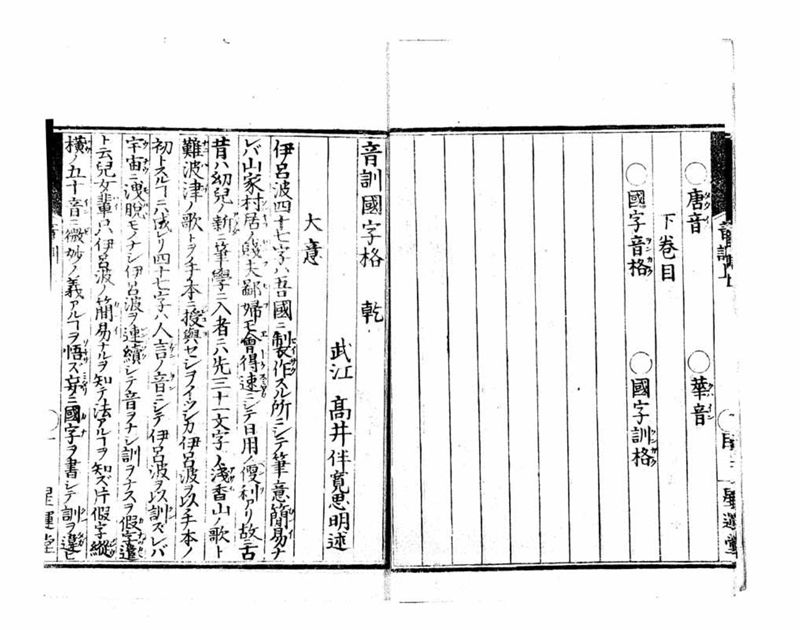
翻刻
【右丁】
○唐音(タウイ) ○華音(クハイン)
下巻目
○国字 音格(ヲンカク) ○国字 訓格(クンカク)
【左丁】
音訓国字格 乾
武江 髙井伴寛思明述
伊呂波四十七字ハ吾国ニ製作(セイサク)スル所ニシテ筆意 簡易(カンイ)ナ
レバ山家 村居(ソンキヨ)ノ賎夫(センフ)鄙婦(ヒフ)モ会得(ヱトク)速(スミヤカ)ニシテ日用ノ便利(ベンリ)アリ故ニ古
昔ハ幼児ノ新(アラタ)ニ筆学ニ入者ニハ先三十一文字ノ朝香(アサカ)山ノ歌ト
難波津(ナニハツ)ノ歌トヲ手本ニ授与(シユヨ)セシヲイツシカ伊呂波ヲ以手本ノ
初トスルコトニハ成レリ四十七字ハ人 言(ゲン)ノ音(ヲン)ニシテ伊呂波ヲ以 訓(クン)スレバ
宇宙(ウチウ)ニ洩脱(モルヽ)モノナシ伊呂波ヲ連続(レンゾク)シテ音ヲナシ訓ヲナスヲ仮字遣(カナヅカヒ)
ト云児女 輩(ハイ)只伊呂波ノ簡易(カンイ)ナルヲ知テ法アルコトヲ知ズ片仮字 縦(ジウ)
横(ワウ)の五十 音(イン)に微(ビ)妙ノ義アルコトヲ悟(サトサ)ズ妄(ミタリ)ニ国字(カナ)ヲ書シテ訓(クン)ヲ違(タガ)ヒ
現代語訳
【右丁】
○唐音(とういん) ○華音(かいん)
下巻目次
○国字音格(こくじおんかく) ○国字訓格(こくじくんかく)
【左丁】
音訓国字格 乾(上冊)
武江 髙井伴寛思明述
伊呂波四十七字は、わが国で作られたものであり、筆法が簡単で覚えやすいため、山里や村に住む身分の低い男女でも速やかに習得でき、日常生活に便利である。それゆえ、古くは幼い子どもが初めて習字を始める際には、まず三十一文字の「朝香山の歌」と「難波津の歌」を手本として与えていたが、いつの間にか伊呂波をもって手本の最初とすることになった。四十七字は人の言葉の音(おん)であり、伊呂波によって訓(くん)を読めば、宇宙(この世)に漏れ落ちるものは何もない。伊呂波を連続させて音を成し訓を成すことを「仮名遣い」という。子どもや女性などは、ただ伊呂波が簡単で覚えやすいことだけを知って、そこに法則があることを知らず、片仮名の縦横の五十音に微妙な意義があることを悟らず、みだりに仮名を書いて訓を誤り、
英語訳
【Right Folio】
○ Tang-on (Chinese Readings in Tang Style) ○ Hua-on (Chinese Readings in Hua Style)
Table of Contents, Lower Volume
○ Rules for On Readings of National Characters ○ Rules for Kun Readings of National Characters
【Left Folio】
Onkun Kokujikaku — *Ken* (Upper Volume)
Composed by Takai Bankan Shimei of Bukō (Edo)
The forty-seven characters of the Iroha were created in our country. Because their written form is simple and easy to learn, even men and women of humble station living in mountain villages and rural settlements can acquire them quickly, making them convenient for daily use. For this reason, in ancient times, when young children first began the study of writing, they were given as their models the thirty-one-syllable poem of Mount Asaka and the poem of Naniwa-zu. Yet somewhere along the way, it became the custom to begin with the Iroha as the first model for learners. The forty-seven characters represent the sounds (*on*) of human speech, and by reading them as *kun*, nothing in the universe is left uncovered. The successive combination of Iroha characters to form sounds and readings is called *kanazukai* (kana orthography). Children and women know only that the Iroha is simple and easy to learn, yet they do not know that it contains rules; they fail to perceive the subtle significance contained in the vertical and horizontal arrangement of the fifty sounds of katakana. They write kana carelessly, making errors in readings (*kun*), and—