翻刻
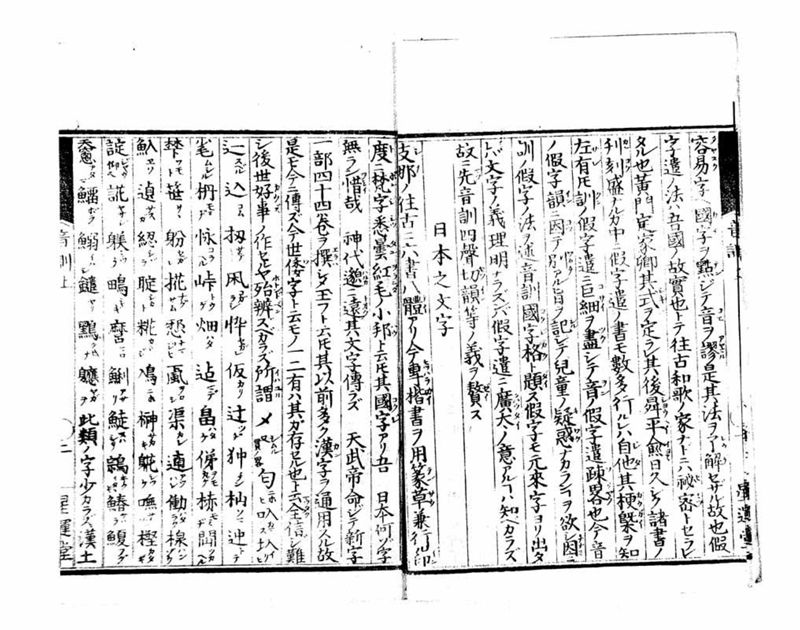
容易(タヤスク)字へ國字(カナ)ヲ點(テン)ジテ音(コエ)ヲ謬(アヤマル)是其法ヲ了解(レウケ)セザル故也假
字遣ノ法ハ吾國ノ故實也トテ往古和歌ノ家ナドニハ秘密(ヒミツ)トセラレ
タル黄門定家卿其 式(しき)ヲ定ラレ其後 昇平(シヨウヘイ)愈(イヨ〳〵)日久シク諸書ノ
刋刻(カンコク)盛ナルカ中ニ假字遣ノ書モ數多行ルレハ自他(ジタ)其 梗槩(カウガイ)ヲ知
左有(サレ)トモ訓(クン)ノ假字遣ニ巨細(コサイ)ヲ盡(ツク)シテ音(ヲン)ヲ假字遣 疎畧(ソリヤク)也今音
ノ假字 韻(イン)ニ因(ヨツ)テ別(ワカチ)アル旨ヲ記(シル)シテ兒童ノ疑惑(キワク)ナカランヿヲ欲シ因(チナミ)ニ
訓ノ假字ノ法ヲ述音訓 國字格(コクジカク)ト題(ダイ)ス假字モ元来字ヨリ出タ
レバ文字ノ義理明ナラズンバ假字遣ニ廣太(クハウタイ)ノ意アルヿハ知ベカラズ
故ニ先(マツ)音訓四聲 切韻(セツイン)等ノ義ヲ贅(ゼイ)ス
日本之文字
支那(シナ)ノ往古ニ六書八 體(テイ)アリ今 専(モツハラ)楷(カイ)書ヲ用 篆(テン)草(サウ)兼行ル印(イン)
度(ト)ニ梵字(ボンジ)悉曇(シツタン)紅毛(ヲランダ)ノ小 邦(ハウ)ト云トモ其 國字(コクジ)アリ吾 日本何ゾ字
無ラン惜(ヲシイ)哉 神代 邈(ハルカ)ニ遠(トオク)其文字傳ラズ 天武帝命ジテ新字
一部四十四巻ヲ撰(エラハ)シメ玉フト云トモ其以前多ク漢(カン)字ヲ通用スル故
是モ今ニ傳ズ今世 倭(ワ)字ト云モノ一二有ハ其ガ存セル也ト云 全(マツタク)信ジ難
シ校正 好事(カウズ)ノ作セルヤ殆(ホトンド)辨(ベン)ズベカラズ所謂(イハユル)〆《割書:シムル|又|貫ノ畧》匂《割書:ニホ| ヒ》叺《割書:カマ| ス》圦《割書:イ|リ|ヒ》
辷《割書:スベル》込《割書:コム》扨《割書:サテ》凩《割書:コガ| ラシ》伜《割書:セガレ》仮《割書:カリ》辻《割書:ツヂ》狆《割書:チン》杣《割書:ソマ》迚《割書:ト|テ》
毟《割書:ムシル》枬《割書:モミ| ヂ》怺《割書:コラ| ヘル》峠《割書:トウ|ゲ》畑《割書:ハタ》迠《割書:マデ》畠《割書:ハタ| ケ》俤《割書:オモ|カケ》𪲒《割書:モミ| ヂ》閊《割書:ツカ| ヘル》
梺《割書:フト| モ》笹《割書:サヽ》躮《割書:セガ| レ》𢯘《割書:ナグ|サム》■#1《割書:ナマ|ジヒ》颪《割書:ヲロ| シ》渠《割書:カレ》遖《割書:アツ|パレ》働《割書:ハタ|ラク》楾《割書:ハン|ゾウ》
魞《割書:ヱリ》遉《割書:サス| ガ》綛《割書:シヾ| ラ》聢《割書:シカ| ト》糀《割書:カウ| ジ》鳰《割書:ニホ》榊《割書:サカ| キ》𬧧《割書:シツ| ケ》嘸《割書:サ|ゾ》樫《割書:カタ| ギ》
諚《割書:ジヤウ|仰也》誮《割書:ヤサシ》躾《割書:シツ| ケ》鴫《割書:シギ》麿《割書:マロ》鯏《割書:アサ| リ》鯐《割書:スハ|シリ》鶎《割書:キク|イタヽ|キ》鰆《割書:サハ| ラ》鰒《割書:フグ》
■#2《割書:アタ| マ》鰡#3《割書:ボラ》鰯《割書:イハ| シ》鑓《割書:ヤリ》■#4《割書:クロ#5| ナ》軈《割書:ヤガ| テ》此類ノ字少カラズ漢土
現代語訳
(前ページより続き)容易に文字に仮名を振って読み(音)を誤る。これはその法則を理解していないからである。仮名遣いの法は我が国の古来の慣例であるとして、往古、和歌の家などでは秘密とされていた。黄門定家卿がその式を定められ、その後、太平の世がいよいよ長く続き、諸書の出版が盛んになる中で、仮名遣いの書も数多く世に流布したため、人々はおおよその概要を知るようになった。しかしながら、訓の仮名遣いについては細かく詳しく記されているのに、音の仮名遣いは疎略である。そこで今、音の仮名が韻によって区別がある旨を記して、児童が疑惑を持たないようにしたいと思い、あわせて訓の仮名の法をも述べ、「音訓国字格」と題する。仮名ももともとは漢字から出たものであるから、文字の義理が明らかでなければ、仮名遣いに広大な意義があることは知りがたい。それゆえまず、音訓・四声・切韻などの義を詳しく述べる。
日本の文字
支那の古代には六書・八体があり、今は専ら楷書を用い、篆書・草書も兼ねて行われている。インドには梵字・悉曇があり、オランダのような小国であっても、その国字がある。我が日本にどうして文字がないことがあろうか。惜しいことに、神代ははるかに遠く、その文字は伝わっていない。天武帝が命じて新字一部四十四巻を撰ばせたとも言われるが、それ以前から多く漢字が通用していたためか、これも今には伝わっていない。今の世に「倭字(和字)」と呼ばれるものが一つ二つあるのは、それが残存しているものだと言うが、全く信じがたい。後から校正好事の者が作ったものかどうか、ほとんど判別しがたい。いわゆる〆(しめる、また「貫」の略)・匂(にほひ)・叺(かます)・圦(いりひ)・辷(すべる)・込(こむ)・扨(さて)・凩(こがらし)・伜(せがれ)・仮(かり)・辻(つぢ)・狆(ちん)・杣(そま)・迚(とて)・毟(むしる)・枬(もみぢ)・怺(こらへる)・峠(とうげ)・畑(はた)・迠(まで)・畠(はたけ)・俤(おもかげ)・𪲒(もみぢ)・閊(つかへる)・梺(ふともと)・笹(ささ)・躮(せがれ)・𢯘(なぐさむ)・■(なまじひ)・颪(おろし)・渠(かれ)・遖(あっぱれ)・働(はたらく)・楾(はんぞう)・魞(ゑり)・遉(さすが)・綛(しぢら)・聢(しかと)・糀(かうじ)・鳰(にほ)・榊(さかき)・𬧧(しつけ)・嘸(さぞ)・樫(かたぎ)・諚(じやう・仰也)・誮(やさし)・躾(しつけ)・鴫(しぎ)・麿(まろ)・鯏(あさり)・鯐(すはしり)・鶎(きくいたたき)・鰆(さはら)・鰒(ふぐ)・■(あたま)・鰡(ぼら)・鰯(いはし)・鑓(やり)・■(くろな)・軈(やがて)、この類の字は少なくなく、漢土(中国)に
英語訳
(Continued from previous page) —and carelessly attach kana readings to characters, thereby corrupting the sounds. This is because they have not grasped the underlying rules. The rules of *kanazukai* (kana orthography) were regarded as ancient customs of our country, and were once kept as closely guarded secrets in households devoted to Japanese poetry (*waka*). Lord Kamon Teika established its formulations, and thereafter, as the era of peace continued ever longer and the printing of various books flourished, works on *kanazukai* also circulated widely, allowing people generally to become acquainted with their broad outlines. However, while the *kanazukai* for *kun* readings has been treated exhaustively, the *kanazukai* for *on* (Chinese-derived) readings has been treated with neglect. I therefore set down here the principle that the *on* readings of kana are distinguished according to their rhymes (*in*), wishing that children may be freed from confusion; and at the same time, I describe the rules of *kun* readings of kana, entitling the work *Onkun Kokujikaku* (Rules for On and Kun National Characters). Since kana too ultimately derives from characters, one cannot know the profound significance of kana orthography without first having a clear understanding of the principles of the written characters. For this reason, I first elaborate upon the meanings of *on* and *kun* readings, the four tones, *fanqie* (切韻) and related matters.
On the Characters of Japan
In ancient China, there were the Six Categories of Writing (*liushu*) and Eight Script Styles (*bati*). Today, regular script (*kaisho*) is predominantly used, with seal script (*tensho*) and cursive script (*sōsho*) also employed alongside it. India has *bonji* (Brahmic script) and *Siddham*; even a small nation like the Netherlands has its own national script. How could our Japan have no characters of its own? Regrettably, the age of the gods is so far removed from us that its characters have not been transmitted. It is said that Emperor Tenmu commanded the compilation of a new script in one work of forty-four volumes, yet because Chinese characters were already widely in use prior to that time, this too has not been transmitted to our day. The one or two things in the present age called *waji* (Japanese characters) are said to be surviving remnants of those scripts, but this is entirely difficult to believe. Whether they were fabricated later by meticulous antiquarians is nearly impossible to determine. The so-called characters of this kind include: 〆 (*shimeru*, also an abbreviation of *kan* 貫); 匂 (*nioi*); 叺 (*kamasu*); 圦 (*irihi*); 辷 (*suberu*); 込 (*komu*); 扨 (*sate*); 凩 (*kogarashi*); 伜 (*segare*); 仮 (*kari*); 辻 (*tsuji*); 狆 (*chin*); 杣 (*soma*); 迚 (*tote*); 毟 (*mushiru*); 枬 (*momiji*); 怺 (*koraeru*); 峠 (*tōge*); 畑 (*hata*); 迠 (*made*); 畠 (*hatake*); 俤 (*omokage*); 𪲒 (*momiji*); 閊 (*tsūkaeru*); 梺 (*futomoto*); 笹 (*sasa*); 躮 (*segare*); 𢯘 (*nagusamu*); ■ (*namajii*); 颪 (*oroshi*); 渠 (*kare*); 遖 (*appare*); 働 (*hataraku*); 楾 (*hanzō*); 魞 (*eri*); 遉 (*sasuga*); 綛 (*shijira*); 聢 (*shikato*); 糀 (*kōji*); 鳰 (*nio*); 榊 (*sakaki*); 𬧧 (*shitsuke*); 嘸 (*sazo*); 樫 (*katagi*); 諚 (*jō*, meaning "command"); 誮 (*yasashi*); 躾 (*shitsuke*); 鴫 (*shigi*); 麿 (*maro*); 鯏 (*asari*); 鯐 (*suwashiri*); 鶎 (*kikuitadaki*); 鰆 (*sawara*); 鰒 (*fugu*); ■ (*atama*); 鰡 (*bora*); 鰯 (*iwashi*); 鑓 (*yari*); ■ (*kurona*); 軈 (*yagate*). Characters of this type are not few, and in China—