翻刻
【右丁】
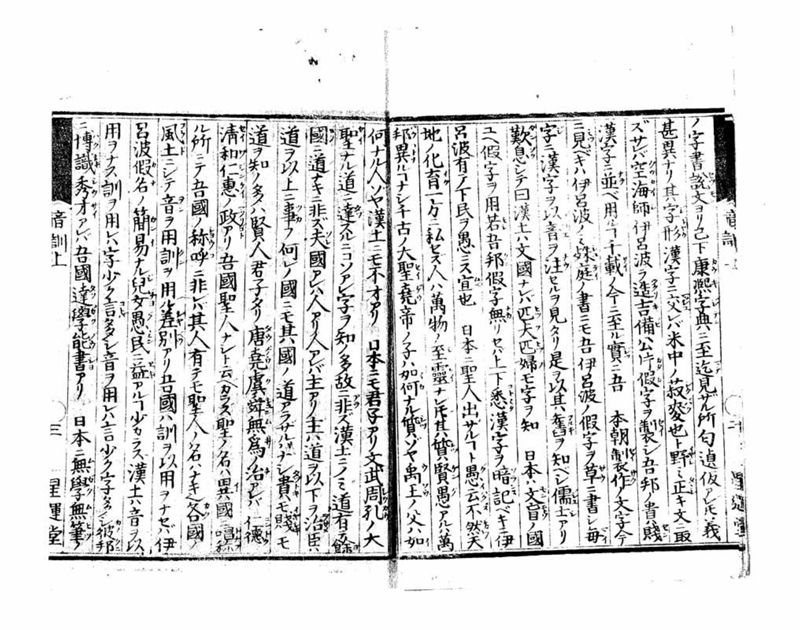
ノ字書 説文(セウモン)ヨリ已下 康煕字典(カウキジテン)ニ至 迄(マテ)見ザル所匂遉仮アレトモ義
甚異ナリ其 字形(ジギヤウ)漢字ニ交(マジユ)レバ米中ノ菽麦(シクバク)也ト野(イヤシ)ミ正(タヽシ)キ文ニ取
ズサレバ空海師(クウカイシ)伊呂波ヲ造(ツクリ)吉備(キビ)公 片仮(カタカ)字ヲ製(セイ)シ吾邦ノ貴 賎(セン)
漢字ニ並(ナラ)ベ用ルコト千 載(サイ)ノ今ニ至ル実(ジツ)ニ吾 本朝 製作(セイサク)ノ文字今
ニ見(ミツ)ベキハ伊呂波ノミ殊庭(シユテイ)ノ書ニモ吾伊呂波ノ仮字ヲ草(サウ)ニ書シ毎(マイ)
字(ジ)ニ漢字ヲ以 音(コエ)ヲ注(チウ)セルヲ見タリ是ヲ以其 古(フルキ)ヲ知ベシ儒士(ジユシ)アリ
歎息(タンソク)シテ曰漢土ハ文国ナレバ匹夫(ヒツフ)匹婦(ヒツフ)モ字ヲ知 日本ハ文盲(モンモウ)ノ国
ユへ仮字ヲ用 若(モシ)吾 邦(クニ)仮字 無(ナカ)リセバ上下 悉(コト〱ク)漢字ヲ暗記(ソランス)ベキニ伊
呂波有テ下民ヲ愚ニス宜(ムベ)也 日本ニ聖人出ザルコトト愚(グヽ)云(イハク)不(ズ)然(シカラ)天
地ノ化 育(イク)一方ニ私セズ人ハ万物ノ至霊(シレイ)ナレトモ其 質(シツ)賢愚(ケング)アルハ万
邦(ハウ)異(コトナ)ルコトナシ千古ノ大 聖(セイ)尭(ゲウ)帝ノ子ハ如何(イカ)ナル質(シツ)ゾヤ禹王(ウワウ)ノ父ハ如(イ)
【左丁】
何ナル人ゾヤ漢土ニモ不才アリ 日本ニモ君子アリ文武 周孔(シウカウ)ノ大
聖(セイ)ナル道ニ達(タツ)スルニコソアレ字ヲ知ノ多故ニ非(アラ)ズ漢土ニノミ道有テ余(ヨ)
国(コク)ニ道ナキニ非ズ夫(ソレ)国アレハ人アリ人アレバ主アリ主ハ道ヲ以下ヲ治(ヲサメ)臣ハ
道ヲ以上ニ事(ツカ)フ何レノ国ニモ其国ノ道アラザルハナシ貴(タツトキ)モ賎(イヤシキ)モ
道ヲ知ノ多ハ賢人君子タリ唐(タウ)尭(ゲウ)虞(ク)舜(シユン)無為(ムヰ)ノ治(チ)アレバ 仁徳(ニントク)
清和(セイワ)仁恵(ジンケイ)ノ政(マツリゴト)アリ吾国聖人ナシト云ベカラズ聖ノ名ハ異(イ)国ニ唱称(トナフ)
ル所ニテ吾国の称呼(シヨウコ)ニ非レバ其人有テモ聖人ノ名ハナキ也 各(カク)国ノ
風土(フウド)ニシテ音(ヲン)ヲ用 訓(クン)ヲ用ル差別(シヤベツ)アリ吾国ハ訓ヲ以用ヲナセバ伊
呂波 仮名(カナ)ノ簡易(カンイ)ナル児女(ジチヨ)愚民(グミン)ニ益(ヱキ)アルコト少カラズ漢土ハ音ヲ以
用ヲナス訓ヲ用レハ字少ク言(コトバ)多シ音ヲ用レハ言少ク多シ彼邦(カノクニ)
ニ博識(ハクシキ)秀才(シウサイ)アレバ吾国 達学(タツガク)能書(ノウシヨ)アリ 日本ニ無学(ムガク)無筆(ムヒツ)ノ
現代語訳
(前ページより続き)字書『説文』以来『康煕字典』に至るまで見られないものである。匂・遉・仮なども(漢字の中に)あるが、意味がまったく異なる。その字形が漢字に交じれば、米の中の豆や麦のようだとして卑しまれ、正式な文章には用いられない。それゆえ、空海師が伊呂波を作り、吉備公が片仮名を製して、我が国の貴賤を問わず漢字と並べて用いること、千年の今に至っている。実に、我が本朝が製作した文字として今に見ることができるのは伊呂波のみである。殊庭の書にも、我が伊呂波の仮名を草書に書き、各字に漢字をもって音を注したものを見たことがある。これによってその古さを知るべきである。ある儒者が嘆息して言った。「漢土は文字の国であるから、身分の低い男女でも字を知っている。日本は文盲の国であるから仮名を用いる。もし我が国に仮名がなければ、上下すべての者が漢字を暗記するはずであったのに、伊呂波があるために下々の民を愚かにしている。日本に聖人が出ないことも宜なるかな。」と。私(愚)は言う、然らず。天地の化育は一方に偏らず、人は万物の至霊であるけれども、その資質に賢愚があるのは万国変わりがない。千古の大聖である堯帝の子はいかなる資質であったか。禹王の父はいかなる人物であったか。漢土にも不才の者があり、日本にも君子がある。文武・周公・孔子のような大聖人の道に達するのは、字を知る者が多いからではない。漢土にのみ道があって他国に道がないわけではない。それ、国があれば人がいて、人があれば主がいる。主は道をもって下を治め、臣は道をもって上に仕える。どの国にも、その国の道がないことはない。貴い者も賎しい者も、道を知る者が多ければ、賢人君子である。唐の堯・虞の舜に無為の治があるならば、(日本の)仁徳・清和・仁恵の御政治がある。我が国に聖人なしとは言うべきでない。「聖」の名は異国において唱えられるものであって、我が国の称呼ではないから、その人がいても「聖人」の名はないのである。各国の風土によって、音を用いる・訓を用いるという差別(区別)がある。我が国は訓をもって用を成すから、伊呂波・仮名の簡易なることが、児女・愚民に益があること少なくない。漢土は音をもって用を成す。訓を用いれば字が少なく言葉が多い。音を用いれば言葉が少なく(字が)多い。かの邦に博識・秀才があれば、我が国には達学・能書がある。日本に無学・無筆の(者が)
英語訳
(Continued from previous page) —these characters are not found in any character dictionary from *Shuowen* (*Setsumon*) onward, up to and including the *Kangxi Zidian* (*Kōki Jiten*). Characters such as 匂, 遉, and 仮 do appear in Chinese dictionaries, but their meanings are entirely different. When such character forms appear mixed among Chinese characters, they are looked down upon as beans or barley among rice—something out of place—and are not accepted into proper writing. Therefore, the Priest Kūkai created the *iroha* syllabary, and Lord Kibi devised *katakana*, and since that time, our country's people, high and low alike, have used these alongside Chinese characters; this practice continues to the present day, a thousand years later. Truly, the only characters created by our own nation that can be seen today are the *iroha*. Even in the text of *Shotei* (*Shūtei*), I have seen our *iroha* kana written in cursive style with Chinese characters annotating the sounds of each character. From this, one should recognize their antiquity.
A certain Confucian scholar lamented, saying: "Since China is a land of writing, even the common man and woman know their characters. Japan is a land of illiteracy, which is why kana are used. Had there been no kana in our country, all people, high and low, would have been obliged to memorize Chinese characters; but because the *iroha* exists, the common people are kept in ignorance. It is only natural that no sages have appeared in Japan."
To this I (the fool) say: Not so. The transforming and nourishing work of Heaven and Earth shows no partiality to any one direction. Though humans are the most spiritually endowed of all living things, variations in individual capacity for wisdom and folly are no different across ten thousand nations. What sort of capacity did the sons of the great sage Emperor Yao of the ancient past possess? What sort of man was the father of King Yu? China too has its untalented men, and Japan too has its exemplary persons (*kunshi*). To attain the great Way of sages such as Kings Wen and Wu, the Duke of Zhou, and Confucius is not merely because more people know how to write. It is not that the Way exists only in China and not in other countries. Where there is a country, there are people; where there are people, there is a ruler; the ruler governs those below through the Way, and the minister serves those above through the Way. There is no country that lacks the Way proper to itself. Whether noble or humble, those who understand the Way in great numbers are worthy persons and exemplary individuals (*kunshi*). If China had the governance of non-action (*wuwei*) under Tang Yao and Yu Shun, then Japan had the benevolent rule of Emperors Nintoku, Seiwa, and Jinkei. One cannot say that our country has no sages. The term "sage" (*seijin*) is a designation used in foreign lands; since it is not a term of our own country's parlance, even if such a person existed, they would not bear the title of "sage."
There are differences in usage according to the climate and customs (*fūdo*) of each country—whether *on* (Chinese-derived) readings or *kun* (native Japanese) readings are employed. Since our country makes use of *kun* readings, the simplicity of the *iroha* kana is of no small benefit to women and children, and to the common people. China makes use of *on* readings. If *kun* readings are used, characters are few but words are many; if *on* readings are used, words are few but (characters) are many. If that country has its learned scholars and brilliant talents, then our country has its accomplished scholars and skilled calligraphers. In Japan, those without learning or without skill in writing—