翻刻
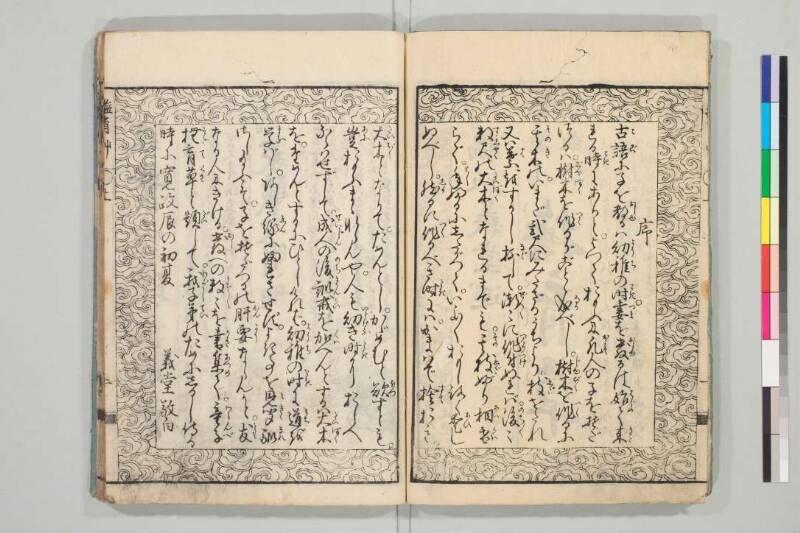
序
古語(こご)に子を教(おしゆ)るは幼稚(ようち)の時(とき)。妻(つま)を教(おしゆ)るは始(はじめ)て来(きた)
れる時(とき)にありと。よつておもふに凡(およそ)人の子をそだ
つるは。樹木(じゆぼく)を作(つく)るがごとく成(なる)べし。樹木(じゆぼく)を作(つく)るに
其木(そのき)の。いまだ弐尺にみたざるうちより。枝(ゑだ)をたれ
又は葉(は)をすかし抔(など)して。漸々(ぜん〳〵)に作付(つくりつけ)ぬれば。後々(のち〳〵)
数尺(すうしやく)の大木(たいぼく)となれるまでも。其枝(そのえだ)ぶり相替(あいかは)
らで。年(とし)ふるにしたがつて。いよ〳〵おもしろく愛(あひ)し
ぬべし。然(しか)るに作(つく)るべき時(とき)には。かまはで捨(すて)おき。
大木(たいぼく)となりて。ためんとし。かゞめむと欲(ほつ)すとも。
豈(あに)おもふまゝならんや。人も幼(いとけな)き時(とき)におしへ
ならはせずして。成人(せいじん)の後(のち)訓戒(きんかい)を加(くは)へんとするは大木(たいぼく)
を。ためんとするにひとしければ。幼稚(ようち)の時(とき)に道(みち)を
学(まな)ばし。あしき縁(ゑん)にふれさせず。よき事を見聞馴(みきくなれ)
さし給ふこそ。子をそだつるの肝要(かんよう)ならんかと。友(とも)
なる人にきける。教(おし)への数々(かず〳〵)を書集(かきあつめ)て。童子(わらんべ)
撫育草(そだてくさ)と題(だい)して。我子弟(わがしてい)のためにしるし伝る
時に寛政辰の初夏 義堂敬白
現代語訳
序
古語に「子を教えるのは幼稚の時、妻を教えるのは初めて来た時である」とある。よって思うに、およそ人の子を育てるのは、樹木を作るようなものであろう。樹木を作るのに、その木がまだ二尺にも満たないうちから、枝を垂らし、また葉を透かすなどして、だんだんに作り付ければ、後々数尺の大木となってまでも、その枝ぶりは変わらず、年を経るにしたがって、いよいよ面白く愛すべきものとなるであろう。しかるに作るべき時には構わずに捨て置き、大木となってから矯めようとし、曲げようと欲したとしても、どうして思うままになるだろうか。人も幼い時に教え慣らさずして、成人の後に訓戒を加えようとするのは、大木を矯めようとするのと同じであるから、幼稚の時に道を学ばせ、悪い縁に触れさせず、良いことを見聞きして慣れさせてあげることこそ、子を育てる肝要であろうかと。友である人に聞いた、教えの数々を書き集めて、「童子撫育草」と題して、我が子弟のために記し伝える。
時に寛政辰の初夏 義堂敬白
英語訳
Preface
An ancient saying states: "Teach a child in its infancy; teach a wife when she first arrives." Therefore, I believe that raising a human child should be like cultivating a tree. When cultivating a tree, if from the time when it has not yet reached two feet in height, one trains the drooping of branches and the thinning of leaves, gradually shaping it, then even after it becomes a large tree of several feet, its branch formation will remain unchanged, and as the years pass, it will become increasingly interesting and loveable. However, if one neglects it during the time when it should be shaped, and then tries to straighten and bend it after it has become a large tree, how could this possibly go as one wishes? With people too, if one does not teach and train them in childhood, attempting to add moral instruction after they have reached adulthood is the same as trying to straighten a large tree. Therefore, the essential point of child-rearing is to have them study the Way during their tender years, not let them be exposed to bad influences, and allow them to become accustomed to seeing and hearing good things. I have collected various teachings that I heard from friends, titled them "Children's Nurturing Grass" (Dōji Buikusō), and recorded them for the benefit of my own children and disciples.
Written in early summer of Kansei, Year of the Dragon Gidō, respectfully written