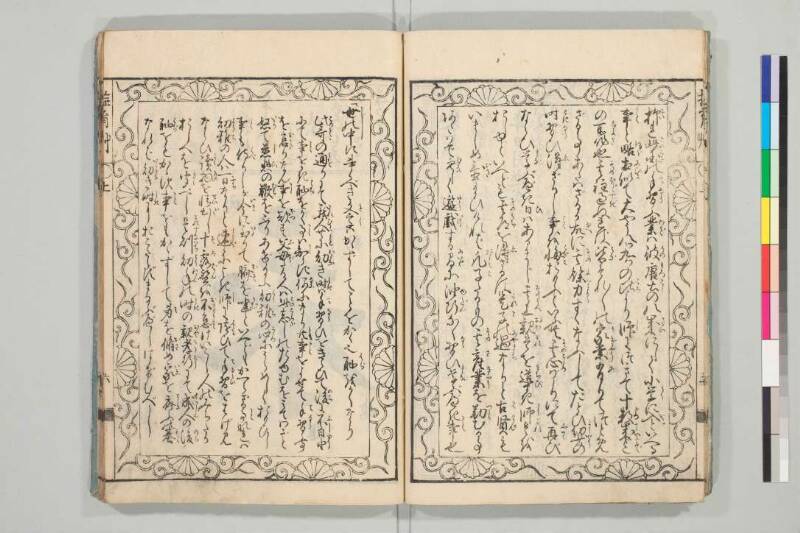
翻刻
【右頁】
抑(そ)れ此国(このくに)の手習(てなら)ふ業(わざ)は彼(かの)唐土(もろこし)の八 歳(さい)にして小 学(かく)に入(いる)といへる
事(こと)と略(ほゞ)相似(あひに)て大やう八っ九っの比(ころ)より師(し)につきて十 数(じう)歳(さい)迄(まで)【「数」の振り仮名脱】
の所作(しよさ)也 其(その)程(ほど)過(すぎ)ぬれば皆(みな)それ〳〵の家業(かぎやう)有(あ)りてつとめ
ざる事あたはざるか故(ゆへ)に其(その)余力(よりよく)すくなふしてたとひ幼少(ようせう)の
時(とき)習(なら)ひ得(ゑ)ざりし事(こと)を悔(くやみ)おもふといふ共 其心(そのこゝろ)がらにて再(ふたゝ)び
ならひ学(まな)ぶべき日(ひ)はあるまじ其上(そのうへ)親(おや)是(これ)を導(みちび)き師(し)是(これ)を
おしゆといへども其道(そのみち)を得(ゑ)ざるは是(これ)子(こ)の過(あやまち)なりと古賢(こけん)も
いましめ置(おき)給ひければ凡(およそ)子(こ)たるもの其(その)産業(さきやう)を勤(つと)むる事
あたはで空(むな)しく遊戯(ゆうげ)する間(あいだ)に油断(ゆだん)なく習(なら)ひ学(まな)べき事(こと)也
【左頁】
〽世の中に書くべき文字(もじ)はかゝずしてことをかく也 恥(はぢ)をかくなり
此哥(このうた)の通(とを)りにて我(われ)人共(ひととも)に幼(おさな)き時(とき)は手習(てなら)ひをきらひて後(のち)に不自由(ふじゆう)
にて事(こと)をかき恥(はぢ)をかく事(こと)は知(し)らず何(なに)になり共(とも)事(こと)をよせて手習(てなら)ふ事
を怠(おこた)りなん事(こと)を欲(ほつ)す父母(ふぼ)たる人は此(この)志(こゝろざ)しのたゆむをみてわざと
怒(いかり)て慈悲(じひ)の鞭(むち)をふりあげ給ふ幼稚(ようち)の心(こゝろ)にうらめしくおもひし
事(こと)も侍(はべ)りしが今(いま)に至(いた)りて臍(ほそ)を噛(かむ)といへどもかへらざる事(こと)なれば
幼稚(ようち)の人は一 日(にち)なりと速(すみや)かによき師(し)に随(したが)ひて手習(てならひ)をはげみ
ならひ読物(よみもの)を情出(せいだ)し十露盤(そろばん)を不怠(おこたらず)けいこし人のみちたり
おしへを聞(きく)べし是(これ)則(すなはち)幼年(ようねん)の時(とき)の親孝行(おやかうこう)にて成人(せいじん)の後(のち)
恥(はぢ)をもかゝす事(こと)をもかゝずして身(み)を脩(おさ)め家(いゑ)を斉(とゝな)ふの基(もと)
なれば幼(いときな)き時(とき)におこたらずまなぶべしはげむべし
現代語訳
【右頁】
そもそもこの国の手習いの業は、あの中国の八歳にして小学に入るということとほぼ似ていて、大体八つ九つの頃より師について十数歳まで行う所作である。その年齢を過ぎれば皆それぞれの家業があって務めざるを得ないため、その余力が少なくなり、たとえ幼少の時習い得なかった事を悔やみ思うといっても、その心がけで再び習い学ぶべき日はないであろう。その上、親がこれを導き師がこれを教えるといえども、その道を得ないのはこれ子の過ちなりと古賢も戒め置かれているので、およそ子たる者がその産業を勤めることができずに空しく遊戯する間に、油断なく習い学ぶべきことである。
【左頁】
〽世の中に書くべき文字は書かずして事を欠く也 恥を欠くなり
この歌の通りで、我も人も共に幼い時は手習いを嫌って、後に不自由にて事を欠き恥を欠くことは知らず、何になっても事を寄せて手習うことを怠りたいことを欲する。父母たる人はこの志のたゆむを見てわざと怒って慈悲の鞭を振り上げ給う。幼稚の心に恨めしく思ったこともあったが、今に至って臍を噛むといえども帰らざることなれば、幼稚の人は一日なりとも速やかによき師に従って手習いをはげみ習い、読物を精出し、十露盤を怠らず稽古し、人の道たる教えを聞くべし。これすなわち幼年の時の親孝行にて、成人の後恥をもかかず事をもかかずして身を修め家を整うの基なれば、幼い時に怠らず学ぶべし、はげむべし。
英語訳
【Right Page】
Now, the practice of calligraphy learning in this country is quite similar to what is said in China about entering elementary school at age eight, and it is generally practiced from around age eight or nine under a teacher until around ten-odd years of age. Once that age passes, everyone has their respective family occupations and must attend to them, so their spare time becomes limited. Even if they regret not having learned things in their youth, there will be no days to learn again with such dedication. Moreover, ancient sages have warned that even though parents guide and teachers instruct, if one does not master the way, it is the child's fault. Therefore, children should diligently study and learn without negligence during the time when they cannot yet engage in productive work and are merely playing idly.
【Left Page】
🎵 In this world, not writing the characters one should write means lacking in affairs and lacking in dignity
As this poem indicates, both I and others alike dislike calligraphy practice in our youth, not knowing that later we will suffer inconvenience, lacking in affairs and lacking in dignity. We want to make excuses and neglect calligraphy practice no matter what. When parents see this slackening of resolve, they deliberately become angry and raise the compassionate whip. Though we may have resented this in our childish hearts, now that we have reached this point, even if we bite our navels in regret, it cannot be undone. Therefore, young people should promptly follow good teachers even for a single day, diligently practice calligraphy, work hard at reading, practice the abacus without neglect, and listen to teachings about the human way. This is filial piety in youth, and it is the foundation for cultivating oneself and ordering one's household in adulthood without shame or deficiency. Therefore, one should study and strive diligently from a young age.