翻刻
【右丁上段】【挿絵】
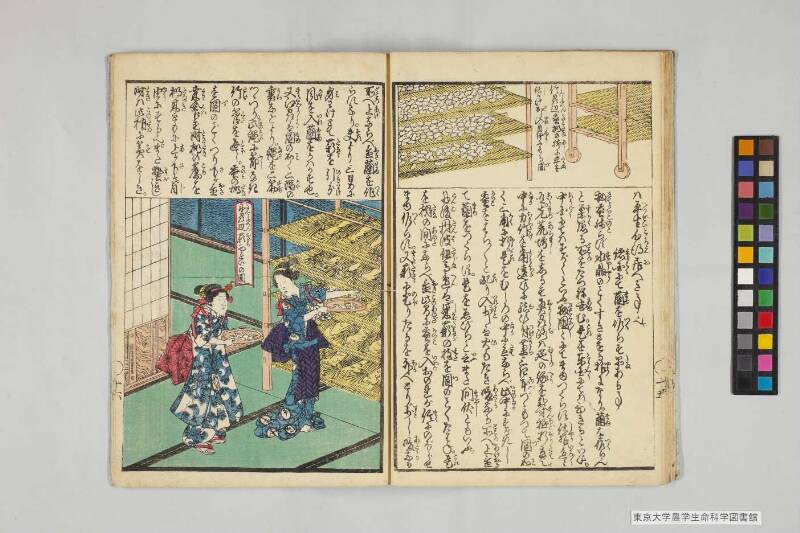
信州(しんしふ)辺(へん)蚕棚(かいこたな)の脚(あし)に車(くるま)を
仕(し)かけ出(だ)し入(いれ)自由(じゆう)にする図(づ)
【右丁下段】
は平生(へいぜい)心得(こゝろえ)居(ゐ)へき事也。
諸国(しよこく)にて繭(まゆ)を作(つく)らす品(しな)ある事
扨(さて)蚕(かいこ)残(のこ)らず水晶(すいしやう)のことくすきとをる様(やう)になり。繭(まゆ)を作(つく)らん
と巣隠(すかく)る所(ところ)をたつね歩(あゆ)む。是(これ)を東国(とうこく)にてはひきるといひ《割書:⊙》
中国(ちうごく)にてはすがくといふ。扨(さて)国々(くに〳〵)にてまゆつくらす仕様(しやう)色々(いろ〳〵)
有(あり)。先(まづ)荒増(あらまし)をしるす奥州路(おうしうぢ)は莚(むしろ)の縁(へり)を弐/寸(すん)程(ほど)折立(おりたて)て《割書:⊙》
中(なか)に力竹(ちからたけ)を角違(すみちが)ひに結(ゆ)ひ付(つけ)。藁(わら)三四/本(ほん)づゝもつて図(づ)の如(こと)
く三/角(かく)に折(おり)。是(これ)をむしろの中(なか)に立(たて)ならべ此中(このなか)にすがきし
蚕(かいこ)をはら〳〵と配(くば)り入(いれ)。少(すこ)しは火(ひ)もたき暖(あたゝか)なる所(ところ)へ上置(あけおき)
て繭(まゆ)をつくらす。是をゑびらと云(いふ)。また間伏(まぶし)ともいふ。
丹後(たんご)丹波(たんば)但馬(たじま)辺(へん)は。柴(しば)薪(たきゞ)の枝(えた)を図(つ)のことくたはね《割書:⊙》是(これ)
を棚(たな)の間(あひた)にならべ置(おき)此間(このあひだ)に蚕(かいこ)を入(いれ)。おのれが儘(まゝ)にのぼらせ
まゆ作(つく)らす。又(また)薪(たきゝ)に登(のぼ)りたるを外(ほか)へとり《割書:⊙》少(すこ)し暖(あたゝか)なる
【左丁上段】
所(ところ)へ上(あげ)ならべ置(おき)繭(まゆ)を作(つく)
らすなり。夫(それ)より三日めに
身(み)わけとて薪(たきゝ)を引分(ひきわけ)
風(かせ)を入(いれ)繭(まゆ)をかはかす也。
又(また)江州(ごうしう)は図(まゆ)【注】の如(こと)く二/階(かい)の
裏(うら)などより。縄(なわ)を二/筋(すぢ)
つゝつり。此縄(このなは)に節(ふし)なき
竹(たけ)の管(くだ)を通(とほ)し。蚕(かいこ)の棚(たな)
を図(づ)のごとくつり下(さ)ヶ置(おき)
桑(くわ)喰(くは)す時(とき)棚(たな)の薦(こも)を
棚木(たなき)ともに上(あ)ヶ下(さ)ヶ。自(じ)
由(ゆう)にする也。また蟄(すが)きし
時(とき)は此棚(このたな)に簀(す)をしき。
【左丁下段】【挿絵】
丹州(たんしふ)辺(へん)薪(おどろ)やといの図
【「図」の振り仮名「まゆ」は「づ」の誤ヵ】
【句点に⊙を使っている部分がある】
現代語訳
【右丁上段】【挿絵】
信州辺りで蚕棚の脚に車輪を取り付けて、出し入れを自由にする図
【右丁下段】
は、普段から心得ておくべき事である。
諸国で繭を作らせる方法に様々あること
さて、蚕が残らず水晶のように透き通るようになり、繭を作ろうと巣を隠す所を探し歩く。これを東国では「ひきる」といい、中国地方では「すがく」という。さて、諸国で繭を作らせる仕様は色々ある。まず大まかなところを記す。奥州路では、莚の縁を二寸ほど折り立てて、中に力竹を斜めに結び付け、藁を三、四本ずつ持って図のように三角に折る。これを莚の中に立て並べ、この中にすがった蚕をぱらぱらと配り入れ、少し火も焚いて暖かな所へ置いて繭を作らせる。これを「えびら」という。また「間伏(まぶし)」ともいう。
丹後・丹波・但馬辺りでは、柴薪の枝を図のようにたわめて、これを棚の間に並べ置き、この間に蚕を入れて、おのおのが勝手に登らせて繭を作らせる。また薪に登ったものを他所へ取って、少し暖かな
【左丁上段】
所へ上げて並べ置き、繭を作らせるのである。それから三日目に身分けといって薪を引き分けて風を入れ、繭を乾かすのである。
また江州では図のように二階の裏などから縄を二筋ずつ吊り、この縄に節のない竹の管を通して、蚕の棚を図のように吊り下げて置き、桑を食わす時は棚の薦を棚木とともに上げ下げして自由にするのである。また蟄った時はこの棚に簀を敷く。
【左丁下段】【挿絵】
丹州辺りの薪による繭作りの図
英語訳
【Right Page, Upper Section】【Illustration】
Diagram from the Shinshū area showing silkworm shelves with wheels attached to the legs for easy movement in and out
【Right Page, Lower Section】
should be understood and practiced regularly.
On the various methods for making cocoons in different provinces
Now, when all the silkworms become transparent like crystal, they search around for places to hide and build their nests. This is called "hikiru" in the eastern provinces and "sugaku" in the central provinces. The methods for making cocoons vary by region. First, I will describe the general approaches. In the Ōshū region, they fold up the edges of straw mats about two sun (approximately 6 cm), tie bamboo supports diagonally inside, and fold straw in bundles of three or four pieces into triangular shapes as shown in the diagram. These are arranged standing in the mats, and the mature silkworms are scattered into them. They are placed in slightly heated, warm locations to make cocoons. This is called "ebira" and also known as "mabushi" (cocooning frames).
In the Tango, Tanba, and Tajima regions, they bend brushwood branches as shown in the diagram, arrange them between the shelves, put the silkworms among them, and let each climb up at will to make cocoons. They also take those that have climbed onto the brushwood and move them to other, slightly warmer
【Left Page, Upper Section】
locations, arranging them there to make cocoons. Three days later, in what is called "miwake" (separation), they separate the brushwood to let in air and dry the cocoons.
In Gōshū (Ōmi Province), as shown in the diagram, they hang two ropes each from places like the back of the second floor, thread bamboo tubes without joints through these ropes, and suspend the silkworm shelves as illustrated. When feeding mulberry leaves, they raise and lower the straw mats along with the shelf boards freely. When the silkworms enter cocooning stage, they spread bamboo screens on these shelves.
【Left Page, Lower Section】【Illustration】
Diagram of cocooning with brushwood in the Tanshū area