翻刻
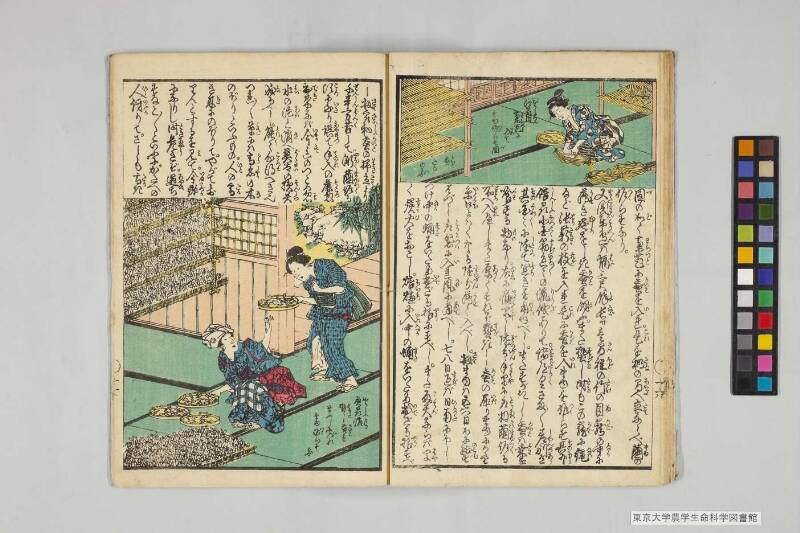
【右丁上段】【挿絵】
江州(ごうしふ)辺(へん)
藁苞(わらつと)に 入(いれ)て
まゆ作(つく)らそ図(づ)【注】
蚕(かいこ) たな の図(づ)
【右丁下段】
図(づ)の如(ごと)く藁苞(わらつと)に蚕(かいこ)を入(い)れ。是(これ)を棚(たな)の間(あいだ)へ立(たて)ならべ繭(まゆ)の
作(つく)らすなり。
又(また)関東(くわんとう)辺(へん)は幅(はゞ)三尺/餘(よ)長(なが)《割書:サ》壱/間(けん)程(ほど)の竹(たけ)の目籠(めかご)の中(なか)に
薄(うす)き莚(むしろ)をしき蚕(かいこ)を飼(か)ふ。また蟄(すがき)し時(とき)もこの籠(かご)に縄(なは)
など張(はり)薪(たきゝ)の枝(えだ)を入れ是(これ)に蚕(かいこ)を入(いれ)まゆを作(つく)らす其外(そのほか)
信州(しんしふ)北国(ほつこく)筋(すぢ)色々(いろ〳〵)の流儀(りうぎ)ありて。諸道具(しよだうく)さま〳〵差別(しやべつ)有(あり)
其(その)国々(くに〳〵)に随(したかつ)て宜(よろし)きを用(もち)ゆべし。またすがきし蚕(かいこ)は桑(くわ)を
喰(くわ)する物(もの)なり。故(ゆゑ)に痛(いたみ)早(はや)し随分(ずいぶん)手早(てはや)に取扱(とりあつかひ)繭(まゆ)作(つく)る
所(ところ)へ入(いれ)へしまた厚(あつく)くすれば蟄(すが)きし蚕(かいこ)の尿(いば)りまゆにかゝり
糸口(いとくち)よはくなる随分(ずいぶん)薄(うす)く入べし。扨(さて)まゆは五六日めに残(のこら)ず
はづし取(とり)器(うつは)に入(い)れ風(かぜ)に当(あて)べし。七八日/過(すぎ)ば日南(ひなた)にほし
つけ中(なか)の蛹(すた)【㊟】をいため出(いで)ざる様(やう)にすべし。また雨天(うてん)ならば早(はや)
く炭火(すみび)をおこし。焙炉(ほいろ)に入(いれ)中(なか)の蛹(すた)をいため。出(いで)ざる様(やう)すべ
【左丁上段】
し扨(さて)最初(さいしよ)蚕(かいこ)の掃立(はきたて)より
千辛万苦(せんしんばんく)して。漸(やう〳〵)繭(まゆ)作(つく)る
頃(ころ)に至(いた)り誤(あやまつ)て手入(ていれ)の麁忽(そこつ)
出来(でき)なば今迄(いまゝで)のつとめ忽(そ)
水(みづ)の泡(あは)と消(き)へ莫太(ばくたい)の損失(そんしつ)
成(な)るべし。能々(よく〳〵)心得(こゝろえ)へき也
つれ〳〵草(くさ)には高名(かうみやう)の木(き)
のぼりといふもの。人(ひと)の高(たか)
き木(き)にのぼりて。やがてお
りんとするを見(み)て。今(いま)纔(わづか)
になりし時(とき)危(あやう)きぞ。過(あやま)ち
すなと〳〵といふに。かたへの
人(ひと)訝(いぶか)りて。さしも高(たか)き
【左丁下段】【挿絵】
奥州(おうしふ)流(りう)
《振り仮名:蟄|す■た》【注】し蚕(かいこ)を
まふしに入(い)れ
まゆ作(つく)らす 図
【注 「作らそ」は「作らす」の誤ヵ】
【注 「蟄」の振り仮名は「すかき」ヵ】
【㊟昆虫食事典の京都府の項に、「家蚕(かさん)の蛹(さなぎ)」「方言」蛹、すた「調理法」色々に調理して食べる。とある。https://entomo.jp/wiki】
現代語訳
【右丁上段】【挿絵】
江州辺り
藁苞に入れて
繭を作らせる図
蚕棚の図
【右丁下段】
図のように藁苞に蚕を入れ、これを棚の間に立て並べて繭を作らせるのである。
また関東辺りでは、幅三尺余り、長さ一間ほどの竹の目籠の中に薄い莚を敷いて蚕を飼う。また蟄った時もこの籠に縄などを張り、薪の枝を入れてこれに蚕を入れて繭を作らせる。その他、信州・北国筋には色々な流儀があって、諸道具も様々に違いがある。その国々に従って良いものを用いるべきである。また蟄った蚕は桑を食べないものである。ゆえに痛みやすく、十分に手早く取り扱って繭作る所へ入れるべきである。また厚く重ねれば蟄った蚕の尿が繭にかかり、糸口が弱くなるので、十分に薄く入れるべきである。さて繭は五、六日目に残らず外し取って、器に入れて風に当てるべきである。七、八日過ぎれば日向に干し続けて、中の蛹を傷めて出てこないようにすべきである。また雨天ならば早く炭火を起こし、焙炉に入れて中の蛹を傷めて出てこないようにすべき
【左丁上段】
である。さて最初の蚕の掃立てより千辛万苦して、ようやく繭作る頃に至って、誤って手入れの粗忽が起これば、今までの努め全てが水の泡と消えて莫大な損失となるであろう。よくよく心得るべきである。
徒然草には高名な木登りというものがあって、人が高い木に登って、やがて降りようとするのを見て、「今わずかになった時が危ないぞ、過ちするな」と言うのに、傍の人が訝って、「あれほど高い
【左丁下段】【挿絵】
奥州流
蟄った蚕を
まぶしに入れて
繭を作らせる図
英語訳
【Right Page, Upper Section】【Illustration】
Gōshū area
Putting silkworms in straw bundles
to make cocoons - diagram
Silkworm shelf diagram
【Right Page, Lower Section】
As shown in the diagram, silkworms are put into straw bundles, which are then arranged standing between shelves to make cocoons.
In the Kantō area, they raise silkworms by spreading thin straw mats inside bamboo mesh baskets about three shaku wide and one ken long. When the silkworms enter cocooning stage, they stretch ropes in these baskets, put in brushwood branches, and place the silkworms there to make cocoons. Besides these, the Shinshū and northern provinces have various methods, with different tools used in different ways. One should use what is suitable according to each region. Also, silkworms that have entered cocooning stage do not eat mulberry leaves. Therefore they deteriorate quickly, so they should be handled very quickly and placed where they can make cocoons. Also, if they are piled too thickly, the urine of the cocooning silkworms will get on the cocoons and weaken the silk threads, so they should be placed quite thinly. The cocoons should all be removed and taken out on the fifth or sixth day, placed in containers and exposed to wind. After seven or eight days have passed, they should be dried in sunlight, taking care not to damage the pupae inside and let them emerge. In rainy weather, charcoal fires should be lit early and the cocoons put in drying ovens to damage the pupae inside so they cannot emerge.
【Left Page, Upper Section】
Now, after enduring countless hardships from the initial silkworm rearing, if careless handling occurs just when the cocoons are finally being made, all the previous efforts will vanish like bubbles on water, resulting in enormous losses. This should be well understood.
In the Tsurezuregusa, there is a famous tree climber who, when watching someone climb a high tree and about to come down, says "The dangerous time is now when you're almost down - don't make a mistake." The people nearby wonder, "With such a high
【Left Page, Lower Section】【Illustration】
Ōshū method
Putting cocooning silkworms
into mabushi frames
to make cocoons - diagram