翻刻
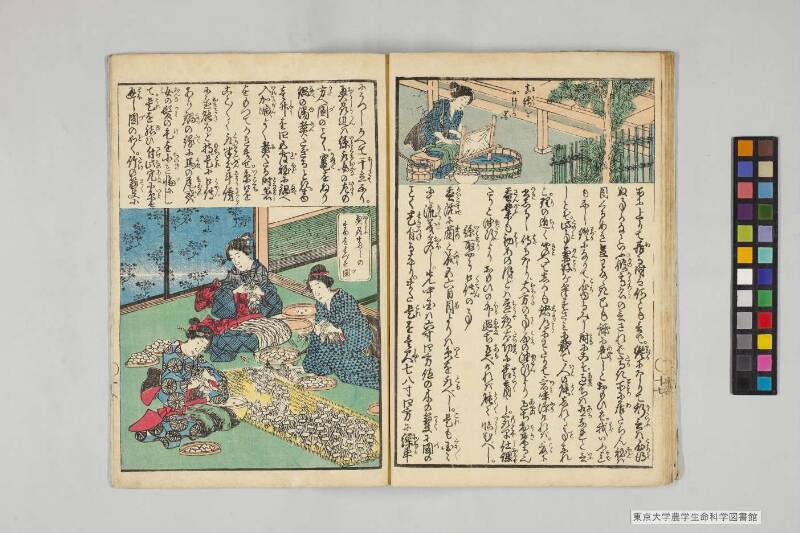
【右丁上段】【挿絵】
真綿(まわた)を かける 図
【右丁下段】
所に上りて居(ゐ)る時は何とも言で。纔(わづか)になりて斯(かく)言(いふ)は心得(こゝろえ)
ぬ事かなといふ。彼(かの)高名(かうめう)の言されば高(たか)き所(ところ)に居(ゐ)たらん程(ほど)は
目くるめき足わなゝき己も誠に危(あやう)しとおもひば。我(わが)いふ迄(まで)
もなし纔(わづか)になりて心(こゝろ)ゆるみし時(とき)にこそ。過(あやま)ちは有(ある)なれと言(いふ)
しとぞ。此事(このこと)兼好(けんこう)が筆すさみに載て人(ひと)の能(よく)しれる事(こと)なれ
と。理(り)の近(ちか)く聞(きこ)へてしかも諸道(しよだう)にわたりて意味(いみ)深(ふか)ければ。爰(こゝ)に
書(かき)しるし侍(はべ)るなり。大方(おほかた)の事(こと)心(こゝろ)の油断(ゆだん)より過(あやま)ち出来(でき)る也
蚕業(さんげふ)も初(はじ)めのほどは昼夜(ちうや)太切(たいせつ)に養育(やういく)し。最早(もはや)仕課(しおほせ)
たりと油断(ゆだん)よりおもひの外(ほか)過(あやま)ち有(ある)べければ能々(よく〳〵)慎(つゝし)むべし。
糸取(いととり)やう口伝(くてん)の事
蚕(かいこ)既(すで)に繭(まゆ)と成(なり)五六日/目(め)よりは糸(いと)を取(とる)べし。是(これ)も国々(くに〳〵)
にて流義(りうき)多(おほ)し。先中国は六寸四方位の木の籆(わく)に図(づ)の
ことく巻付(まきつけ)るなり。また是(これ)を壱/尺(しやく)七八寸四方に繰車(おほか)
【左丁上段】
にうつしかへて干立(ほしたて)なり。
奥州(おうしう)辺(へん)は糸(いと)取(とる)女(おんな)の左(ひたり)の
方(かた)へ図(づ)のことく。竈(かまど)をぬり
鍋(なべ)の湯(ゆ)煮(にへ)たぎるとき。まゆ
壱/升(しやう)を四五/度(ど)程(ほど)に鍋(なべ)へ
入(いれ)。加減(かげん)よく煮(に)たる時(とき)箸(はし)
をもつてかきまぜ。糸口(いとくち)を
こと〳〵く取(とり)。半分(はんぶん)斗(ばかり)傍(かたはら)
に置(おき)能(よき)ほど持(もち)。是(これ)に口伝(くでん)
あり鍋(なべ)の《振り仮名:縁|ふ■》に馬(うま)の尾(を)或(あるひ)は
女(おんな)の髪(かみ)の毛(け)を小(ちいさ)き輪(わ)にし
て。是(これ)を結(ゆ)ひ付(つけ)此穴(このあな)に糸(いと)を
通(とほ)し図(づ)の如(ごと)く。竹(たけ)の籆(わく)に
【左丁下段】【挿絵】
奥州(おうしふ)まぶしの まゆをはづす図(づ)
現代語訳
【右丁上段】【挿絵】
真綿をかける図
【右丁下段】
所に登っている時は何とも言わないで、わずかになってこのように言うのは理解できないことだな」と言う。その高名な人が言うには「高い所にいる時ほど目がくらみ足が震え、自分でも本当に危ないと思うので、私が言うまでもない。わずかになって心が緩んだ時にこそ、過ちがあるのだ」と言ったという。この事は兼好が筆のついでに書いて人がよく知っている事であるが、理屈がわかりやすく聞こえて、しかも諸道に渡って意味が深いので、ここに書き記すのである。大抵の事は心の油断から過ちが生じるものである。養蚕業も初めの頃は昼夜大切に養育し、もう仕上げたと油断から思いがけない過ちがあるだろうから、よくよく慎むべきである。
糸取りの方法 口伝の事
蚕が既に繭となって五、六日目からは糸を取るべきである。これも国々で流儀が多い。まず中国地方では六寸四方ほどの木の枠に図のように巻き付けるのである。またこれを一尺七、八寸四方の繰車
【左丁上段】
に移し替えて干し立てるのである。
奥州辺りでは糸を取る女性の左の方へ図のように竈を塗り、鍋の湯が煮えたぎる時、繭一升を四、五度ほどに分けて鍋へ入れ、加減よく煮えた時に箸を持ってかき混ぜ、糸口をことごとく取り、半分ばかり傍らに置いてよい頃合いに持つ。これに口伝があり、鍋の縁に馬の尾あるいは女性の髪の毛を小さい輪にして、これを結び付け、この穴に糸を通して図のように竹の枠に
【左丁下段】【挿絵】
奥州のまぶしから繭を外す図
英語訳
【Right Page, Upper Section】【Illustration】
Diagram of applying silk floss
【Right Page, Lower Section】
place when climbing high says nothing, but when you're almost down, why do you say such things? That's incomprehensible." The famous person replied: "When you're in a high place, your eyes become dizzy and your legs tremble, and you yourself truly feel the danger, so there's no need for me to say anything. It's when you're almost down and your guard is relaxed that mistakes occur." This matter was written by Kenkō as an aside with his brush, and people know it well. Since the reasoning sounds clear and the meaning is deep across all pursuits, I record it here. Generally, mistakes arise from carelessness of the heart. In sericulture too, while one carefully nurtures the silkworms day and night in the beginning, unexpected mistakes may occur due to carelessness when thinking the work is finished, so one should be very cautious.
Silk reeling methods - oral traditions
When silkworms have already become cocoons, silk should be taken from the fifth or sixth day onward. There are many different methods in different regions. First, in the Chūgoku region, they wind the silk onto wooden frames about six sun square as shown in the diagram. Then they transfer this to reeling wheels about one shaku seven or eight sun square
【Left Page, Upper Section】
and set them up to dry.
In the Ōshū area, they build a stove as shown in the diagram to the left of the woman reeling silk, and when the water in the pot is boiling vigorously, they put about one shō of cocoons into the pot in four or five batches. When properly cooked, they stir with chopsticks, take all the silk thread ends, set aside about half, and hold them at the right time. There is an oral tradition for this: they make a small ring from horse tail hair or women's hair and tie it to the rim of the pot, pass the threads through this hole, and wind them onto bamboo frames as shown in the diagram
【Left Page, Lower Section】【Illustration】
Diagram of removing cocoons from Ōshū mabushi frames