翻刻
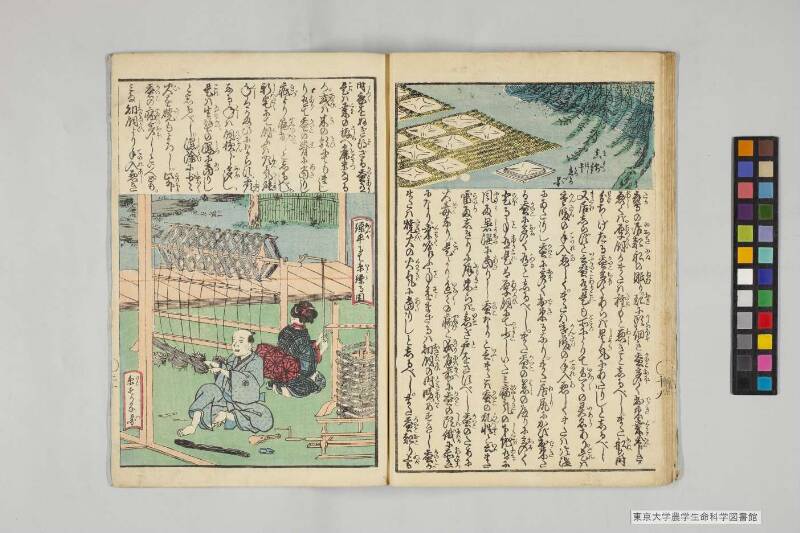
【右丁上段】【挿絵】
真綿(まわた)干(ほし)立(たつ)る図(づ)
【右丁下段】
鷹(たか)の居起(ゐおき)船(ふね)の眠(ねむ)り。起(おき)に頭(かしら)細(ほそ)き蚕(かいこ)多(おほ)く出来(でき)桑(くわ)喰(くひ)き□【注】
悪(あし)くば。厚飼(あつかひ)かまたは種(たね)もと悪(あし)きとしるべし。また船(ふね)の時
分(わけ)ちゝげたる蚕(かいこ)多(おほ)くあらば暑気(しよき)にあたりしとしるべし
又(また)居(ゐ)しらずと言(いふ)蚕(かいこ)有(あり)是(これ)も所(ところ)によりて色々(いろ〳〵)の異名(いめう)あり。是(これ)は
寒暖(かんたん)の手入(ていれ)悪(あ)しく。または寒暖(かんたん)の手入(ていれ)悪(あ)しくまたは冷湿
にあたりし蚕(かいこ)に多(おほ)く出来(でき)るなり。また居尻(ゐしり)にかび出来(でき)た
る蚕(かいこ)に多(おほ)く有(ある)としるべし。また蚕(かいこ)の箸(はし)のへりに多(おほ)く
登(のぼ)る事(こと)有(あり)是(これ)は厚飼(あつかい)にて。少(すこ)しいたみ病気(びやうき)の下地(したぢ)有(ある)に
風雨(ふうう)暑湿(しよしつ)に当(あた)りし蚕(かいこ)なりと言(いふ)。または蚕(かいこ)の乱性(らんしやう)と言(いふ)また
雷雨(らいう)しきりに降来(ふりきた)らば。急(いそ)ぎ戸(と)をさすべし蚕(かいこ)のために
大/毒(どく)なり。是(これ)より色々(いろ〳〵)の病(やまひ)と成(なり)庭前(にはまへ)に蚕(かいこ)の頭(かしら)俄(にはか)に赤色(あかいろ)
になり。桑(くわ)喰(く)ふ事(こと)進(すゝ)まざるは初飼(おさなかひ)の時(とき)暖(あたゝ)めすきし蚕(かいこ)か。
または焼火(たきび)の火気(くわき)に当(あた)りしとしるべし。また蚕(かいこ)起(おこ)り上(あが)る
【左丁上段】
時衣(じふく)【注】をぬぎ得(え)ざる蚕(かいこ)有(あり)
是(これ)は桑(くわ)の拵(こしら)へ麁末(そまつ)なる
か。或(あるひ)は木(き)の類(るひ)にてもまじ
り有(あり)て蚕(かいこ)の脊(せ)に当(あた)りし
疵(きづ)より病(やまひ)出(いで)しとしるべし。
新宅(しんたく)にて飼(か)ふは順気(しゆんき)能(よき)
年(とし)はかまひにならす。不/順(じゆん)
なる年(とし)は飼損(かひそん)じ多(おほ)し。
是(これ)は生壁(なまかべ)の湿(しつ)に当(あた)りし
としるべし。湿徐(しつよけ)に少々(しやう〳〵)
火(ひ)を焼(たく)もよろし。此外(このほか)
蚕(かいこ)の病(やまひ)多(おほ)しといへども。
みな幼飼(おさなかひ)より手入(ていれ)悪(あし)き
【左丁下段】【挿絵】
繰車(おふか)【注】にて糸(いと)繰(ゝ)【注】る図
糸(いと)すかる図(つ)
【注 □は「り」。「喰い切り」】
【注 「時衣」の振り仮名は「時(とき)衣(ふく又はきぬ)」ヵ。】
【注 「繰車」の振り仮名「おふか」は「おほか」ヵ。16コマ目では「おほか」】
【注 「繰」の振り仮名「ゝ」は「く」ヵ」】
【右の注は「養蚕秘録」の同じ箇所を参照】
現代語訳
【右丁上段】【挿絵】
真綿を干し立てる図
【右丁下段】
二齢の据え置き、三齢の眠り、起きに頭が細い蚕が多く出来て、桑の食い切りが悪ければ、厚飼いかまたは種元が悪いと知るべきである。また三齢の時分にちぢれた蚕が多くあれば暑気に当たったと知るべきである。
また「居知らず」という蚕がある。これも所によって色々な異名がある。これは寒暖の手入れが悪く、または冷湿に当たった蚕に多く出来るのである。また脱皮にかびが出来た蚕に多くあると知るべきである。また蚕が箸の縁に多く登ることがある。これは厚飼いで、少し痛み病気の下地があるのに風雨暑湿に当たった蚕であるという。または蚕の乱性という。また雷雨がしきりに降ってきたら、急いで戸を閉すべきである。蚕のために大毒である。これより色々な病気となる。庭前に蚕の頭が俄かに赤色になり、桑を食うことが進まないのは、初飼いの時に暖めすぎた蚕か、または焚き火の火気に当たったと知るべきである。また蚕が起き上がる
【左丁上段】
時に衣を脱ぎ得ない蚕がある。これは桑の拵えが粗末であるか、或いは木の類がまじり有って蚕の背に当たった傷から病気が出たと知るべきである。
新宅で飼うのは順気の良い年は構わないが、不順な年は飼い損じが多い。これは生壁の湿気に当たったと知るべきである。湿気除けに少々火を焚くのも良い。この外にも蚕の病気は多いといえども、みな幼飼いより手入れが悪い
【左丁下段】【挿絵】
繰車で糸を繰る図
糸を染める図
英語訳
【Right Page Upper Section】【Illustration】
Diagram of drying raw silk cotton
【Right Page Lower Section】
When there are many silkworms with thin heads during the second instar resting period and third instar sleep and awakening, and if their feeding on mulberry leaves is poor, one should know this is due to overcrowding or poor quality of silkworm eggs. Also, if there are many shriveled silkworms during the third instar period, one should know they have been affected by heat.
There are also silkworms called "ikishirazu" (not knowing when to rest). These also have various different names depending on the location. These occur frequently in silkworms that have had poor temperature management or have been exposed to cold dampness. One should also know that this occurs frequently in silkworms that develop mold during molting. Sometimes silkworms frequently climb to the edges of chopsticks. This indicates overcrowding, with silkworms that have some damage and underlying disease conditions being exposed to wind, rain, heat, and humidity. This is also called the erratic nature of silkworms. When thunderstorms frequently occur, doors should be closed immediately as this is highly toxic to silkworms. This leads to various diseases. When silkworms' heads suddenly turn red in the rearing area and they do not feed well on mulberry leaves, this indicates silkworms that were overheated during early rearing or were exposed to the heat from fires.
【Left Page Upper Section】
Sometimes silkworms cannot shed their skin when molting. This is because the mulberry preparation was poor, or there were wood fragments mixed in that injured the silkworms' backs, leading to disease.
Raising silkworms in new houses is fine in years with good weather conditions, but in years with poor weather, there are many rearing failures. This is due to exposure to dampness from fresh plaster walls. It is also good to light a small fire to remove dampness. Although there are many other silkworm diseases, they are all due to poor care from early rearing.
【Left Page Lower Section】【Illustration】
Diagram of reeling silk with a silk-reeling wheel
Diagram of dyeing silk