翻刻
【右丁】
種(たね)は随分(ずいぶん)揃(そろひ)よく面(おもて)一/様(やう)にして生気(せいき)強(つよ)く。卵(たまこ)の中(うち)少(すこ)しくほみ種(たね)の地合(ちあひ)能(よく)しまり蛾(ひゝる)の働(はたら)
き種子(たね)のちらし能(よく)。悪(あし)き臭(にほ)ひなく取扱(とりあつかひ)に種(たね)落(おち)す紙(かみ)に能(よく)取付(とりつき)しを最上(さいじやう)とす。種(たね)を
取(とる)に蛾(ひゝる)を撰分(えらみわけ)悪(あし)き蝶(ちやう)はばくと名付(なづけ)て選出(えらみいた)し。蝶(ちやう)を上中下と仕分(しわく)る也/能(よき)蝶(ちやう)の種(たね)は
高直(かうじき)也。悪(あし)き蝶(ちやう)の種(たね)は下直(げじき)としるべし尤(もつとも)種(たね)の色(いろ)は其(その)土地(とち)の精(せい)種(たね)へ顕(あらは)るゝ也。赤地(あかち)の桑(くわ)にて
養(やしな)へば種(たね)赤色(あかいろ)と成(なり)又(また)黒土(くろつち)の桑(くわ)にて飼(かふ)時(とき)は。種(たね)少(すこ)し黒(くろ)みを帯(お)ふ真土(まつち)の桑(くわ)喰(くひ)し種(たね)は桔梗(きゝやう)
色(いろ)にして種(たね)に少(すこ)し霜降(しもふり)し如(こと)く見(み)ゆ。種(たね)の色(いろ)にはかゝはらず何国(いづく)にても地面(ちめん)宜敷(よろしき)川筋(かはすぢ)の所(ところ)へ上桑(しやうくは)を
作(つく)り刈桑(かりくわ)もぎ桑(くわ)なとにし飼方(かひかた)の本法(ほんはう)を以(もつ)て養(やしなひ)し種(たね)を最上(さいしやう)す其次(そのつぎ)を場脇(ばわき)ぶつ切(きり)或(あるひ)は
ころ種(たね)抔(など)□【とヵ】色々(いろ〳〵)の異名(ゐみやう)有(あり)。又(また)蛾(ひゝる)の性(しやう)悪(あ)しきをはくと云(いふ)は麦飯(むぎめし)の色(いろ)に似(に)たるををもつて名付(なづけ)し
とかや性(せい)能(よき)蛾(ひゝる)は白(しろ)き飯(めし)の如(ごと)しと云(いふ)諸国(しよこく)にて上々まゆを取(と)らんと思(おも)はゞ種(たね)の善悪(せんあく)を吟味(ぎんみ)すべしまゆ
一つの中(なか)に蚕(かいこ)二つ三つも一/所(しよ)に籠(こも)し大(おほ)まゆ有(あり)。是(これ)を糸(いと)に取(とる)時(とき)は節(ふし)多(おほ)く出来(でき)甚(はなはだ)悪(あし)し。よつて是(これ)を
除(よけ)て真綿(まわた)になす大まゆにて取(とり)し種(たね)国々(くに〳〵)より出(いづ)ること多(おほ)し。此種(このたね)を求(もと)むべからず種(たね)は第一(たいゝち)其(その)
年(とし)上々(じやう〳〵)の桑(くわ)を喰(くわ)せ上作(じやうさく)の蚕(かいこ)にてとりし種(たね)極上(ごくしやう)としるべし。少(すこ)しにても飼方(かひかた)に
手(て)ぬけあるかまたは桑(くわ)のあてがひに過(くわ)不/足(そく)あるか。あるひは種(たね)もとあしきか又(また)
【左丁上段】
は其家(そのいへ)に不吉(ふきつ)ある欤(か)。四/度(ど)の起居(おきゐ)に
格別(かくべつ)の寒暑(かんしよ)に当(あた)るか。風雨(ふうう)の時節(じせつ)に
蟄(すが)きまゆ作(つく)るか。此等(これら)の事(こと)一つにても障(さゝは)
り有(あれ)ば其種(そのたね)蚕(かいこ)決(けつし)て宜(よろし)からず。随分(ずゐふん)種(たね)
元(もと)を吟味(ぎんみ)して上種(じやうたね)を求(もと)むべし愚成(おろかなる)
人(ひと)はこの理(り)をしらず。蚕(かいこ)の善悪(よしあし)は年(とし)の
廻(まは)り我運(わがうん)なりと心得(こゝろえ)る人(ひと)多(おほ)し。これ
大成(おほいなる)ひがごとなり。蚕(かいこ)に限(かぎ)らず生(しやう)あるもの
は猶更(なをさら)なり。一/切(さい)の草木(さうもく)までも皆(みな)親(おや)に
似(に)るものなり譬(たとへ)ば渋柿(しぶかき)の種(たね)を植(うへ)て
甘(あま)き柿(かき)は生(はへ)ざるが如(ごと)し。又(また)年(とし)の廻(まは)りに
よりて悪種(あくたね)にても相応(さうおう)の蚕(かいこ)を取(と)る
人(ひと)も有(ある)べけれども。是(これ)は其年(そのとし)のまはり
【左丁下段】
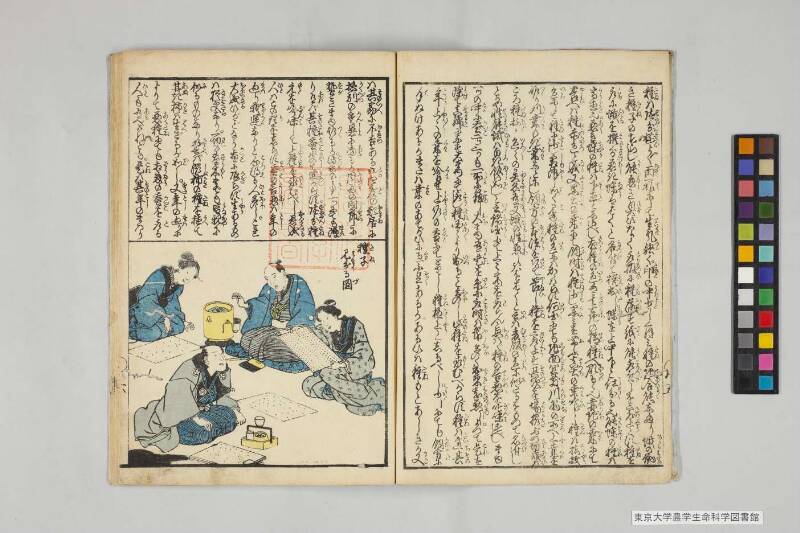
種子(たね)
見分(みわく)る図(づ)
現代語訳
【右丁】
種は十分に揃いが良く、表面が一様で生命力が強く、卵の中が少し膨らんでおり、種の地合いがよく締まって、蛾の働きが良く、種子の散らし方が良い。悪い臭いがなく、取り扱いの際に種が落ちず、紙によく付着するものを最上とする。種を採るには蛾を選別し、悪い蝶は「ばく」と名付けて選り分ける。蝶を上中下に仕分けする。良い蝶の種は高価である。悪い蝶の種は安価であると知るべきである。なお、種の色はその土地の性質が種に現れるものである。赤い土の桑で育てれば種は赤色となり、また黒い土の桑で飼う時は、種は少し黒みを帯びる。真土の桑を食べた種は桔梗色で、種に少し霜降りのように見える。種の色には関係なく、どこの国でも地面の良い川筋の所に上質な桑を作り、刈桑や桑の葉摘みなどにして、飼育方法の正統な方法で育てた種を最上とする。その次を「場脇」「ぶつ切り」あるいは「ころ種」など様々な異名がある。また蛾の性質の悪いものを「はく」というのは、麦飯の色に似ているからそう名付けたということである。性質の良い蛾は白い飯のようであるという。諸国で上々の繭を取ろうと思うなら、種の善悪を吟味すべきである。繭一つの中に蚕が二つ三つも一緒に籠もった大きな繭がある。これを糸にする時は節が多くでき、非常に悪い。よってこれを除いて真綿にする。大繭で取った種は各国から出ることが多い。この種を求めてはならない。種は第一に、その年に上々の桑を食べさせ、上作の蚕で取った種を極上と知るべきである。少しでも飼育方法に手抜きがあるか、または桑の与え方に過不足があるか、あるいは元の種が悪いか、また
【左丁上段】
はその家に不吉なことがあるか、四度の脱皮の際に格別の寒暑に当たるか、風雨の時節に蛹になって繭を作るか。これらのことの一つでも障りがあれば、その種の蚕は決して良くない。十分に種元を吟味して上質な種を求めるべきである。愚かな人はこの理を知らず、蚕の善悪は年の巡り合わせや自分の運であると心得る人が多い。これは大いなる間違いである。蚕に限らず生きているものはなおさらである。一切の草木までも皆親に似るものである。譬えば渋柿の種を植えて甘い柿は生えないようなものである。また年の巡り合わせによって悪い種でも相応の蚕を取る人もあるであろうが、これはその年の巡り合わせで
【左丁下段】
種子を見分ける図
英語訳
【Right Page】
The best seeds are those that are well-uniform in appearance, with strong vitality, eggs that are slightly swollen inside, seeds with good texture and firmness, moths that work well, and good seed distribution. They should have no bad odor, not fall during handling, and adhere well to paper - these are considered the finest quality. When collecting seeds, moths should be selected and sorted, with inferior butterflies named "baku" and separated out. Butterflies are classified into upper, middle, and lower grades. Seeds from good butterflies are expensive, while seeds from poor butterflies should be known as cheap. The color of seeds reflects the characteristics of the local soil. If raised on mulberry from red soil, the seeds become reddish, and when raised on mulberry from black soil, the seeds take on a slightly blackish tint. Seeds that have eaten mulberry from true soil are balloon flower colored and appear slightly mottled like frost. Regardless of seed color, the finest seeds are those raised using proper breeding methods with high-quality mulberry grown in good riverside locations anywhere in the country, using cut mulberry leaves or picked mulberry leaves. The next grade has various names like "bawaki," "butsu-kiri," or "koro-dane." Moths with poor characteristics are called "haku" because they resemble the color of barley rice. Moths with good characteristics are said to be like white rice. If one wishes to produce superior cocoons throughout the provinces, one should carefully examine the quality of the seeds. There are large cocoons where two or three silkworms have nested together in one cocoon. When these are made into thread, many knots form, making them very poor quality. Therefore, these should be removed and made into silk wadding instead. Seeds taken from such large cocoons come from many provinces. Such seeds should not be sought. The finest seeds should be known as those taken from superior silkworms that were fed the best mulberry of that year. If there is even the slightest negligence in breeding methods, excess or deficiency in mulberry feeding, poor original seeds, or
【Left Page, Upper Section】
inauspicious events in the household, exposure to exceptional cold or heat during the four molting periods, or cocoon formation during windy and rainy seasons - if even one of these obstacles exists, those seeds will definitely not produce good silkworms. One should thoroughly examine the seed source and seek superior seeds. Foolish people do not understand this principle and many believe that the quality of silkworms depends on the year's fortune or their own luck. This is a great mistake. This applies not only to silkworms but even more so to all living things. Even all plants and trees resemble their parents. For example, planting seeds from astringent persimmons will not produce sweet persimmons. While some people may obtain decent silkworms even from poor seeds depending on the year's fortune, this is due to that year's favorable conditions.
【Left Page, Lower Section】
Diagram for distinguishing seeds