翻刻
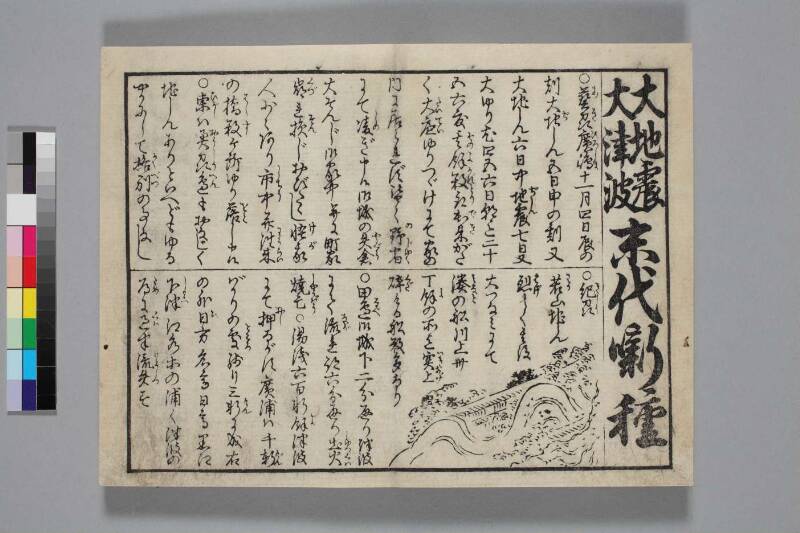
《題:《割書:大地震|大津波》末代噺種》
【上段】
〇/芸州(あき)/広島(ひろしま)十一月四日辰の
刻大 地(ぢ)しん五日申の刻又
大地しん六日中/地震(ぢしん)七日又
大ゆり尤四五六日朝迄二十
五六度/其餘数取出来(そのよかずとりでき)がた
く/大底(たいてい)ゆりつゞけにて家の
内に居られず皆〻/野宿(のじゆく)
にて/凌(しの)ぎ申候御城の/矢倉(やぐら)
大そんじ御家中并に町家
/崩(くづ)れ/損(そん)じおびたゝし/怪我(けが)
人小〻あり/市中(しちう)并/往来(わうらい)
の/橋(はし)/数(す)ケ所ゆり/落(をと)し申候
〇/東(ひがし)は/奥州(おうしう)/辺(へん)もおなじく
地しんありといへどもゆる
やかにして/格別(かくべつ)の事なし
【下段】
〇/紀州(きしう)
/若(わか)山地しん
/烈(はげ)しく其後
大つなみにて
/湊(みなと)の船川上卅
丁/餘(よ)の所迄/突上(つきあげ)
/砕(くだ)ける船数多なり
〇田/辺(なべ)御城下二分通り津波
にて/流(なが)れ跡六分通り/出火(しゆつくは)
/焼亡(しやうばう)〇湯浅六百軒/餘(よ)津波
にて/押(おし)ながす広浦は千/軒(げん)
ばかりの/處(ところ)残り三/軒(けん)に成右
の外/日(ひ)方名高日高黒江
/下津(しもつ)江水等の浦〻津波の
/為(ため)に/過(くは)半/流失(りうしつ)す
現代語訳
『大地震大津波 末代噺の種』
【上段】
芸州広島
十一月四日辰の刻に大地震、五日申の刻にまた大地震、六日中地震、七日にまた大揺れ。四・五・六日の朝まで二十五・六度、その余は数を数えることができないほど、大体揺り続けで家の中にいることができず、皆野宿で凌いだ。御城の矢倉が大損傷、御家中並びに町家の崩れ損傷がおびただしい。怪我人が少々あり。市中並びに往来の橋が数ヶ所揺り落とされた。
東は奥州辺りも同じく地震があったというが、緩やかで格別のことはない。
【下段】
紀州
和歌山で地震が激しく、その後大津波で港の船が川上三十丁余りの所まで押し上げられ、砕ける船が数多くあった。
田辺では御城下の二分通りが津波で流され、跡の六分通りが出火で焼亡。
湯浅では六百軒余りが津波で押し流された。広浦は千軒ばかりの所が残り三軒になった。その外、日方・名高・日高・黒江・下津・江水等の浦々が津波のため過半流失した。
英語訳
"Great Earthquake and Great Tsunami: Tales for Future Generations"
【Upper section】
Geishū Hiroshima
Great earthquake at the hour of the dragon on the 11th month, 4th day; another great earthquake at the hour of the monkey on the 5th; earthquake during the 6th; and another great shake on the 7th. From the mornings of the 4th, 5th, and 6th days, there were twenty-five or twenty-six tremors, with the remainder being too numerous to count. It shook continuously, making it impossible to stay inside houses, so everyone endured by sleeping outdoors. The castle's turrets suffered great damage, and the collapse and damage to samurai residences and townhouses was tremendous. There were some injured people. Several bridges in the city and on roads were shaken down and collapsed.
In the east, the Ōshū region also experienced earthquakes, but they were gentle with nothing particularly noteworthy.
【Lower section】
Kishū Province
In Wakayama, the earthquake was severe, followed by a great tsunami that pushed ships from the harbor up to locations more than thirty chō upstream, with many vessels being destroyed.
In Tanabe, two-tenths of the castle town was swept away by tsunami, and the remaining six-tenths was destroyed by fire.
In Yuasa, over 600 houses were swept away by tsunami. In Hiroura, of about 1,000 houses, only three remained. Additionally, the coastal areas of Hikata, Nadaka, Hidaka, Kuroe, Shimotsu, Esui, and other bays suffered more than half their buildings being swept away by tsunami.