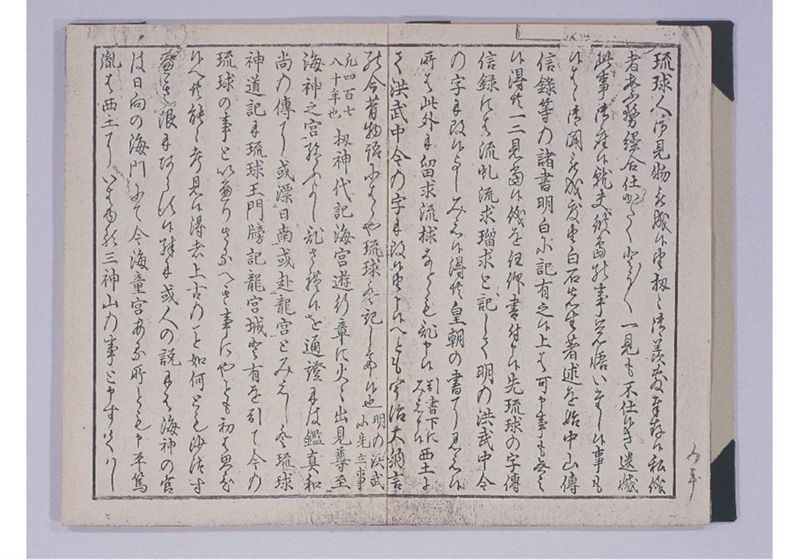
翻刻
琉球人御見物被成候由扨々御羨敷奉存候私儀
は繁務繰合仕かたくとう〳〵一見も不仕候き遺憾
此事御座候就夫彼島の事覚悟いたし候事も
候はゝ御聞被成度由白石先生著述を始中山伝
信録等の諸書明白に記有之候上は可申事も無之
候得共一二見当候儀を任仰書付申候先琉球の字伝
信録には流虬流求瑠求と記し明の洪武中今
の字に改候よしみえ候得共皇朝の書に見え候
所は此外に留求流梂などゝも記申候《割書:別書下に|みえ申候》西土に
て洪武中今の字に改候由申候へとも宇治大納言
の今昔物語にはゝや琉球と記して候也《割書:明の洪武|に先立事》
《割書:凡四百七|八十年也》扨神代記海宮遊行章に火々出見尊至_二
海神之宮_一給ふよし記され候を通証には鑑真和
尚の伝に或漂_二日南_一或赴_二竜宮_一とみえしと琉球
神道記に琉球王門牓記竜宮城と有を引て今の
琉球の事といへりさるへき事にやとも初は思ひ
候へ共能々考見候得は上古のこと如何とも沙汰す
へき限にあらす候殊に或人の説には海神の宮
は日向の海門にて今海童宮ある所とも申平篤
胤は西土にいはゆる三神山の事と申すくはし
現代語訳
琉球人をご見物されたとのこと、まことにうらやましく存じます。私は多忙で時間の都合がつかず、とうとう一度も見ることができず、まことに残念に思っております。それにつきまして、あの島のことについて心得ていることがございましたら、お聞きになりたいとのことですが、白石先生の著述をはじめ『中山伝信録』などの諸書に明白に記されている以上は、申し上げることもございませんが、一、二思い当たることを仰せのままに書き付けて申し上げます。
まず琉球の字ですが、『伝信録』には流虬・流求・瑠求と記し、明の洪武年間に今の字に改めたとのことが見えますが、わが国の書物に見える所では、この他に留求・流梂なども記しております(別の書物にも見えます)。中国では洪武年間に今の字に改めたと申しますが、宇治大納言の『今昔物語』にははや琉球と記してあります(明の洪武に先立つこと、およそ四百七、八十年です)。
さて『神代記』海宮遊行章に火々出見尊が海神の宮に至り給うとのことが記されているのを、『通証』には鑑真和上の伝に「或いは日南に漂い、或いは竜宮に赴く」と見えたのと、『琉球神道記』に琉球王の門の額に「竜宮城」と有るのを引いて、今の琉球のことだと言っております。もっともなことかとも初めは思いましたが、よくよく考えてみますと、上古のことはどうとも判断すべき限りではありません。殊に或る人の説には、海神の宮は日向の海門で今海童宮がある所とも申し、平篤胤は中国でいうところの三神山のことだと申します。詳しくは
英語訳
I hear that you had the opportunity to observe the Ryukyu people - how truly enviable! As for myself, I have been too busy to arrange the time, and in the end was unable to see them even once, which I find most regrettable. Regarding this matter, you mentioned wanting to hear what I might know about that island. While there is nothing I can add beyond what is already clearly recorded in various books, beginning with Master Hakuseki's writings and including the "Chūzan Denshin-roku" and other works, I shall write down one or two things that come to mind as you have requested.
First, regarding the characters for "Ryukyu": the Denshin-roku records it as 流虬, 流求, and 瑠求, noting that it was changed to the current characters during the Hongwu era of the Ming dynasty. However, in Japanese books, we also find it written as 留求, 流梂, and other variations (these appear in other books as well). While it is said that China changed to the current characters during the Hongwu era, the Uji Dainagon's "Konjaku Monogatari" already uses the characters 琉球 (preceding Ming Hongwu by approximately four hundred seventy to eighty years).
Now, regarding the passage in the "Jindai-ki" Kaigū Yukō chapter about Hohodemi-no-mikoto visiting the sea god's palace, the "Tsūshō" cites this alongside a passage from the biography of the priest Ganjin stating "sometimes drifting to Jitnan, sometimes going to the dragon palace," and references from the "Ryukyu Shintō-ki" about the Ryukyu king's gate being inscribed with "Dragon Palace Castle," concluding that this refers to present-day Ryukyu. At first I thought this seemed reasonable, but upon careful consideration, matters of ancient times are beyond definitive judgment. Moreover, according to one theory, the sea god's palace refers to the sea gate of Hyūga where the Kaidō shrine now stands, while Hirata Atsutane claims it refers to what the Chinese call the Three Sacred Mountains. In detail...