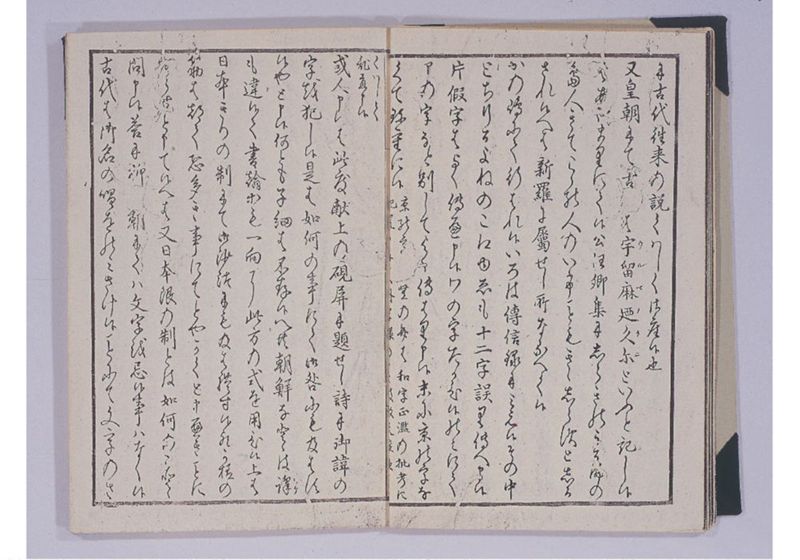
翻刻
に古代往来の説くはしく御座候也
又皇朝にて古□は宇留麻廼久爾(ウルマノクニ)といふと記し候
はあやまりにて候公任郷集にしらきのうるまの
島人きてこゝの人のいふこともきゝしらすとしか
され候へは新羅に属せし所なるへく候
かの島にて行はれ候いろは伝信録にみえ候その中
とちりかよねのこはゆゑも十二字誤り伝へ申候
片仮名はよく伝へ申候ワの字たかひ候のみにて
アの字なと別してよく伝はり申候未に京の字な
くて珍重に候《割書:京の字□無の弁は和字正濫の批考に|【一行綴じ目で見えず】》
《割書:くはしく|記直申候》
或人申候は此度献上の硯屏に題せし詩に御諱の
字を犯し候是は如何の事にて御咎にも及はす
候やと申候何とも子細は不存候へ共朝鮮なとゝは訳(ワケ)
も違候て書翰等も一向に此方の式を用ひ候上は
日本きりの制にて御沙汰にも及はれす候歟か様の
筋は都て恐多き事にてとやかくと申へきことに
あらすと申て候へは又日本限の制とは如何のことゝ
問申候答に抑□朝にては文字を忌候事はなく候
古代は御名の唱をのみさけ候ことにて文字のさ
現代語訳
に古代往来の説が詳しく記載されています。
また皇朝にて古くは宇留麻廼久爾(ウルマノクニ)というと記していますが、これは誤りです。公任郷集に「しらきのうるまの島人きてこゝの人のいふこともきゝしらす」とありますので、新羅に属していた所であるようです。
かの島にて行われている「いろは」は『伝信録』に見えますが、その中で「とちりかよねのこはゆゑも」の十二字を誤り伝えています。片仮名はよく伝わっていますが、「ワ」の字が違っているのみで、「ア」の字などは特によく伝わっています。まだ「京」の字がなくて珍重です(「京」の字無しの弁は『和字正濫』の批考に詳しく記しました)。
ある人が申すには「この度献上の硯屏に題した詩に御諱の字を犯しているが、これはいかがなことで、御咎めにも及ばないのか」と申しました。何とも詳細は存じませんが、朝鮮などとは訳も違って、書翰等も一向にこちらの式を用いている上は、日本限りの制で御沙汰にも及ばれないのでしょうか。かような筋は全て恐れ多きことで、とやかくと申すべきことではないと申しましたところ、また「日本限りの制とはいかなることか」と問われました。答えるに、そもそも□朝にては文字を忌むことはなく、古代は御名の唱えのみを避けることにて、文字のさ
英語訳
contains detailed explanations of ancient exchanges.
Also, it records that in ancient times the Imperial Court called it "Uruma no Kuni," but this is an error. In the Kintō Kyōshū it states "People from Shiraki's Uruma island came, but they could not understand what the people here were saying," so it appears to have been a place belonging to Silla.
The "iroha" practiced on that island is mentioned in the Denshin-roku, but among them, the twelve characters "tochiri kayo neko hayo emo" are transmitted incorrectly. The katakana are well transmitted, with only the character "wa" being different, while characters like "a" are particularly well preserved. The character "kyō" is not yet present, which is remarkable (the explanation about the absence of the character "kyō" is detailed in the critical examination of Waji Seiran).
Someone said: "In the poem inscribed on the inkstone screen presented this time, the character of His Imperial name has been violated. How is this matter handled, and will it not result in Imperial censure?" I do not know the details, but unlike Korea and other places, since they use entirely our format for correspondence and other matters, perhaps under Japan's exclusive system it does not warrant Imperial attention. Such matters are all extremely reverent, and I said they are not things one should discuss casually. Then they asked again, "What do you mean by Japan's exclusive system?" In response, fundamentally in the □ court there is no taboo against characters. In ancient times, only the pronunciation of the Imperial name was avoided, and as for characters...