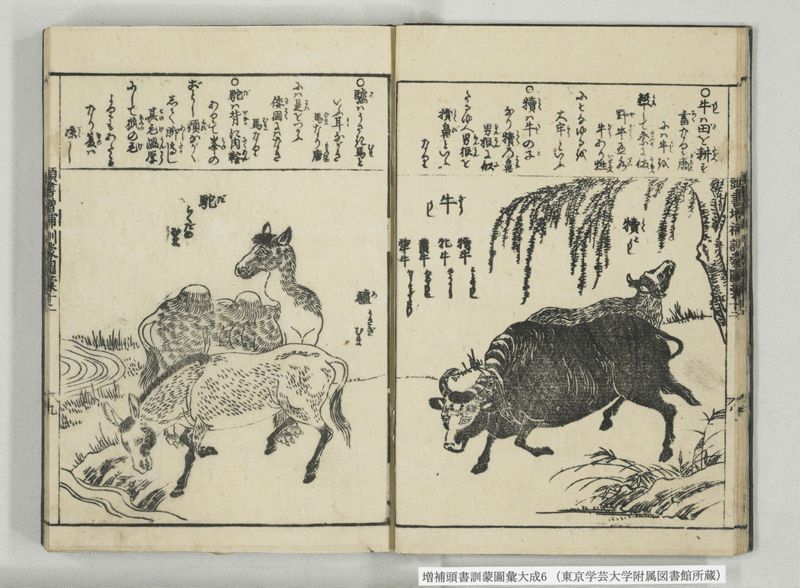
翻刻
【上段】
○牛(うし)は田(た)を耕(たがへ)す
畜(ちく)なり唐(もろこし)
には牛(うし)を
殺(ころ)して祭(まつり)に備(そなふ)
野牛(やぎう)有 水(すい)
牛(ぎう)あり牲(いけにへ)
にそなゆるを
大 牢(らう)といふ
○犢(とく)は牛(うし)の子(こ)
なり犢(とく)の鼻(はな)
男根(なんこん)に似(に)
たるゆへ男根(なんこん)を
犢鼻(とくび)といふ
なり
○驢(ろ)はうさき馬(むま)と
いふ耳(みゝ)ながき
馬(むま)なり唐(もろこし)
には是(これ)をつかふ
倭国(わこく)にはなき
馬(むま)なり
○駝(だ)は背(せなか)に肉鞍(にくあん)
ありて峯(みね)の
ごとし頸(くび)ながく
して脚高(あしたか)し
其毛(そのけ)温厚(うんかう)
にして狐(きつね)の毛(け)
よりもあたゝか
なり夏(なつ)は
涼(すゞ)し
【下段】
犢(とく) こうし
牛(ぎう)
うし
特牛 ことひうし
牝牛 めうし
黄牛 あめうし
犂牛 ほしまだらうし
驢(ろ)
うさぎむま
駝(だ)
らくだのむま
現代語訳
【上段】
○牛(ウシ)は田を耕す
家畜である。中国
では牛を
殺して祭りに供える。
野牛がおり、水
牛がいる。いけにえ
に供えるものを
大牢という。
○犢(トク)は牛の子
である。犢の鼻が
男性器に似
ているため、男性器を
犢鼻(トクビ)という
のである。
○驢(ロ)はうさぎ馬と
いう。耳の長い
馬である。中国
ではこれを使う。
日本にはいない
馬である。
○駝(ダ)は背中に肉のこぶが
あって峰の
ようである。首が長く
して脚が高い。
その毛は温かく
して狐の毛
よりも暖か
である。夏は
涼しい。
【下段】
犢(トク) 子牛
牛(ギュウ)
うし
牡牛 おうし
牝牛 めうし
黄牛 あめうし
犂牛 星斑牛
驢(ロ)
うさぎうま
駝(ダ)
らくだのうま
英語訳
[Upper section]
○The ox is a
livestock animal that plows fields. In China,
oxen are
killed and offered in festivals.
There are wild oxen and water
buffalo. Those offered
as sacrifices are
called "great enclosures" (tairo).
○A calf is a young
ox. Because a calf's nose
resembles
male genitalia, male genitalia are
called "calf-nose" (tokubi).
○The donkey is called "rabbit horse."
It is a horse with long
ears. In China
they use these.
They are horses that do not exist
in Japan.
○The camel has a flesh hump
on its back that is
like a mountain peak. Its neck is long
and its legs are tall.
Its fur is warm
and warmer than
fox fur.
In summer it is
cool.
[Lower section]
Calf (toku) - ko-ushi
Ox (gyu) -
ushi
Bull - o-ushi
Cow - me-ushi
Yellow ox - ame-ushi
Plow ox - hoshi-madara-ushi
Donkey (ro) -
usagi-uma
Camel (da) -
rakuda no uma