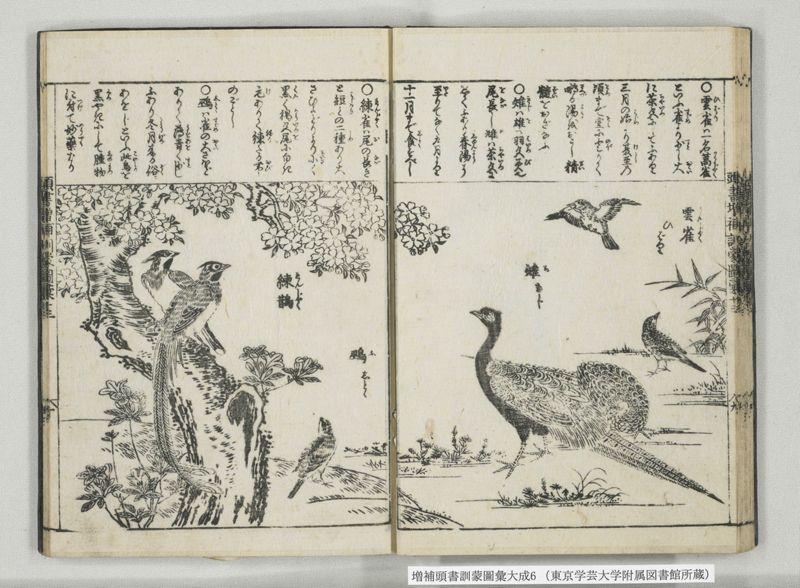
翻刻
【上段】
○雲雀(ひばり)は一名 蒿雀(かうじやく)
といふ雀(すゞめ)より少(すこ)し大(おゝい)
に茶色(ちやいろ)にしてふあり
三月の始(はじめ)より夏至(けし)の
頃(ころ)まで空(そら)に登(のぼ)りて
囀(さへづ)る陽(よう)をおこし精(せい)
髄(すい)をおぎなふ
○雉(きじ)は雄(を)は羽色(はいろ)美(び)也
尾長(をなが)し雌(め)は茶色(ちやいろ)に
してふあり春陽(しゆんよう)に
至(いた)りてなく九月より
十一月まで食(しよく)すべし
○練雀(れんじやく)は尾(お)の長(なが)き
と短(みじかき)との二 種(しゆ)あり大
さひよどりより小(ちいさ)く
黒(くろ)く褐色(かういろ)尾(を)に白き
毛(け)ありて練(ねり)たる帯(おび)
のごとし
○鵐(しとゝ)は雀(すゞめ)の大(おゝい)さほど
ありて薄青(うすあを)く少(すこ)し
ふあり冬月(とうげつ)来る俗(ぞく)ニ
あをじといふ此鳥(このとり)を
黒(くろ)やきにして腫物(しゆもつ)
に付(つけ)て妙薬(めうやく)なり
【下段】
雲雀(うんじやく)
ひばり
雉(ち) きじ
鵐(ふ) しとゝ
練鵲(れんじやく)
現代語訳
【上段】
○ヒバリ(雲雀)は別名コウジャク(蒿雀)
という。スズメより少し大き
く茶色で斑がある。
三月の初めから夏至の
頃まで空に上がって
さえずる。陽気を起こし精
髄を補う。
○キジ(雉)は雄は羽色が美しく
尾が長い。雌は茶色で
斑がある。春の陽気
になるとなく。九月から
十一月まで食用にできる。
○レンジャク(練雀)は尾の長い
ものと短いものの二種類がある。大き
さはヒヨドリより小さく、
黒く褐色で、尾に白い
羽毛があって練った帯
のようである。
○シトド(鵐)はスズメの大きさほど
で薄青く少し
斑がある。冬月にやってくる。俗に
アオジという。この鳥を
黒焼きにして腫れ物
につけると妙薬である。
【下段】
ヒバリ
キジ
シトド
レンジャク
英語訳
[Upper section]
○The Hibari (skylark) is also called Koujaku (artemisia sparrow).
It is slightly larger than
a sparrow, brown in color with spots.
From the beginning of March until around
the summer solstice, it rises into the sky and
sings. It raises the spirit and supplements
vital essence.
○The Kiji (pheasant): the male has beautiful plumage
and a long tail. The female is brown
with spots. When spring weather
arrives, it calls out. It can be eaten from September
to November.
○The Renjaku (waxwing) comes in two varieties:
those with long tails and those with short ones. In size
they are smaller than bulbuls,
black and brown in color, with white
feathers on the tail that look like
a braided sash.
○The Shitodo (bunting) is about the size
of a sparrow, light blue with slight
spots. It comes in the winter months. Commonly
called Aoji. When this bird is
made into charcoal powder and applied to swellings,
it serves as an excellent medicine.
[Lower section]
Hibari (skylark)
Kiji (pheasant)
Shitodo (bunting)
Renjaku (waxwing)