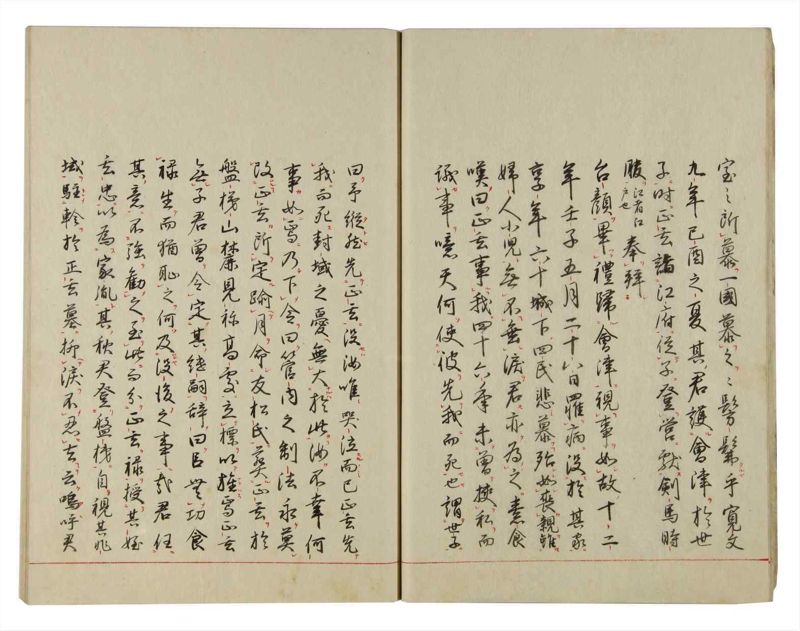
翻刻
宝之所_レ慕 ̄フ一-国慕 ̄フ_レ之 ̄ヺ々髣-髴 ̄タルヤ乎寛-文
九-年己-酉之-夏其 ̄ノ君護 ̄ル_二会津 ̄ヺ於世
子 ̄ニ_一時 ̄ニ正-玄詰_二江-府 ̄ニ_一従 ̄テ_レ子 ̄ニ登 ̄リ_レ営 ̄ニ献 ̄ス_二剣馬時-
服 ̄ヺ_一《割書江は江:戸也|》奉 ̄リ_レ拝 ̄シ_二
台-顔 ̄ヺ_一畢 ̄ッテ_レ礼帰 ̄ル_二会津 ̄ニ_一視 ̄コト_レ事 ̄ヺ如 ̄シ_レ故 ̄ノ十-二-
年壬-子五-月二-十-八-日羅 ̄リ_レ病没 ̄ス_二於其家 ̄ニ_一
享-年六十城-下 ̄ノ四-民悲 ̄ミ慕 ̄フコト殆 ̄ント如 ̄シ_レ喪 ̄カ_レ親 ̄ヺ雖 ̄トモ_二
婦-人小-児 ̄ト_一無_レ不 ̄コト_レ垂 ̄レ_レ涙 ̄ヺ君 ̄モ亦 ̄タ為 ̄メ_レ之 ̄カ素-食
嘆 ̄メ曰 ̄ク正-玄事 ̄ルコト_レ我 ̄ニ四十六年未 ̄タ_二曽 ̄テ狭 ̄テ_レ私 ̄ヺ而
議 ̄セ_レ事 ̄ヺ噫天何 ̄ソ使_二彼 ̄ヺ先 ̄テ_レ我 ̄ニ而死 ̄セ_一也 ̄ヤ謂 ̄テ_二世子 ̄ニ_一
曰 ̄ク予縦然/縦然(タトヒ)先 ̄テ_二正-玄 ̄ニ_一没 ̄セハ汝唯 ̄ヽ哭-泣 ̄スル/而己(ノミ)正-玄先 ̄テ
_レ我 ̄ニ而死 ̄ス封-域之憂 ̄へ無_レ大 ̄ナルハ_二於此 ̄ヨリ_一汝 ̄カ不-幸何-
事 ̄カ如 ̄ニ_レ下焉 ̄ニ乃 ̄チ下 ̄メ_レ令 ̄ヺ曰 ̄ク管内之制-法永 ̄ク莫 ̄レ
改 ̄ムルコト_二正-玄 ̄カ所 ̄ヺ_一レ定 ̄ル踰 ̄へテ_レ月 ̄ヺ命 ̄シ_二友-松-氏葬 ̄ル_二正-玄 ̄ヺ於
盤-梯-山麓見-祢高処 ̄ニ_一立 ̄テ_レ標 ̄ヺ以 ̄テ/旌(アラハス)焉正-玄
無 ̄レ_レ子君曽 ̄テ令_レ定 ̄メ_二其 ̄ノ継-嗣 ̄ヺ_一辞 ̄メ曰 ̄ク臣無 ̄ノ_レ功食
_レ禄生 ̄テ而猶恥_レ之 ̄ヺ何 ̄ソ及 ̄ハンヤ_二没-後/之(ノ)事 ̄ニ_一哉君任 ̄セ_二
其 ̄ノ意 ̄ニ_一不_二強 ̄テ勧 ̄メ_一レ之 ̄ヺ至 ̄テ_レ此 ̄ニ而分 ̄テ_二正-玄 ̄カ禄 ̄ヺ_一授 ̄テ_二其姪
玄-忠 ̄ニ_一以為 ̄ス_二家-胤 ̄ト_一其 ̄ノ秋霊登 ̄リ_二磐-梯 ̄ニ_一自 ̄テ視其飛-
域 ̄ヺ_一駐_二軫於正-玄墓 ̄ニ_一抑 ̄へテ_レ涙 ̄ヺ不 ̄メ_レ忍 ̄ヒ_レ去 ̄コトヺ云 ̄ク嗚呼霊
現代語訳
臣の慕うところであり、一国これを慕うこと、まさに髣髴たるものがあった。寛文九年己酉の夏、その君が会津を世子に護らせた時、正玄は江戸に詰めており、子に従って営に登り、剣馬時服を献上した《江は江戸なり》。台顔を拝し奉り、礼を畢えて会津に帰り、事を視ること故の如くであった。十二年壬子五月二十八日、病に羅り、その家にて没した。享年六十。城下の四民が悲しみ慕うこと、殆ど親を喪うが如く、婦人小児といえども涙を垂れざる者はなかった。君もまた彼のために素食し、嘆いて曰く「正玄が我に事えること四十六年、未だかつて私を狭んで事を議したことはなかった。ああ、天は何故に彼をして我に先んじて死なしめたのか」と。世子に謂いて曰く「予がたとひ正玄に先んじて没せば、汝はただ哭泣するのみである。正玄が我に先んじて死す、封域の憂いでこれより大なるはない。汝の不幸、何事かこれに如かん」と。すなわち令を下して曰く「管内の制法は、永く正玄の定めし所を改むるなかれ」と。月を踰えて友松氏に命じ、正玄を磐梯山麓見祢の高処に葬り、標を立ててこれを旌した。正玄には子がなく、君はかつてその継嗣を定めるよう令したが、辞して曰く「臣は功なくして禄を食み、生きながらにしてなお之を恥ず。何ぞ没後の事に及ばんや」と。君はその意に任せ、強いて勧めなかった。この時に至って正玄の禄を分け、その姪玄忠に授けて家胤となした。その秋、霊が磐梯に登り、自らその飛域を視、軫を正玄の墓に駐め、涙を抑えて去ることを忍びず、云く「嗚呼霊よ
英語訳
He was what retainers admired, and the entire domain mourned him with something approaching reverence. In the summer of Kanbun 9 (1669), year of the earth rooster, when his lord entrusted Aizu to his heir, Shōgen was stationed in Edo {{Edo refers to Edo}} and followed his son to the camp, presenting swords, horses, and seasonal clothing. After paying respects and receiving an audience with His Lordship, he completed the ceremony and returned to Aizu, overseeing affairs as before. On the twenty-eighth day of the fifth month of the twelfth year, Kanbun 12 (1672), year of the water rat, he fell ill and died at his home at the age of sixty. The four classes of people in the castle town grieved and mourned him almost as if they had lost a parent; even women and children could not help but shed tears. The lord also ate plain food in mourning for him and lamented, saying: "Shōgen served me for forty-six years and never once argued with me out of private interest. Alas, why did Heaven cause him to die before me?" He said to his heir: "Even if I were to die before Shōgen, you would merely weep. With Shōgen dying before me, there is no greater worry for the domain than this. What misfortune of yours could compare to this?" He then issued an order saying: "The laws and systems within the domain must never be changed from what Shōgen established." After more than a month had passed, he commanded the Tomomatsu clan to bury Shōgen at a high place called Mine in the foothills of Mount Bandai, erecting a marker to honor him. Shōgen had no children, and though the lord had once ordered him to establish a successor, he declined, saying: "This retainer has no merit yet consumes a stipend, and even while living I am ashamed of this. How could I concern myself with matters after death?" The lord respected his wishes and did not force him to reconsider. At this time, Shōgen's stipend was divided and granted to his nephew Gentada, who became the family heir. That autumn, when His Lordship climbed Mount Bandai and viewed the area himself, he stopped his carriage at Shōgen's grave, suppressed his tears, and could not bear to leave, saying: "Alas, spirit..."