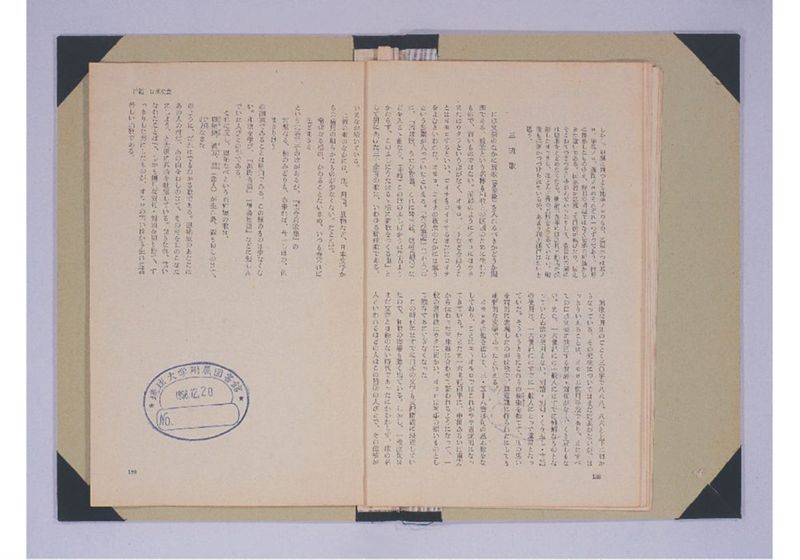
翻刻
188
【右頁上段】
しかし、甲類は四つとも比嘉ノロのもの、乙類三つは城ノ
ロ、宇根ノロ、儀間ノロのそれぞれ一つずつであり、□□
に採集したものゆえ、新旧の問題ではなく伝承の□□から
きた違いである。伝承者が急死して口伝が滅びたり、伝え
そこねてつぎつぎにゆがんでいったりして、数世代の間に
は原形をとどめなくなる。明治二九年に田島利三郎氏が採
□したオモロも、ほとんど昔の原形をとどめていない、□
後も採集がつづけられているが、あまり利用価値はないと
思う。
三 琉歌
口承文芸のなかに琉歌(琉球歌)を入れるべきかどうか問
題である。琉歌という名称も和歌との区別のために生れた
もので、古いものではない。前述のようにオモロにはウタ
またはウタフという語がなく、オモロ、エトなどを謡うこ
とはオモロするといい、コイナもコイナするまたはコイナ
をよむといわれた。オモロ、コイナの概念のなかには謡う
という要素が入っていたといえる。『大島筆記』(一七六二)
に、「琉球歌、うたひ物也、これに琴三絃、鼓弓(胡弓)な
どを入るゝ曲なり、(中略)この歌のふしばかりは往古より
かわらず、このふしにうたはるゝ様に新歌をつくる也」と
して例にあげた三十余首の歌は、いわゆる琉球歌である。
【右頁下段】
琉歌は周知のごとく三〇字で八八八、八六と上下二句か
らなっている。その発生についてはまだ定義がないが、は
っきりいえることは、オモロの慣用手段であり、またすべ
ての口承文芸に共通する対語・対句がなく、くり返しもな
い。また、一六世紀には一般人にはすでに難解なものとな
っていた古語の使用もない。対語・対句・くり返し・古語
の使用は、一六世紀にはすでに一般人にとって重荷となっ
ていた。そういうときにこれらの拘束(こうそく)を捨てて、民の思い
を端的に表現したのが琉歌で、無意識に作られたにしても
革新的な文学であったといえる。
オモロその他を通じて、三・五―八音は句の基本数をな
しており、ことにエトオモロではこれがやや固定的になっ
てきている。たまたま一六世紀前半に、中国あるいは南方
から伝わった三味線に合わせて謡われるようになって、一
般の創作欲はウタに向かい、オモロは□事の謡いものとし
て残存するにすぎなくなった。
この時代にはすでに日本の文学も支配階級に浸透してい
たので、和歌の影響も強く出ている。しかし、一般庶民は
まだ文学とは縁のない時代であったにかかわらず、歌の名
人といわれるほどの人はこの階級の人びとで、その伝統が
【左頁上段】
いまなお続いている。
□□の歌のなかには、□、用語、風物など、日本文学か
らの借用の明らかなものが少なくない。たとえば、
常盤なる松の、かわることないさめ、いつも春来れば
色どまさる
という北谷王子の歌があるが、『古今和歌集』の
常盤なる、松のみどりも、春来れば、今一しほの、色
まさりけり
の翻案であることは明白である。この類のものは少なくな
い。和歌を学び、『源氏物語』『伊勢物語』などに親しん
でいた人びとの作である。
これに反し、恩納なべという百姓娘の歌は、
恩納嶽(おんなだけ)、彼方(あがた)、里(さと)(恋人)が生れ島、森もおしのけて、
此方(こがた)なさな
のように、だれにでもわかる歌である。恩納嶽のあなたは
あの人の村だ、あの山をおしのけて、その村を山のこなた
にしよう、と大胆に真情を吐露している。聞きなれ、言い
なれたことばで、しかも無用な対句・対語を切り捨て、す
っきりした形にしたものが、オモロの古い株から生れた若
若しい琉歌である。
沖縄 口承文芸
189
現代語訳
188
【右頁上段】
しかし、甲類は四つとも比嘉ノロのもの、乙類三つは城ノロ、宇根ノロ、儀間ノロのそれぞれ一つずつであり、各地に採集したものゆえ、新旧の問題ではなく伝承の系統から来た違いである。伝承者が急死して口伝が滅びたり、伝えそこねて次々にゆがんでいったりして、数世代の間には原形をとどめなくなる。明治29年に田島利三郎氏が採集したオモロも、ほとんど昔の原形をとどめていない。その後も採集が続けられているが、あまり利用価値はないと思う。
三 琉歌
口承文芸のなかに琉歌(琉球歌)を入れるべきかどうか問題である。琉歌という名称も和歌との区別のために生まれたもので、古いものではない。前述のようにオモロにはウタまたはウタフという語がなく、オモロ、エトなどを謡うことはオモロするといい、コイナもコイナするまたはコイナを読むといわれた。オモロ、コイナの概念のなかには謡うという要素が入っていたといえる。『大島筆記』(1762年)に、「琉球歌、うたい物也、これに琴三絃、鼓弓(胡弓)などを入るる曲なり、(中略)この歌の節ばかりは往古よりかわらず、この節にうたはるる様に新歌をつくる也」として例にあげた三十余首の歌は、いわゆる琉球歌である。
【右頁下段】
琉歌は周知のごとく30字で八八八、八六と上下二句からなっている。その発生についてはまだ定説がないが、はっきりいえることは、オモロの慣用手段であり、またすべての口承文芸に共通する対語・対句がなく、繰り返しもない。また、16世紀には一般人にはすでに難解なものとなっていた古語の使用もない。対語・対句・繰り返し・古語の使用は、16世紀にはすでに一般人にとって重荷となっていた。そういうときにこれらの拘束を捨てて、民の思いを端的に表現したのが琉歌で、無意識に作られたにしても革新的な文学であったといえる。
オモロその他を通じて、三・五─八音は句の基本数をなしており、ことにエトオモロではこれがやや固定的になってきている。たまたま16世紀前半に、中国あるいは南方から伝わった三味線に合わせて謡われるようになって、一般の創作欲はウタに向かい、オモロは祭事の謡いものとして残存するにすぎなくなった。
この時代にはすでに日本の文学も支配階級に浸透していたので、和歌の影響も強く出ている。しかし、一般庶民はまだ文学とは縁のない時代であったにもかかわらず、歌の名人といわれるほどの人はこの階級の人々で、その伝統が
【左頁上段】
いまなお続いている。
琉球の歌のなかには、題材、用語、風物など、日本文学からの借用の明らかなものが少なくない。たとえば、
常盤なる松の、かわることないさめ、いつも春来れば色どまさる
という北谷王子の歌があるが、『古今和歌集』の
常盤なる、松のみどりも、春来れば、今一しほの、色まさりけり
の翻案であることは明白である。この類のものは少なくない。和歌を学び、『源氏物語』『伊勢物語』などに親しんでいた人々の作である。
これに反し、恩納なべという百姓娘の歌は、
恩納嶽(おんなだけ)、彼方(あがた)、里(さと)(恋人)が生れ島、森もおしのけて、此方(こがた)なさな
のように、だれにでもわかる歌である。恩納嶽のあなたはあの人の村だ、あの山をおしのけて、その村を山のこなたにしよう、と大胆に真情を吐露している。聞き慣れ、言い慣れたことばで、しかも無用な対句・対語を切り捨て、すっきりした形にしたものが、オモロの古い株から生まれた若々しい琉歌である。
沖縄 口承文芸
189
英語訳
188
[Right page, upper section]
However, all four Type A pieces belong to Higa Noro, while the three Type B pieces belong to Gusuku Noro, Une Noro, and Gima Noro respectively, one each. Since these were collected from various locations, the differences come not from chronological issues but from different transmission lineages. When tradition bearers die suddenly and oral traditions perish, or when they make mistakes in transmission and the traditions become increasingly distorted generation by generation, they lose their original form within several generations. The Omoro collected by Tajima Risaburō in 1896 (Meiji 29) also barely retains its ancient original form. Collection has continued since then, but I think it has little utility value.
III. Ryūka (Ryukyu Songs)
It is questionable whether Ryūka (Ryukyu songs) should be included among oral literature. The term "Ryūka" itself was created to distinguish it from Japanese waka poetry and is not ancient. As mentioned earlier, Omoro had no words like "uta" or "utafu," and chanting Omoro or Eto was called "doing Omoro," while Koina was said to be "doing Koina" or "reading Koina." It can be said that the concepts of Omoro and Koina included the element of chanting. In "Ōshima Hikki" (1762), it states: "Ryukyu songs are sung pieces, with accompaniment of koto, sanshin, and kokyū (Chinese fiddle), etc. Only the melodies of these songs have remained unchanged since ancient times, and new songs are composed to fit these melodies." The thirty-odd songs given as examples are so-called Ryukyu songs.
[Right page, lower section]
As is well known, Ryūka consists of 30 characters arranged in two verses of 8-8-8 and 8-6 syllables. There is no established theory about its origin, but what can be said clearly is that it lacks the paired words, parallel phrases, and repetitions that were conventional devices of Omoro and common to all oral literature. It also lacks the use of archaic words that had already become difficult for common people to understand by the 16th century. The use of paired words, parallel phrases, repetitions, and archaic language had already become burdensome for ordinary people by the 16th century. It was at this time that Ryūka was created, abandoning these constraints and expressing the people's feelings directly. Even if created unconsciously, it can be said to have been revolutionary literature.
Throughout Omoro and others, 3-5-8 syllables formed the basic number for verses, and this became somewhat fixed especially in Eto-omoro. It happened that in the first half of the 16th century, when songs began to be sung to the accompaniment of the sanshin transmitted from China or the South, general creative desire turned toward Uta, and Omoro merely survived as ritual chanting.
By this period, Japanese literature had already penetrated the ruling class, so the influence of waka poetry appears strongly. However, although common people still lived in an age unconnected to literature, those called masters of song were people of this class, and that tradition
[Left page, upper section]
continues even now.
Among Ryukyu songs, many clearly borrow themes, terminology, and seasonal references from Japanese literature. For example, there is a song by Prince Chatan:
"The evergreen pine, unchanging in its nature, always when spring comes, its color grows deeper"
This is clearly an adaptation of a poem from the "Kokin Wakashū":
"The evergreen pine's green too, when spring comes, takes on an even deeper hue"
There are many of this type. They are works by people who studied waka and were familiar with "The Tale of Genji," "Tales of Ise," and other works.
In contrast, the songs of Onna Nabe, a peasant girl, such as:
"Onna Peak over there, where my beloved (sato) was born, push aside even the forest and bring it over here"
are songs anyone can understand. She boldly expresses her true feelings: "Over there beyond Onna Peak is my beloved's village; push aside that mountain and bring that village to this side of the mountain." These fresh Ryūka, born from the old stock of Omoro, use familiar, commonly spoken words while cutting away unnecessary parallel phrases and paired words to create a clean form.
Okinawa Oral Literature
189