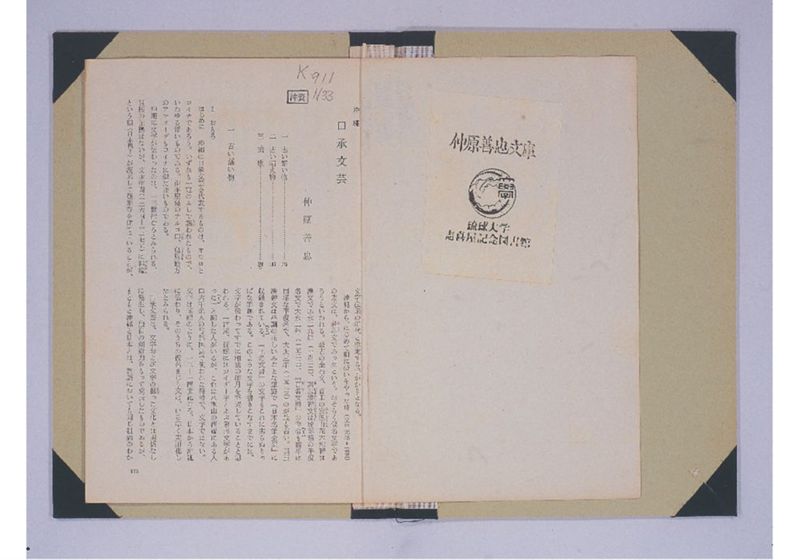
翻刻
【左頁上段】
沖縄
口承文芸
仲原善忠
一 古い謡い物…………………………………175
二 古い唱え者…………………………………183
三 琉歌…………………………………………188
一 古い謡い物
1 おもろ
はじめに 沖縄の口承文芸を代表するものは、オモロと
コイナであろう。いずれも一定のふしで謡(うた)われたもので、
いわゆる謡いものである。伊平屋島のテルコ口(ぐち)、島尻(しまじり)地方
のアマエーダもコイナに似た謡いものである。
沖縄に文字が伝わったのは、一三世紀ごろとみられる。
直接の証拠はないが、文永年間(一二六四―一二七五)に禅鑑(ぜんかん)
という僧(日本僧?)が渡来して極楽寺を建てていることが、
【左頁下段】
文字伝来の年代を推定する手がかりとなる。
沖縄から、はじめて明に使いをやった時(文中元年=一三七二)
の表文は、科斗(かと)文であったという。おそらく仮名文字であ
ろうといわれる。最古の金石文、首里の安国山(あんこくざん)花木記碑は
漢文で応永二九年(一四二二)、真玉湊碑文(まだまみなとひもん)は琉球語の平仮
名文で大永二年(一五二二)、『田名(だな)文書』の発令【(1)】も前半は
同様な平仮名で、大永三年(一五二三)のが最も古い。真玉
湊碑文は格調の正しいみごとな筆跡で『日本名筆全集』に
収録されている。『田名文書』の文字もこれに劣らぬりっ
ぱな筆跡である【(2)】。このような文字を書きこなすまでには、
文字が伝わってすでに相当の年月を経過していることと思
われる。「古来、琉球にはカイダー字とよぶ象形文字があ
った」【(3)】と記した人がいるが、これは八重山の西端にある人
口六千余人の与那国島で使われた符号で、文字ではない。
文字は前記のように、一三―一四世紀ごろ、日本から沖縄
に伝わり、そのうちの仮名まじり文は、いち早く実用化し
たとみられる。
口承文芸は、文字および文字の担(にな)った文化とは関係なし
に発生し、独自の創造力をもって成長したものであるが、
もともと沖縄と日本とは、言語においても同じ祖語のわか
175
現代語訳
【左頁上段】
沖縄
口承文芸
仲原善忠
一 古い謡い物…………………………………175
二 古い唱え者…………………………………183
三 琉歌…………………………………………188
一 古い謡い物
1 おもろ
はじめに 沖縄の口承文芸を代表するものは、オモロとクイナであろう。いずれも一定のメロディーで歌われたもので、いわゆる謡いものである。伊平屋島のテルコ節、島尻地方のアマエーダもクイナに似た謡いものである。
沖縄に文字が伝来したのは、13世紀頃とみられる。直接の証拠はないが、文永年間(1264-1275年)に禅鑑という僧(日本僧?)が渡来して極楽寺を建てていることが、
【左頁下段】
文字伝来の年代を推定する手がかりとなる。
沖縄から、はじめて明に使いを送った時(文中元年=1372年)の表文は、科斗文であったという。おそらく仮名文字であろうといわれる。最古の金石文、首里の安国山花木記碑は漢文で応永29年(1422年)、真玉湊碑文は琉球語の平仮名文で大永2年(1522年)、『田名文書』の発令も前半は同様な平仮名で、大永3年(1523年)のものが最も古い。真玉湊碑文は格調の正しい見事な筆跡で『日本名筆全集』に収録されている。『田名文書』の文字もこれに劣らない立派な筆跡である。このような文字を書きこなすまでには、文字が伝わってすでに相当の年月を経過していることと思われる。「古来、琉球にはカイダー字と呼ぶ象形文字があった」と記した人がいるが、これは八重山の西端にある人口六千余人の与那国島で使われた符号で、文字ではない。文字は前記のように、13-14世紀頃、日本から沖縄に伝わり、そのうちの仮名まじり文は、いち早く実用化したとみられる。
口承文芸は、文字および文字の担った文化とは関係なしに発生し、独自の創造力をもって成長したものであるが、もともと沖縄と日本とは、言語においても同じ祖語から分かれた
英語訳
[Left page, upper section]
Okinawa
Oral Literature
Nakahara Zenchū
1 Ancient songs…………………………………175
2 Ancient chanters…………………………………183
3 Ryūka………………………………………188
1 Ancient songs
1 Omoro
Introduction The representative works of Okinawan oral literature would be Omoro and Kuina. Both were sung with fixed melodies and are so-called sung narratives. Teruko-bushi of Iheya Island and Amae-da of the Shimajiri region are also sung narratives similar to Kuina.
Written characters are thought to have been introduced to Okinawa around the 13th century. Although there is no direct evidence, the fact that a monk named Zenkan (a Japanese monk?) came over during the Bun'ei era (1264-1275) and built Gokuraku Temple serves as a clue for estimating
[Left page, lower section]
the period when written characters were introduced.
The diplomatic document when Okinawa first sent an envoy to Ming China (Bunchū 1 = 1372) is said to have been written in katō script. It is thought that this was probably kana script. The oldest stone inscription, the Ankokuzan Hanaki Memorial Stele in Shuri, was written in Chinese characters in Ōei 29 (1422), while the Madama Harbor Stele inscription was written in Ryukyuan using hiragana in Daiei 2 (1522). The proclamation in the "Tana Documents" was also written in similar hiragana in the first half, with the oldest dating to Daiei 3 (1523). The Madama Harbor Stele inscription has magnificent calligraphy with proper style and is included in the "Complete Collection of Famous Japanese Calligraphy." The characters in the "Tana Documents" also show equally excellent calligraphy. To master writing such characters, considerable time must have passed since written characters were first introduced. Some have written that "since ancient times, Ryukyu had pictographic characters called Kaidā script," but this refers to symbols used on Yonaguni Island at the western end of the Yaeyama Islands, with a population of over six thousand, and these are not true written characters. As mentioned above, written characters were transmitted from Japan to Okinawa around the 13th-14th centuries, and among these, texts mixing kana with Chinese characters appear to have been quickly put to practical use.
Oral literature developed independently of written characters and the culture that written characters carried, growing through its own creative power. However, Okinawa and Japan originally shared the same ancestral language