翻刻
176
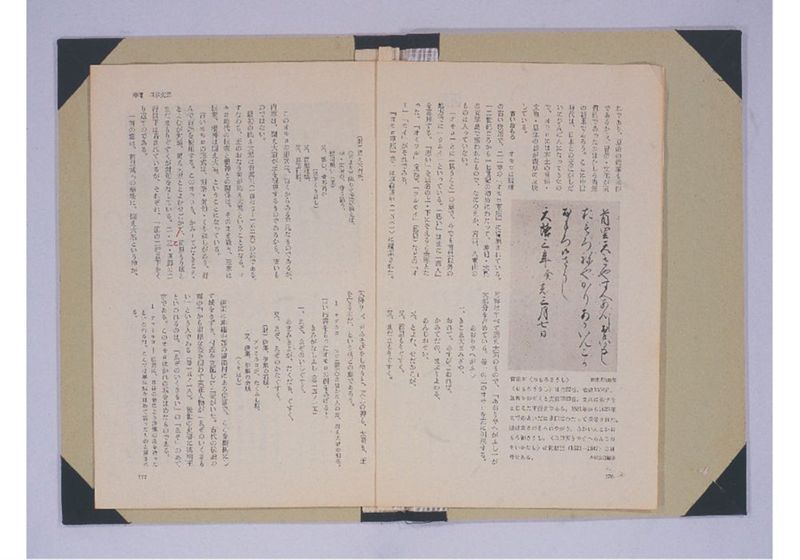
【右頁右下・図の説明】
□□本〈おもろさうし〉 □□□□□□
〈おもろさうし〉は全22巻、歌数1554首、
重複をのぞくと実数1□43首、まれに漢字を
まじえた平仮名である。1531年から1623年
までのあいだに3回にわたって集録された。
図は巻8おもろねやがり、あかいんこかお
もろ御さうし。〈首里天きやすへあんじお
そいかなし〉は尚豊王(1621―1647)の神
号である。 本田安次撮影
【右頁上段】
れであり、原始の産業も米作
であるから、習俗・文化が同
質的であったのはむしろ当然
の結果であろう。ことに中世
時代は、日本との交通がしだ
いにひんぱんになってきたの
で、オモロには本土の言語・
文物・思想の影が濃厚に反映
している。
古いおもろ オモロは琉球
の古い歌謡で、二一巻の『オモロ草紙』に編集されている。
一二世紀ごろから一七世紀の初めにわたって、沖縄・大島
の両群島で謡われたもので、なにゆえか、宮古、八重山の
ものは入っていない。
「オモロ」とは「思うこと」の意で、今でも首里以外の
地方では「ウムイ」といっている。「思い」はまた「恋人」
を意味する。「思い」を通名の上・下にそえると美称とな
った。「オミツル」(思□)、「ツルモイ」(□思)などの「オ
ミ」「モイ」がそれである。
『オモロ草紙』巻一は享禄四年(一五三一)に編集された。
【右頁下段】
内容はすべて聞え大君のもので、「あおりやへがふし」が
大部分を占めている。巻一の二のオモロを左に例示する。
あおりやへがふし
一、きこゑ大ぎみぎや、
おれて、あすびよわれば、
かみてだの、まぶりよわる、
あんじおそい、
又、とよむ、せだかこ【1】が、
又、首里もりぐすく、
又、まだまもりぐすく。
【左頁上段】
(訳)聞え大君が、
(天より)降りて遊び給えば、
神・太陽の、守り給う、
按司□い(王)
又、響む、せぢ高が
(以下くり返し)
又、首里杜城、
又、真玉杜城。
このオモロの形式は、古くからある平凡なものであるが、
内容は、聞え大君が王を祝福するものであるから、古いも
のではない。
最初の聞え大君は尚真王(一四七七―一五二六)の妹である。
すなわち、王のおなり神が聞え大君ということになる。マ
キヨ時代の根□と根神との関係は、そのまま続き、王□は
根□、根神は聞え大君、ということになっている。
古いオモロの形式は、対語・対句・くり返しがあり、好
んで古語を使用する。このオモロも、かみ―てだ・きこゑ・
とよむが対語、聞え大君ととよむせだかこ、首里もり城と
まだまもりぐすくが対句をなしている。二・三・四節の二
行以下は略されているが、それぞれ、一節の二行以下をく
り返すのである。
一首の意は、首里城内の祭場に、聞え大君という神が、
【左頁下段】
天降りし、□あそびをし給うと、天上の神も、太陽も、王
を守るのだ、というほどの意であろう。
1 セダカコ セジ(霊力)の豊かな人の意、聞え大君の□名。
古い内容をもったオモロの例をあげると
きみがなしふし(巻一五ノ一五)
一、ゑぞ、ゑぞのいしぐすく、
あまみきよ【1】が、たくだる、ぐすく、
又、ゑぞ、ゑぞのかなぐすく。
(訳)伊集、伊集の石城、
アマミキヨが、たくみし城、
又、伊集、伊集の金城。
(くり返し)
伊集は沖縄中部の浦添村にある集落で、ここを根拠にし
て城をきずき、付近を支配した土豪がいた。古代の伝説の
霧の中から明瞭な姿を現わす実在人物が「ゑぞのいくさも
い」という人である(巻一五ノ一八)。後世の史書に英祖王
といわれるのは、「ゑぞのいくさもい」の「ゑそ」のあて
字である。このオモロはかれの城をほめたものである。
1 アマミキヨ ― 伝説に、日神の命により沖縄の島を造った
といわれる神。ここでは単に城をほめて言ったものと解され
る。
沖縄 口承文芸
177
現代語訳
176
【右頁右下・図の説明】
『おもろさうし』
『おもろさうし』は全22巻、歌数1554首、重複を除くと実数1143首、まれに漢字を混じえた平仮名である。1531年から1623年までの間に3回にわたって集録された。
図は巻8おもろねやがり、あかいんこかおもろ御さうし。〈首里天きやすへあんじおそいかなし〉は尚豊王(1621-1647)の神号である。 本田安次撮影
【右頁上段】
れであり、原始の産業も米作であるから、習俗・文化が同質的であったのはむしろ当然の結果であろう。特に中世時代は、日本との交流がしだいに頻繁になってきたので、オモロには本土の言語・文物・思想の影が濃厚に反映している。
古いおもろ オモロは琉球の古い歌謡で、21巻の『オモロ草紙』に編集されている。12世紀頃から17世紀の初めにわたって、沖縄・大島の両群島で歌われたもので、なぜか、宮古、八重山のものは入っていない。
「オモロ」とは「思うこと」の意で、今でも首里以外の地方では「ウムイ」といっている。「思い」はまた「恋人」を意味する。「思い」を通名の上・下に添えると美称となった。「オミツル」(思鶴)、「ツルモイ」(鶴思)などの「オミ」「モイ」がそれである。
『オモロ草紙』巻一は享禄4年(1531年)に編集された。
【右頁下段】
内容はすべて聞得大君のもので、「あおりやへがふし」が大部分を占めている。巻一の二のオモロを左に例示する。
あおりやへがふし
一、きこゑ大ぎみぎや、
おりて、あすびよわれば、
かみてだの、まもりよわる、
あんじおそい、
又、とよむ、せだかこが、
又、首里もりぐすく、
又、まだまもりぐすく。
【左頁上段】
(訳)聞得大君が、
(天より)降りて遊び給えば、
神・太陽の、守り給う、
按司おそい(王)
又、響む、せじ高子が
(以下繰り返し)
又、首里杜城、
又、真玉杜城。
このオモロの形式は、古くからある平凡なものであるが、内容は、聞得大君が王を祝福するものであるから、古いものではない。
最初の聞得大君は尚真王(1477-1526年)の妹である。すなわち、王のおなり神が聞得大君ということになる。マキヨ時代の根子と根神との関係は、そのまま続き、王子は根子、根神は聞得大君、ということになっている。
古いオモロの形式は、対語・対句・繰り返しがあり、好んで古語を使用する。このオモロも、かみ−てだ・きこえ・とよむが対語、聞得大君ととよむせだかこ、首里もり城とまだまもりぐすくが対句をなしている。二・三・四節の二行以下は略されているが、それぞれ、一節の二行以下を繰り返すのである。
一首の意は、首里城内の祭場に、聞得大君という神が、
【左頁下段】
天降りし、神遊びをし給うと、天上の神も、太陽も、王を守るのだ、というほどの意であろう。
1 セダカコ セジ(霊力)の豊かな人の意、聞得大君の美名。
古い内容をもったオモロの例をあげると
きみがなしふし(巻十五の十五)
一、ゑぞ、ゑぞのいしぐすく、
あまみきよが、たくだる、ぐすく、
又、ゑぞ、ゑぞのかなぐすく。
(訳)伊集、伊集の石城、
アマミキヨが、作りし城、
又、伊集、伊集の金城。
(繰り返し)
伊集は沖縄中部の浦添村にある集落で、ここを根拠にして城を築き、付近を支配した土豪がいた。古代の伝説の霧の中から明瞭な姿を現わす実在人物が「ゑぞのいくさもい」という人である(巻十五の十八)。後世の史書に英祖王といわれるのは、「ゑぞのいくさもい」の「ゑそ」の当て字である。このオモロは彼の城をほめたものである。
1 アマミキヨ − 伝説に、日神の命により沖縄の島を造ったといわれる神。ここでは単に城をほめて言ったものと解される。
沖縄 口承文芸
177
英語訳
176
[Right page, bottom right - Figure caption]
"Omoro Sōshi"
The "Omoro Sōshi" consists of 22 volumes in total, containing 1,554 songs, with 1,143 actual songs excluding duplicates, written in hiragana with occasional Chinese characters. It was compiled in three phases between 1531 and 1623.
The figure shows volume 8 Omoro-negari, Akainkoka Omoro-gosōshi. "Shuri Ten Kiyasu He Anji Osoi Kanashi" is the divine name of King Shō Hō (1621-1647). Photographed by Honda Yasuji
[Right page, upper section]
and their primitive industry was also rice cultivation, so it was rather natural that their customs and culture were of the same nature. Particularly in medieval times, as exchanges with Japan became increasingly frequent, Omoro strongly reflects the language, material culture, and thought of mainland Japan.
Ancient Omoro: Omoro are ancient songs of Ryukyu, compiled in the 21-volume "Omoro Sōshi." They were sung in both the Okinawa and Ōshima island groups from around the 12th century to the beginning of the 17th century, but for some reason, those from Miyako and Yaeyama are not included.
"Omoro" means "to think," and even today in areas outside Shuri it is called "Umui." "Omoi" (thought) also means "lover." When "omoi" was added above or below common names, it became an honorific title. "Omi" and "Moi" in names like "Omitsuru" (Thinking Crane) and "Tsurumoi" (Crane Thought) are examples of this.
Volume one of "Omoro Sōshi" was compiled in Kyōroku 4 (1531).
[Right page, lower section]
The content is entirely that of the Kikoe-ōgimi, with "Aoriyahe-gabushi" comprising the majority. An example of Omoro from volume one, section two, is shown on the left.
Aoriyahe-gabushi
1. Kikoe-ōgimi-giya,
orite, asubiyowareba,
kami-teda-no, mamori-yowaru,
anji-osoi,
Again, toyomu, sedaka-ko-ga,
Again, Shuri-mori-gusuku,
Again, Madama-mori-gusuku.
[Left page, upper section]
(Translation) When the Kikoe-ōgimi
descends (from heaven) and plays,
the gods and sun protect
the anji-osoi (king).
Again, resounding, Sedaka-ko
(repetition follows below)
Again, Shuri-mori castle,
Again, Madama-mori castle.
While the form of this Omoro follows an ancient and common pattern, its content—the Kikoe-ōgimi blessing the king—is not ancient.
The first Kikoe-ōgimi was the sister of King Shō Shin (1477-1526). In other words, the king's onari-god became the Kikoe-ōgimi. The relationship between neko and ne-gami from the Makiyo period continued unchanged, with the prince being neko and the ne-gami being Kikoe-ōgimi.
Ancient Omoro forms include paired words, parallel phrases, and repetitions, preferring to use archaic language. In this Omoro too, kami-teda, kikoe, and toyomu are paired words; Kikoe-ōgimi and toyomu-sedaka-ko, Shuri-mori castle and Madama-mori-gusuku form parallel phrases. The second line and below of verses two, three, and four are abbreviated, but each repeats the second line and below of the first verse.
The meaning of this song is that when the goddess called Kikoe-ōgimi
[Left page, lower section]
descends from heaven and performs sacred dances at the ceremonial site within Shuri Castle, the heavenly gods and the sun protect the king.
1. Sedaka-ko: Meaning a person rich in seji (spiritual power), a beautiful name for the Kikoe-ōgimi.
An example of Omoro with ancient content:
Kimi-ga-nashi-bushi (Volume 15, No. 15)
1. Ezo, Ezo-no-ishi-gusuku,
Amamikiyo-ga, takudaru, gusuku,
Again, Ezo, Ezo-no-kana-gusuku.
(Translation) Izu, Izu's stone castle,
The castle that Amamikiyo built,
Again, Izu, Izu's metal castle.
(repetition)
Izu is a settlement in Urasoe village in central Okinawa, where a local strongman built a castle as his base and ruled the surrounding area. A historical figure who emerges clearly from the mists of ancient legend is a person called "Ezo-no-ikusa-moi" (Volume 15, No. 18). What later historical records call King Eiso is a phonetic rendering of "eso" from "Ezo-no-ikusa-moi." This Omoro praises his castle.
1. Amamikiyo: According to legend, a deity who created the Okinawan islands by command of the sun god. Here it is understood as simply praising the castle.
Okinawa Oral Literature
177