翻刻
【右丁】
【頭部 標題 右から横書き】
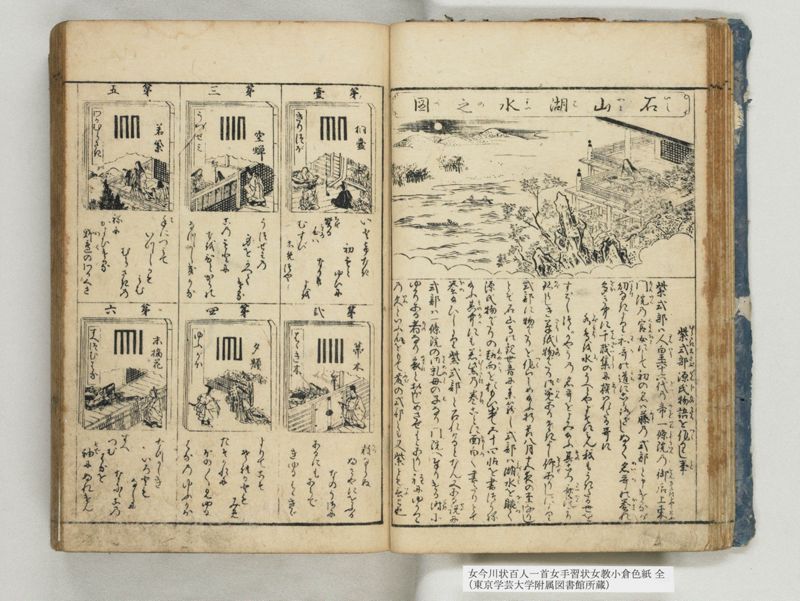
石山湖水之図(いしやまこすいのづ)
【本文】
紫式部(むらさきしきぶ)源氏物語(げんじものがたり)を作(つく)りし事(こと)
紫式部は人皇(にんわう)六十六 代(だい)の帝(みかど)一条院(いちじやういん)の御后(おんきさき)上東(じやうとふ)
門院(もんいん)の官女(くわんちよ)にして初の名は藤(ふじ)の式部と申けるが
幼(いとけ)なきより和哥(わか)の道(みち)にこゝろざしふかく名哥(めいか)の誉(ほま)れ
多(をほ)き中に千載集(せんざいしう)に撰(ゑら)はれたる哥に
水鳥(みづとり)を水(みづ)のうへとやよそにみん我もうきたる世を
すぎしつゝ。かやうの名哥をよみ給ふ其(その)ころ斎院(さいいん)より
珍(めづ)らしき草紙(さうし)物(もの)がたり御覧(ごらん)ありたきよし仰(をふせ)ありしにより
式部に物がたりを作(つく)らしめ給ふ折節八月十五夜の事なりし
とぞ石山寺の観世音に参籠し式部は湖水(みづうみ)を眺(ながめ)て
源氏物がたりの趣向(しゆかう)をおもひ出て五十四帖を書つらね
給ふ其中(そのなか)にも若紫(わかむらさき)の巻(まき)ことに面白(おもしろ)く書たりとて
誉(ほめ)給ひしより紫式部と召れけるとなん又ある説(せつ)に
式部は一条院の御乳母(をんめのと)の子(こ)なり門院へ奉りける時(とき)に
ゆかりある者(もの)なり哀(あはれ)とおぼしめさせよとありし程にゆかり
の色(いろ)といふ心をもて藤(ふぢ)の式部とも又紫とも言(いふ)と也
【左丁】
【上下段に分かれ各段に三項目あり。各項(巻)に源氏香の図あるも省略す】
桐壺 いとけなき
第 初もと
ゆひに
契(ちぎ)る
壱 心(こゝろ)は なりき
きりつぼ むすび よを
こめつや
帚木 数(かづ)ならぬ
第 ふせやにをふる
なのうさに
弐 あるにもあらで
はゝき木 きゆるはゝきゞ
空蝉 うつせみの
第 身(み)をかへて
ける
このもとに
三 なをひとからの
うつせみ なつかしきかな
夕顔 よりてこそ
第 それかとも
みめ
たそかれに
四 ほの〳〵見ゆる
ゆふがほ はなのゆふかほ
若紫 手(て)につみて
第 いつしかも
みむ
むらさきの
五 ねに
わかむらさき かよひける
野辺(のべ)のわかくさ
末摘花 なつかしき
第 いろとも
なしに
すへ なにゝこの
六 つむ
すへつむはな はなを
袖(そで)にふれけ
現代語訳
【右丁】
【頭部 標題 右から横書き】
石山湖水の図
【本文】
紫式部が源氏物語を作ったことについて
紫式部は第66代一条天皇の皇后上東門院にお仕えした女官で、最初は藤式部と呼ばれていました。幼い頃から和歌の道に深く志し、名歌の誉れが高く、千載集に選ばれた歌に「水鳥を水の上とや よそに見ん 我も浮きたる世を過ぎしつつ」があります。このような名歌を詠まれていた頃、斎院から珍しい草紙物語をご覧になりたいとの仰せがあったため、式部に物語を作らせることになりました。折しも八月十五夜のことで、石山寺の観世音に参籠した式部は湖水を眺めて源氏物語の構想を思いつき、五十四帖を書き連ねました。その中でも若紫の巻は特に面白く書かれたと褒められ、これによって紫式部と呼ばれるようになったということです。また別の説では、式部は一条院の乳母の子で、門院にお仕えする時に「ゆかりのある者です。哀れとお思いください」とあった際に、ゆかりの色という意味で藤式部とも紫とも呼ばれるようになったということです。
【左丁】
源氏物語各巻の和歌
第一 桐壺 「いとけなき初元結に契る心は結び込めつや」
第二 帚木 「数ならぬ伏屋に生ふる名の憂さにあるにもあらで消ゆる帚木」
第三 空蝉 「空蝉の身を変へてけるこの木にもなお人がらの夏かしきかな」
第四 夕顔 「寄りてこそそれかとも見め黄昏にほのぼの見ゆる花の夕顔」
第五 若紫 「手に摘みていつしかも見む紫の根に通ひける野辺の若草」
第六 末摘花 「夏かしき色ともなしに何にこの末摘む花を袖に触れけん」
英語訳
【Right Page】
【Header Title, written horizontally from right】
Illustration of Ishiyama Lake
【Main Text】
About Murasaki Shikibu's creation of The Tale of Genji
Murasaki Shikibu was a court lady serving Empress Jōtōmon'in, consort of Emperor Ichijō (the 66th emperor). Initially called Fuji no Shikibu, she had been deeply devoted to the way of waka poetry since childhood and was renowned for her excellent poems. Among her celebrated works, one poem selected for the Senzaishū collection reads: "Shall I view the waterfowl as strangers upon the water? I too drift through this floating world."
During the time when she was composing such famous poems, the Saiin (Imperial Princess serving at Ise Shrine) requested to see some rare illustrated tales. Consequently, Shikibu was commissioned to create a story. This happened on the night of August 15th. While staying at Ishiyama Temple in devotion to Kannon, Shikibu gazed upon the lake and conceived the plot for The Tale of Genji, eventually completing all fifty-four chapters. The Wakamurasaki (Young Murasaki) chapter was particularly praised for its beauty, and from this she came to be called Murasaki Shikibu. According to another theory, Shikibu was the daughter of Emperor Ichijō's wet nurse, and when she entered service with the Empress, she was introduced as "one with connections - please regard her with compassion." From this connection (yukari), meaning the color of kinship, she came to be called both Fuji no Shikibu and Murasaki.
【Left Page】
Poems from Each Chapter of The Tale of Genji
Chapter 1 - Kiritsubo: "In that innocent first hair-binding, what vows were tied and bound within the heart?"
Chapter 2 - Hahakigi: "Nameless, growing by a humble hut, grieved by its reputation, the broom tree fades away"
Chapter 3 - Utsusemi: "Though the cicada has shed its shell upon this tree, how dear still is that person's character"
Chapter 4 - Yūgao: "If I drew closer, I might recognize it - the evening glory flower faintly visible in the twilight"
Chapter 5 - Wakamurasaki: "When might I pluck and see the young grass of the fields that shares its roots with purple?"
Chapter 6 - Suetsumuhana: "Though it bears no lovely color, why did I touch my sleeve to this safflower?"