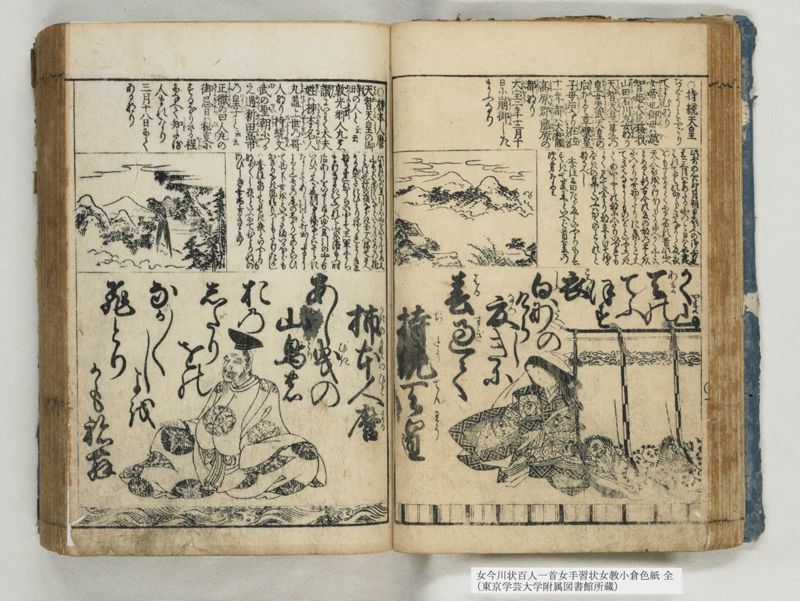
翻刻
【右丁 上段】
○持統天皇
ぢどうとにごり
てよむなり
女帝(によてい)也(なり)御母(おんはゝ)は越(を)
智姫大臣(ちひめのだいじん)蘇我(そがの)
山田石川丸(やまたいしかはまるの)女(むすめ)なり
天智天皇(てんちてんわう)第二の
皇女(くわうじよ)天武(てんむ)天皇の
后(きさき)なり草壁皇子(くさかべのわう)
子(じの)母后(ぼこう)なり在位(ざいい)
十一年 都(みやこ)は大和国(やまとのくに)
高原郡(たかはらのこほり)藤原(ふぢはら)の
都(みやこ)なり
大宝(たいほう)二年十二月十
日に崩御(ほうぎよ)した
まふなり
【同 中段】
此哥の心は卯月朔日衣がへの御歌也
春三月は霞たる山の今日ははや霞
はれて雲の白〳〵とさなから夏衣
をも干たることくに見ゆる昔此山人
天人衣をかけほしたるゆへかく山とは
よめり新古今の夏の部の巻頭
に入たりいせ物がたりに露とこたへ
てきへなましものをといふにつき
てあいじやうの部に入たりいづれも
よく見て入たり部立わけて然る
べきの集といふはかくのことくのこと
なるべし
○季注に曰たゞ夏といふよりも春
すぎて夏来といへば首夏の
次第なり
【同 下段 左から読む】
かく山(やま)
天(あま)の
てふ
ほす
衣(ころも)
白妙(しろたへ)の
けらし
夏(なつ)きに
春過(はるすぎ)て
持統天皇(ぢたうてんわう)
【左丁 上段】
○柿【柹】本人麿
天智天皇(てんちてんわう)の御
時(とき)の人と《割書:云| 云》
敦光卿(あつみつきやう)人丸の
讃(さん)にいわく太夫
姓(せい)は柿(かきの)【柹】本(もと)名(なは)人(ひと)
丸(まる)蓋(けだし)【盖は俗字】上世(しやうせい)の哥(か)
人なり持統(ぢたう)文(もん)
武(む)の聖朝(せいてう)につか
え遇(あふと)_二新田(につた)高市(たかいち)
乃 皇子(わうじ)_一と《割書:云| 云》
正徹(しやうてつ)の曰人丸の
御忌日(きよきにち)は秘事(ひじ)に
するなりさる程(ほど)
になへて知(しり)たる
人まれなり
三月十八日にて
あるなり
【同 中段】
此哥の心は足引とは山をいはんため又
山鳥はなが〳〵しなどいはんための枕
ことば也秋の夜ながきに二人ねてさへ
うかるべきにひとりねられまじきと
なり第一はかうらい国にて王軍にうち
まけきさきをつれて山谷落給ふ時
后あしをいたみ給ふゆへ足引の山とも
いひつたへる也別なる儀などはさらに
なしたゞあし引のと打出したるに
より山鳥の尾のしだりをのといひ
て長〳〵し世をといへるさまいかほども
かぎりなき風情もつともたけたかし
○季注に曰たゞ長き夜といふよりも
なが〳〵し夜といふにてひとりねの
わびしき無■【渟ヵ】方きこゆ
【同 下段】
柿本人麿(かきのもとのひとまろ)
あし曳(ひき)の
山鳥(やまとり)の
おの
しだり
をの
なが〳〵
しよを
ひとり
かもねむ
現代語訳
【右丁 上段】
○持統天皇
持統と濁って読む
女帝である。御母は越智姫、大臣蘇我山田石川麻呂の娘である。天智天皇の第二皇女で、天武天皇の皇后である。草壁皇子の母后である。在位11年。都は大和国高市郡藤原京である。
大宝2年12月10日に崩御された。
【同 中段】
この歌の心は、4月1日の衣替えの御歌である。春の3月は霞んでいた山が、今日は早くも霞が晴れて雲が白々と、まるで夏衣を干したかのように見える。昔この山で天人が衣をかけて干したため、香久山と呼ばれる。『新古今集』の夏の部の巻頭に入っている。『伊勢物語』に「露と答えて消えなましものを」とあることに関連して、恋情の部にも入っている。いずれもよく見て選び入れてある。部立てを分けて然るべき歌集というのは、このようなことである。
○季吟注によれば、ただ「夏」というよりも「春過ぎて夏来」と言えば、初夏の次第がよく表れている。
【同 下段 左から読む】
香久山の
天の
という
干す
衣の
白妙の
けらし
夏来にけらし
春過ぎて
持統天皇
【左丁 上段】
○柿本人麻呂
天智天皇の御代の人という。敦光卿の人丸賛によれば、「大夫、姓は柿本、名は人丸、思うに上代の歌人である。持統・文武の聖朝に仕え、新田・高市皇子に遇った」という。
正徹が言うには、人丸の御忌日は秘事にするので、一般には知っている人は稀である。3月18日である。
【同 中段】
この歌の心は、「足引」は山を言うための、また「山鳥」は長々しなどと言うための枕詞である。秋の夜の長いのに二人で寝てさえ物憂いのに、一人では寝られないということである。第一の説では、高句麗国で王軍に打ち負け、后を連れて山谷に落ちた時、后が足を痛められたので「足引の山」とも言い伝えられる。別の説などは全くない。ただ「足引の」と詠い出したことにより、「山鳥の尾のしだり尾の」と言って「長々し夜を」と詠んだ様は、どれほども限りなき風情で、最も優れている。
○季吟注によれば、ただ「長き夜」というよりも「長々し夜」というので、一人寝の侘しさが限りなく聞こえる。
【同 下段】
柿本人麻呂
足引きの
山鳥の
尾の
しだり
尾の
長々
し夜を
一人
かも寝む
英語訳
【Right Page - Upper Section】
○Empress Jitō
Read "Jitō" with a voiced consonant.
She was an empress regnant. Her mother was Ochi-hime, daughter of Minister Soga no Yamada Ishikawa-maro. She was the second imperial daughter of Emperor Tenji and the empress consort of Emperor Tenmu. She was the mother-empress of Prince Kusakabe. She reigned for 11 years. The capital was Fujiwara-kyō in Takaichi District, Yamato Province.
She passed away on the 10th day of the 12th month of Taihō 2 (702 CE).
【Same Page - Middle Section】
The meaning of this poem is that it is an imperial poem for the seasonal clothing change on the 1st day of the 4th month. The mountain that was hazy during the three months of spring now, today, has its haze cleared early and the clouds appear white and pure, as if summer robes were being dried. Long ago, celestial beings hung and dried their robes on this mountain, which is why it is called Mount Kaguyama. This poem is included at the beginning of the summer section of the Shin Kokin-shū. In relation to the passage in the Tales of Ise that says "would that I had answered 'dew' and vanished," it is also included in the love section. In both cases, it was carefully selected and included. An anthology that properly divides its categorical organization should be like this.
○According to Kigin's commentary, rather than simply saying "summer," saying "spring has passed and summer has come" better expresses the progression into early summer.
【Same Page - Lower Section - Read from left】
Mount Kaguyama's
heavenly
so it seems
drying
robes of
white hemp
it seems
summer has come
Spring has passed and
Empress Jitō
【Left Page - Upper Section】
○Kakinomoto no Hitomaro
He was a person from the reign of Emperor Tenji. According to Lord Atsumitsu's praise of Hitomaro: "Court gentleman, family name Kakinomoto, given name Hitomaro, presumably a poet of ancient times. He served during the sacred reigns of Jitō and Monmu, and had audiences with Princes Nitta and Takechi."
Shōtetsu said that Hitomaro's death anniversary is kept as a secret matter, so generally few people know it. It is the 18th day of the 3rd month.
【Same Page - Middle Section】
The meaning of this poem is that "ashihiki" is a makura-kotoba (pillow word) for referring to mountains, and "yamadori" (mountain bird) is for saying things like "long and lengthy." Even sleeping with two people during the long autumn nights would be melancholy, so how much more unbearable to sleep alone. One theory states that when the king's army was defeated in Koguryō and he fled to mountain valleys with his empress, she injured her foot, which is why it's called "ashihiki no yama" (foot-pulling mountain). There are no other particular interpretations. Simply by beginning with "ashihiki no," then saying "yamadori no o no shidari o no" (the mountain bird's trailing tail), and then "naganagashi yo wo" (through the long, long night), the style expresses limitless poetic sentiment and is most excellent.
○According to Kigin's commentary, rather than simply saying "long night," saying "long, long night" makes the loneliness of sleeping alone sound limitless.
【Same Page - Lower Section】
Kakinomoto no Hitomaro
Foot-pulling
mountain bird's
tail's
drooping
tail's
long, long
night, shall I
alone
sleep?