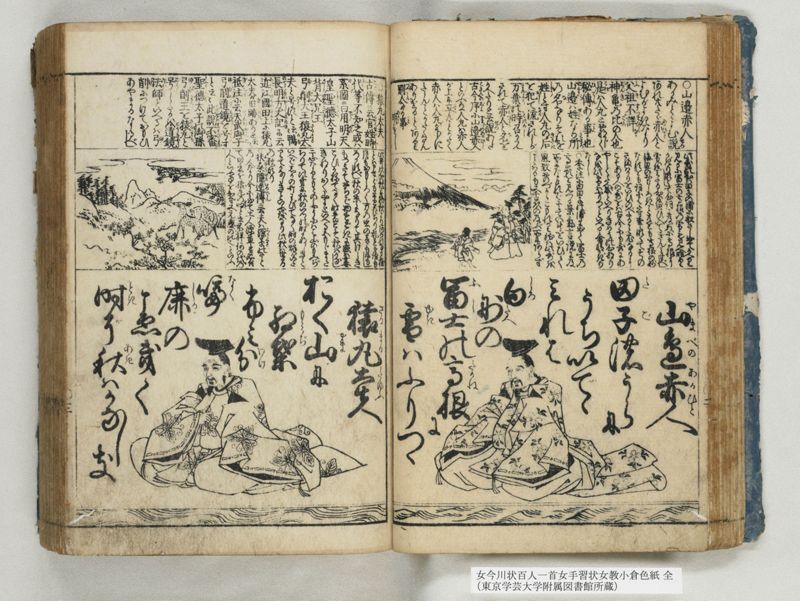
翻刻
【右丁 上段】
○山辺赤人
あかみとゝよむ説(せつ)
あれ共たゞ赤人(あかひと)と
よむがよきなり
父祖(ふそ)不(す)_レ詳(つまひらかなら)
神亀(じんき)の比(ころ)の人也
是(これ)は人丸と同じく
秘伝(ひでん)ある事(こと)也
山辺(やまべ)は姓(せい)なり所(ところ)
の名(な)なりそれを
姓(しやう)とす人丸の后(きさき)
を犯(おかし)て流(なが)されしが
万葉(まんよう)の時(とき)召(めし)かえ
されて赤人(あかひと)と名(な)を
かへたりと云 説(せつ)あた
古今序(こきんのじよ)に山辺赤人(やまべのあかひと)
といふ有人丸は赤人
が上に立(たゝ)んことかたく
赤人は人丸が下に
たゝんことかたくなん
ありけるとあり
別人(べつしん)なる事(こと)
明(あきら)けし
【同 中段】
此哥の心は田子の浦に船さし出てかへり
見るに富士の高根の雪も見へ眺望
かぎりなくして心詞に及ぬに高根に
雪をみたる心を思ひ入てぎんみすべし
海辺のおもしろきこと共をも高根の妙
なるをも詞にはたす事なくてその
さまはかりをいひのべたること尤なるに
こそある人の哥をば古今にも哥にあ
やしくたへ成といへりきめうの心なり
なを此雪はふりつゝといへる余情かぎり
なし
○季注に曰田子の浦に出て富士の
高嶺を見つる景気言説に及
所になければ其てい計をいひて
風致おのづからこもれり然は此哥を
ことはるも又舌頭の及所にあらず
【同 下段】
山辺赤人(やまべのあかひと)
田子(たご)のうらに
うちいでゝ
みれは
白(しろ)
妙(たへ)の
富士(ふし)の高根(たかね)に
雪(ゆき)はふりつゝ
【左丁 上段】
○猿丸太夫
古伝(こでん)に云 官(くわん)姓(せい)時(じ)
代(だい)等(とう)不_レ知_レ之或は
系図(けいづ)に曰 用明(やうめい)天
皇 聖徳(しやうとく)太子山
背大兄王(うしろのおほえきみ)
弓削大王(ゆげのおゝきみ)猿丸(さるまる)太
夫と号(ごう)すと《割書:云|々》鴨(かも)
長明(のてうめい)方丈記(ほうでうのき)に云
近江国(あふみのくに)田上(たかみ)に猿丸
太夫が旧跡(きうせき)ありと《割書:云|々》
祇注(ぎちう)に云 天武(てんむ)御子(おんこ)
弓削道鏡(ゆげのだうきやう)を号(こう)す
と云々 此説(このせつ)不(ず)_レ審(つまひらかなら)
聖徳(しやうとく)太子の御孫
弓削王(ゆげわう)を猿丸(さるまる)と
号(こう)したるを道鏡(とうきやう)
法師(ほつし)といへるは弓(ゆ)
削(げ)につけておもひ
あやまるなるべし
【同 中段】
此哥の心は秋は初秋よりあはれなる程
とは申せども草花ちり乱れ露も
月もおもしろく万の虫の音もおもし
ろかるべし秋の末になりて其けしき
もつきておちば物すごきに鹿は妻
こひかねてなく時節こそ秋はかなし
きなりおく山にといへる五もじまた
干心なりもとのしやうにはは山のもみぢ
ちりて次第に秋のいつの時かなしきと
いへばしかの打わびてなく時の秋がいた
りてかなしきといふ儀なり此秋は世間
の秋なり
○扶桑隠逸伝(ふさういんいつでん)に云夫は深草(ふかくさ)のさと
の人なり今に至て土人深草と名付
て曰爰を猿丸の郷(さと)と云不_レ詳何の代の
人といふ事を知ず又元慶の比也といふ
【同 下段】
猿丸大夫(さるまるたゆふ)
おく山(やま)に
紅葉(もみぢ)
ふみ分(わけ)
啼(なく)
鹿(しか)の
こゑきく
時(とき)ぞ秋(あき)はかなしき
現代語訳
【右丁 上段】
○山辺赤人
「あかみ」と濁って読む説もあるが、ただ「あかひと」と読むのがよい。
父祖は詳らかでない。神亀の頃の人である。
これは人麻呂と同じく秘伝のあることである。
山辺は姓である。所の名をそれを姓とする。人麻呂の后を犯して流されたが、万葉の時に召し返されて赤人と名を変えたという説がある。
『古今集』序に「山辺赤人という人がいる。人麻呂は赤人より上に立つことが難く、赤人は人麻呂より下に立つことが難い」とある。
別人であることは明らかである。
【同 中段】
この歌の心は、田子の浦に船を漕ぎ出して振り返って見ると、富士の高嶺の雪も見える。眺望は限りなく、言葉では表現しきれないが、高嶺に雪を見た心を思い入れて吟味すべきである。海辺の興趣深いことも高嶺の素晴らしさも言葉には尽くせないで、その様子ばかりを述べたことは最ももっともである。人の歌を古今集でも「歌に不思議なまでに優れている」と言った。奇妙な心である。
なお、この「雪はふりつつ」と言った余情は限りない。
○季吟注によれば、田子の浦に出て富士の高嶺を見た景色は言葉で説明できるところではないので、その様子だけを言って風致が自然に込められている。そうであればこの歌を解説するのも舌先の及ぶところではない。
【同 下段】
山辺赤人
田子の浦に
うち出でて
見れば
白
妙の
富士の高嶺に
雪はふりつつ
【左丁 上段】
○猿丸太夫
古伝によれば、官職・姓・時代等は知られていない。ある系図によれば、用明天皇−聖徳太子−山背大兄王−弓削大王が猿丸太夫と号したという。鴨長明の『方丈記』によれば、近江国田上に猿丸太夫の旧跡があるという。
祇園注によれば、天武天皇の御子弓削道鏡を指すという。この説は審らかでない。
聖徳太子の御孫弓削王を猿丸と号したのを道鏡法師と言ったのは、弓削の名前から思い違いをしたのであろう。
【同 中段】
この歌の心は、秋は初秋から趣深い頃とは言うものの、草花が散り乱れ、露も月も美しく、あらゆる虫の音も趣深い。秋の末になってその景色もついて落葉が物寂しく、鹿は妻恋いかねて鳴く時節こそ秋は悲しい。「奥山に」と言った五文字もまた余韻がある。もとの性質では山の紅葉が散って、次第に秋のいつの時が悲しいかと言えば、鹿が物わびしく鳴く時の秋が最も悲しいということである。この秋は世間の秋である。
○『扶桑隠逸伝』によれば、彼は深草の里の人である。今に至って土地の人は深草と名付けて、ここを猿丸の郷と言う。何の時代の人かということは知らない。また元慶の頃だという。
【同 下段】
猿丸大夫
奥山に
紅葉
踏み分け
鳴く
鹿の
声聞く
時ぞ秋は悲しき
英語訳
【Right Page - Upper Section】
○Yamabe no Akahito
There is a theory to read it as "Akami" with a voiced consonant, but it is better to simply read it as "Akahito."
His paternal lineage is unclear. He was a person from around the Jinki era.
Like Hitomaro, this involves secret traditions.
Yamabe is his family name. It takes a place name as the family name. There is a theory that he violated Hitomaro's empress and was exiled, but was recalled during the Man'yōshū period and changed his name to Akahito.
In the preface to the Kokin-shū, it says "There is a person called Yamabe no Akahito. It would be difficult for Hitomaro to stand above Akahito, and difficult for Akahito to stand below Hitomaro."
It is clear that they were different people.
【Same Page - Middle Section】
The meaning of this poem is that when rowing a boat out to Tago Bay and looking back, one can see the snow on Mount Fuji's high peak. The vista is limitless, beyond what words can express, but one should contemplate and appreciate the feeling of seeing snow on the high peak. Both the fascinating aspects of the seashore and the magnificence of the high peak cannot be fully expressed in words, so describing only their appearance is most appropriate. The Kokin-shū described people's poems as "mysteriously excellent in poetry." It has a wondrous quality.
Furthermore, the lingering emotion in "snow continues to fall" is limitless.
○According to Kigin's commentary, the scenery of going out to Tago Bay and viewing Mount Fuji's high peak is beyond what words can explain, so by describing only its appearance, poetic charm is naturally contained within. If so, explaining this poem is also beyond what the tongue can accomplish.
【Same Page - Lower Section】
Yamabe no Akahito
At Tago Bay
going out
when I look
white
hemp-like
on Mount Fuji's high peak
snow continues to fall
【Left Page - Upper Section】
○Sarumaru-dayū
According to ancient traditions, his court rank, family name, era, etc. are unknown. According to a certain genealogy, Emperor Yōmei → Prince Shōtoku → Prince Yamashiro no Ōe → Prince Yuge, who was called Sarumaru-dayū. According to Kamo no Chōmei's Hōjōki, there are old sites of Sarumaru-dayū in Takami, Ōmi Province.
According to Gion's commentary, it refers to Prince Yuge Dōkyō, son of Emperor Tenmu. This theory is unclear.
Prince Yuge, grandson of Prince Shōtoku, was called Sarumaru, but calling him the monk Dōkyō was probably a mistake based on the name Yuge.
【Same Page - Middle Section】
The meaning of this poem is that while autumn is said to be poignant from early autumn onward, with flowers scattering in disorder, dew and moon being beautiful, and the sounds of all insects being charming, when late autumn arrives and the scenery becomes complete with fallen leaves creating a desolate atmosphere, the season when deer cry unable to bear their longing for mates is when autumn is truly sad. The five characters "oku yama ni" (in the deep mountains) also have deep resonance. In its original nature, when the autumn leaves of the mountains scatter and one asks what time of autumn is sad, it means the autumn when deer cry in melancholy is the most sorrowful. This autumn refers to the autumn of the world.
○According to the Fusō Initsuden, he was a person from Fukakusa village. To this day, the local people call it Fukakusa and say this is Sarumaru's village. It is unknown what era he was from. Some say it was around the Gangyō period.
【Same Page - Lower Section】
Sarumaru-dayū
In the deep mountains
autumn leaves
trampling through
crying
deer's
voice I hear
when autumn is truly sad