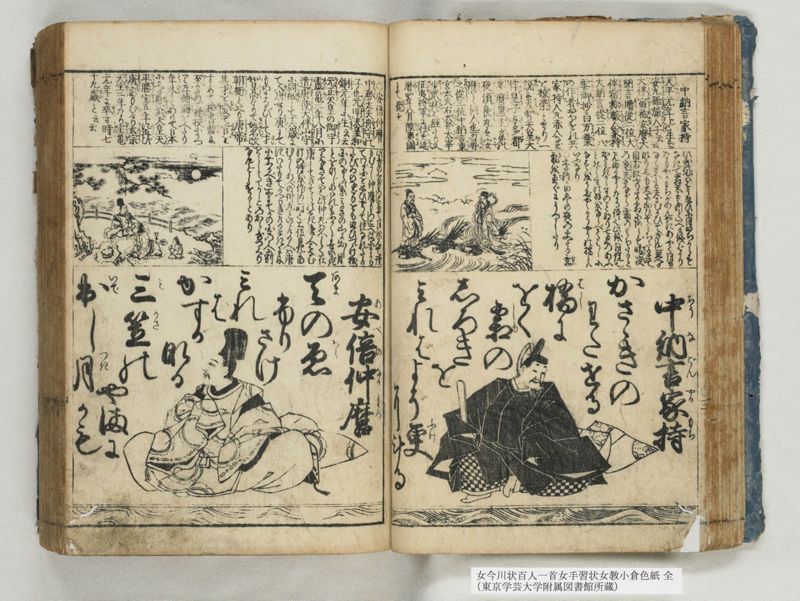
翻刻
【右丁 上段】
○中納言家持
天平(てんへい)元年己巳生ず
安丸(やすまるの)孫(まご)旅人(たびんと)子云云
大伴宿祢(をゝとものすくね)安麿(やすまろ)大
納言 贈従(ぞうしう)二位 大(をゝ)
伴宿祢(とものすくね)旅人(たひんど)家持(やかもち)
大納言 従(じう)二位 八(や)
雲御抄(くもごせう)に曰 万葉(まんよう)
の作者(さくしや)おほけれ共
家持(やかもち)人丸赤人など
を棟梁(とうりやう)とせり一
説(せつ)に天智(てんち)天皇 大(おゝ)
伴皇子(とものわうし)予多都(よたと)
无麿(むまろ)黒主(くろぬし)が弟(をとゝ)の
夜須良丸(やすよしまる)は安(やす)
麿(まろ)と同人也可_レ尋(たづぬ)
_レ之(これを)従(じう)三位中納言 東(とう)
宮(ぐう)太夫 右大弁(うたいべん)太宰(たざい)
少弐(せうに)抔(など)を経(へ)たり又
征夷将軍(せいいしやうぐん)に任(にん)ず延(えん)
暦(りやく)四年八月 陸奥国(むつのくに)
にて薨(こう)す
【同 中段】
此哥の心ははうゑひに月おちからす
なきて霜天にみつといへる儀ばかり
なりやかもちがあんやにあふて月も
なくさへたる天にむかひてぎんじ思へる
なりしも天に向ひてみちたるとて
目前にふりたる霜にあらず晴夜(せいや)
の寒天(かんてん)さながら霜のみちたると
見ゆるやうなる体也此義は御説也
かさゝぎからすのことなり七夕のあふ
ときからすの羽をならべてはしに
なすをうじやくかうやうの橋とは
いふなり
○季注に曰冬の夜の更たる景(けい)
気(き)を直(す)ぐにうつしたり
【同 下段】
中納言家持(ちうなごんやかもち)
かさゝきの
わたれる
橋(はし)に
をく
霜(しも)の
しろき
を
みればよぞ更(ふけ)
にける
【左丁 上段】
○安倍仲麿
中務(なかつかさ)太夫 舟守(ふなもり)の
子也 元明天皇(げんみやうてんわう)和(わ)
銅(どう)元年に生(むまる)云云
元正(けんしやう)天皇の御宇(ぎよう)
霊亀(れいき)二年八月に
遣唐使(けんとうし)大伴山守(をゝとものやまもり)
に同船(どうせん)して十六 歳(さい)に
て入唐(につとう)せり唐(もろこし)にて
ものまなびして才(さい)
智(ち)高(たかく)なりて姓名(せいめい)改
朝衡(てうかう)といへり唐帝(とうてい)
其 才(さい)を愛(あい)して官(くわん)を
すゝめて秘書監(ひしよかん)に
至(いたり)かさねて撿挍(けんこう)にうつ
り左補闕(さほけつ)をへたり
年(とし)久(ひさ)しくありて日本
にかへる聖武(しやうむ)天皇 天(てん)
平勝宝(へいせうほう)五年に再(ふたゝ)び
唐(もろこし)におもむけり玄宗(けんさう)
天宝(てんほう)二年なり宝亀(ほうき)
元年に卒(そつ)す時(ときに)七
十九 歳(さい)と云云
【同 中段】
此哥の心はもろこしにて月を見て読
るむかし仲麿もろこしへ使にまかり
てわが国を思ひやりて住なれたる
たびゐのなごりをも思ひつゞけ我
国のならの京みかさの山に出し月
とをなじあはれもふかくよせいかぎ
りなきてい也此仲丸は久しく在
唐してきてうのとき唐人はなむ
けの詩を作りし時也土佐日記に曰
むかしあべの仲丸といゝける人は唐
にいたりてかへりきけるときに舟
に乗るべき所にてかの国の人に別
をゝしみてかしこのから哥つくり
なんどしけるとあり
【同 下段】
安倍仲麿(あべのなかまろ)
天(あま)の原(はら)
ふり
さけ
みれ
ば
かすが
なる
三笠(みかさ)の
やまに
出(いで)し月(つき)かも
現代語訳
【右丁 上段】
○中納言家持
天平元年己巳(729年)生まれ。
安麿の孫、旅人の子という。
大伴宿禰安麿は大納言、贈従二位。大伴宿禰旅人、家持は大納言、従二位。
『八雲御抄』によれば、万葉集の作者は多いけれども、家持、人麻呂、赤人などを棟梁とする。
一説に天智天皇−大伴皇子−予多都无麿−黒主の弟の夜須良丸は安麿と同人であるという。これは調べてみる必要がある。
従三位中納言、東宮太夫、右大弁、太宰少弐などを歴任した。また征夷将軍に任じられた。延暦四年(785年)八月、陸奥国にて薨去。
【同 中段】
この歌の心は、鵲の渡る橋に月が落ち、烏が鳴いて霜が天に満ちているということばかりである。家持が案内に遭って月もなく冴えた天に向かって吟じ思ったのである。天に向かって満ちているといっても、目前に降りた霜ではない。晴夜の寒天がそのまま霜に満ちたように見える様子である。この解釈は御説である。
鵲は烏のことである。七夕の逢う時、烏の羽を並べて橋とする。これを「うじゃく橋」のような橋という。
○季吟注によれば、冬の夜の更けた景気を直接に写したものである。
【同 下段】
中納言家持
鵲の
渡れる
橋に
置く
霜の
白き
を
見れば夜ぞ更け
にける
【左丁 上段】
○安倍仲麿
中務大夫。舟守の子である。元明天皇和銅元年(708年)に生まれるという。
元正天皇の御代、霊亀二年(716年)八月に遣唐使大伴山守と同船して十六歳にて入唐した。唐にて学問をして才智が高くなり、姓名を改めて朝衡と言った。唐帝がその才を愛して官職を進めて秘書監に至り、重ねて検校に移り、左補闕を経た。
年久しくあって日本に帰る。聖武天皇天平勝宝五年(753年)に再び唐に赴いた。玄宗天宝二年(743年)である。宝亀元年(770年)に卒す。時に七十九歳という。
【同 中段】
この歌の心は、唐にて月を見て詠んだものである。昔仲麿が唐へ使者として参り、わが国を思いやって住み慣れた旅居の名残をも思い続け、わが国の奈良の京、三笠の山に出た月と同じ、趣も深く余情限りない様子である。この仲麿は久しく在唐して帰朝の時、唐人が送別の詩を作った時である。
『土佐日記』によれば、昔安倍の仲麿という人は唐に至って帰ってくる時に、船に乗るべき所でかの国の人に別れを惜しんで、あちらの唐歌作りなどをしたとある。
【同 下段】
安倍仲麿
天の原
振り
仰け
見れ
ば
春日
なる
三笠の
山に
出でし月かも
英語訳
【Right Page - Upper Section】
○Middle Counselor Yakamochi
Born in the first year of Tenpyō, Kinoto-mi (729 CE).
Grandson of Yasumaro, son of Tabito.
Ōtomo no Sukune Yasumaro was Grand Counselor, posthumously granted Junior Second Rank. Ōtomo no Sukune Tabito and Yakamochi were Grand Counselors, Junior Second Rank.
According to the Yakumo Goshō, while there are many authors in the Man'yōshū, Yakamochi, Hitomaro, Akahito and others are considered the pillars.
One theory states that from Emperor Tenji → Prince Ōtomo → Yotato Mumaro → Yasuyoshimaru, younger brother of Kuronushi, is the same person as Yasumaro. This should be investigated.
He served as Junior Third Rank Middle Counselor, Eastern Palace Supervisor, Major Controller of the Right, Junior Assistant Governor-General of Dazaifu, etc. He was also appointed as Commanding General for Pacifying the East. He died in Mutsu Province in the eighth month of Enryaku 4 (785 CE).
【Same Page - Middle Section】
The meaning of this poem is simply about the moon setting on the bridge where magpies cross, crows crying, and frost filling the heaven. Yakamochi, encountering this scene, composed this while contemplating the moonless, clear-cold sky. Though it says "filling the heaven," this is not frost that has actually fallen before one's eyes. It describes how the clear cold night sky itself appears to be filled with frost. This interpretation follows the master's explanation.
"Kasasagi" refers to crows. When the Weaver and Cowherd meet at Tanabata, crows line up their wings to form a bridge. This is called the "magpie bridge."
○According to Kigin's commentary, this directly captures the atmosphere of a deep winter night.
【Same Page - Lower Section】
Middle Counselor Yakamochi
On the bridge
that magpies
cross
the white
frost
that lies
when I see it, the night
has grown deep
【Left Page - Upper Section】
○Abe no Nakamaro
Middle Palace Secretary. Son of Funamori. Born in the first year of Wadō under Emperor Genmei (708 CE).
In the reign of Emperor Genshō, in the eighth month of Reiki 2 (716 CE), he sailed with the envoy to Tang, Ōtomo no Yamamori, entering Tang at age sixteen. He studied in Tang, became highly intelligent, changed his name to Chōkō. The Tang Emperor loved his talent, promoted his rank to Secretary of the Imperial Library, then transferred to Inspector, and served as Left Reminder.
After many years, he returned to Japan. In Emperor Shōmu's Tenpyō-shōhō 5 (753 CE), he went to Tang again. This was Xuanzong's Tianbao 2 (743 CE). He died in Hōki 1 (770 CE) at age seventy-nine.
【Same Page - Middle Section】
The meaning of this poem is that he composed it while viewing the moon in Tang. Long ago, when Nakamaro went as an envoy to Tang, he thought of his homeland, continuing to remember the traces of his familiar life in foreign lands. The moon that rose over Mount Mikasa in Nara, the capital of his country, evokes the same deep emotion and limitless sentiment. This Nakamaro had been in Tang for a long time, and this was when Tang people composed farewell poems upon his departure.
According to the Tosa Diary, long ago a person called Abe no Nakamaro went to Tang, and when returning, at the place where he was to board the ship, lamenting parting with the people of that country, he composed Tang poems and such.
【Same Page - Lower Section】
Abe no Nakamaro
Looking up at
the wide
heavens
when I
see
in Kasuga
lies
Mount Mikasa
where
that moon emerged