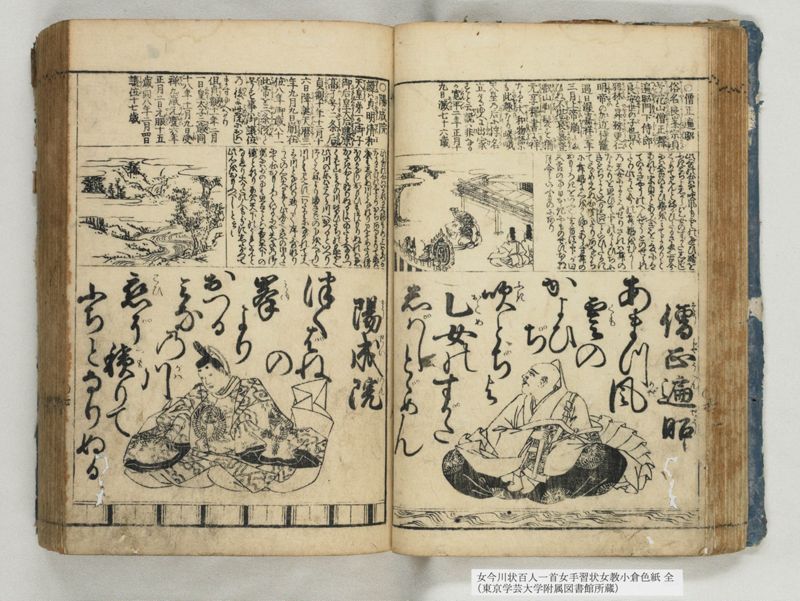
翻刻
【右丁 上段】
○僧正遍昭
俗名(そくみやう)良峯宗貞(よしみねのむねさだ)
号(こうす)_二花山僧正(くはさんのそうじやうと)_一釈(しやく)
遍昭(へんせう)門下(もんか)侍郎(じらう)
良安世(りやうのやすよ)の子(こ)也 早(はや)く
羽林(うりん)と昇(のほり)殊更(ことさら)仁(にん)
明帝(みやうてい)の加近侍寵
遇日渥 嘉祥(かしやう)三年
三月 上帝(しやうてい)崩(ほうじ)たま
ひぬ不(す)_レ堪(たへ)_二哀慕(あいぼに)_一登(のほり)【二点脱】
叡山(ゑいさん)【一点脱】剃髪(ていはつ)す猶(なを)
元享釈書(けんこうしやくしよ)に祥(つまひらか)
なり大和物語(やまとものがたり)に
も此趣(このおもむき)なり嵯峨(さが)
天皇の后(きさき)に浮名(うきな)
立けるゆへに出家(しゆつけ)
すと云 説(せつ)は非(ひ)なる
か寛平(くわんへい)二年正月十
九日 滅(めつす)七十六歳
【同 中段】
此哥の心は雲吹風も雲の通ひ路を
ふきとぢよしからば乙女のすがたしばし
とゞめて見んとねがひたるさま也古今
には五節のまひ姫をみてよめりと
あれば宗貞とあるべきを爰には
ていかきやうのへんぜうとのせられ
たり此うた今の舞姫をむかし
の天女によみなせりされは舞の
なごりを思ひて雲のかよひぢふ
きとぢよといへりしばしといひたるに
てとゞめえぬ心聞えたりあながち
に舞姫に心をかくるにあらず舞の
おもしろきをいふ也玄旨法印が曰
五節の事日本記【紀の誤】にものせず本朝
月令といふものにあり
【同 下段】
僧正(そうじやう)遍昭(へんせう)
あまつ風(かぜ)
雲(くも)の
かよひ
ぢ
吹(ふき)とぢよ
乙女(おとめ)のすがた
しばしとゞめん
【左丁 上段】
○陽成院
諱(いみな)は貞明(さたあきら)清和(せいわ)
天皇(てんわう)第一之御子
御 后(きさき)皇大后(くわうたいこう)藤原(ふぢはら)
高子(たかご)号(かうす)_二 二条后(にてうのきさき)_一
貞観(じやうくわん)十年十二月十
六日 降誕(こうたん)天暦(てんりやく)三
年九月九日 崩(ほうす)在(ざい)
位(い)八年御歳八十一
此帝(このみかと)を二条院(にでうのいん)と
号(ごう)す事は御譲位(ごじやうい)
の後(のち)に此院(このいん)におはし
ますゆへなり
但 貞観(じやうくわん)十一年二月
一日 皇太子(くわうたいし)二 歳(さい)同
十八年十一月九日 受(じゆ)
禅(ぜん)九歳 元慶(げんけい)六年
正月二日 元服(げんぶく)十五
歳同八年二月四日
譲位(しやうい)十七歳
【同 中段】
此哥の心はいかなる大河も水上はわづか
なるこけのしたゞりおちあつまりて末は
底もしれぬ川となれり見そめたる俤
ほのかなりしおもひもつもりぬれは忍
かたき心となりぬるよしのたとへなりつ
くば山みなの川皆ひたちの名所也
此川の東はさくら川へおつるといへり
つくはねよりまさごの下をくゞりて
川とも見へず一わたりにながれてすへ
は川となれり総【惣】して序哥なり
うたの心は大りやく此分也恋の御うた
にて心おもしろく侍るにや天子の御
身には少の事も思召とは善は天下の
徳となり悪は天下のうれえと
なれり大かたの人も分にしたがつて
此心をおもふべしと云々
【同 下段】
陽成院(やうせいいん)
つくばね
の
峯(みね)
より
おつる
みな
の
川(がは)
恋(こひ)ぞ
積(つも)りて
ふちとなりぬる
現代語訳
【右丁 上段】
○僧正遍昭
俗名は良峯宗貞。花山僧正と号する。釈遍昭という。門下侍郎良安世の子である。早くから羽林(近衛兵)となり、特に仁明天皇の寵愛を受けた。嘉祥三年三月、仁明天皇が崩御された。哀慕に堪えられず比叡山に登り剃髪した。詳しくは『元亨釈書』に記されている。『大和物語』にもこの趣旨が記されている。嵯峨天皇の后との浮名が立ったために出家したという説は間違いである。寛平二年正月十九日に入滅、七十六歳。
【同 中段】
この歌の心は、雲を吹く風よ、雲の通い路を吹き塞いでくれ、そうすれば乙女の姿をしばらく留めて見ることができるだろうと願う様子である。『古今集』には「五節の舞姫を見て詠んだ」とあるから、宗貞とあるべきところを、ここでは出家後の遍昭として載せられている。この歌は今の舞姫を昔の天女に詠みなしている。それで舞の名残を思って「雲の通い路吹き塞げよ」と言っている。「しばし」と言ったことで、留めることができない心が聞こえる。むやみに舞姫に心を奪われるのではなく、舞の面白さを詠んでいる。玄旨法印が言うには、五節のことは『日本書紀』には載せず、『本朝月令』という書物にある。
【同 下段】
僧正遍昭
天つ風
雲の
通い
路
吹き塞げよ
乙女の姿
しばし留めん
【左丁 上段】
○陽成院
諱は貞明、清和天皇第一の御子。
御后は皇大后藤原高子、二条后と号する。
貞観十年十二月十六日降誕、天暦三年九月九日崩御、在位八年、御歳八十一。
この帝を二条院と号することは、御譲位の後にこの院にいらっしゃるからである。
ただし、貞観十一年二月一日皇太子(二歳)、同十八年十一月九日受禅(九歳)、元慶六年正月二日元服(十五歳)、同八年二月四日譲位(十七歳)。
【同 中段】
この歌の心は、いかなる大河も水上はわずかな苔の下を滴り落ち、集まって末は底も知れない川となった。見初めた面影はかすかであった思いも積もれば忍び難い心となったという例えである。筑波山、みなの川、皆常陸の名所である。この川の東は桜川へ注ぐと言われている。筑波嶺より真砂の下を潜って川とも見えず一面に流れて末は川となった。総じて序歌である。歌の心は大略この通りである。恋の御歌で心面白くあるのだろうか。天子の御身には少しのことも思し召しとは、善は天下の徳となり、悪は天下の憂いとなった。普通の人も身分に従ってこの心を思うべきであるということ。
【同 下段】
陽成院
筑波嶺の
峯
より
落つる
みなの
川
恋ぞ
積もりて
淵となりぬる
英語訳
【Right Page - Upper Section】
○Priestly Prelate Henshō
His secular name was Yoshimine no Munesada. He was called Kazan Priestly Prelate. Known as Monk Henshō. He was the son of Monjū Jirō Ryō no Yasuyo. He became a palace guard early and was especially favored by Emperor Ninmyō. In the third month of Kashō 3 (850), Emperor Ninmyō passed away. Unable to bear his grief and longing, he climbed Mount Hiei and shaved his head. Details are recorded in the "Genkō Shakusho." The "Yamato Monogatari" also records this account. The theory that he became a monk because of scandalous rumors with Emperor Saga's empress is false. He died on the nineteenth day of the first month of Kanpei 2 (890) at age seventy-six.
【Same Page - Middle Section】
The meaning of this poem is: O wind that blows the clouds, please block the pathway of the clouds, so that I might briefly hold and gaze upon the maiden's figure. The Kokinshū states this was "composed upon seeing a Gosechi dancer," so it should be attributed to Munesada, but here it is attributed to Henshō after his ordination. This poem likens the present dancer to ancient celestial maidens. Therefore, thinking of the dance's afterglow, he says "block the pathway of clouds." By saying "briefly," one hears the heart that cannot detain her. This is not about being infatuated with the dancer, but about expressing the beauty of the dance. High Priest Gen'shi said that Gosechi affairs are not recorded in the "Nihon Shoki" but appear in a work called "Honchō Getsuryō."
【Same Page - Lower Section】
Priestly Prelate Henshō
Heavenly wind—
block the pathway
of clouds
so I might briefly
hold
the maiden's form
【Left Page - Upper Section】
○Emperor Yōzei
His personal name was Sadaakira, first son of Emperor Seiwa.
His empress was Grand Empress Fujiwara no Takako, called Nijō Empress.
Born on the sixteenth day of the twelfth month of Jōgan 10 (868), died on the ninth day of the ninth month of Tenryaku 3 (949), reigned eight years, lived to age eighty-one.
This emperor is called Nijō-in because after his abdication he resided at this palace.
He became crown prince on the first day of the second month of Jōgan 11 (869) at age two, received imperial succession on the ninth day of the eleventh month of Jōgan 18 (876) at age nine, came of age on the second day of the first month of Gangyō 6 (882) at age fifteen, and abdicated on the fourth day of the second month of Gangyō 8 (884) at age seventeen.
【Same Page - Middle Section】
The meaning of this poem is: no matter how great a river, its source is merely droplets falling from beneath moss, gathering together until it becomes a river with unknowable depths. The faint glimpse of someone first seen, when such feelings accumulate, becomes a heart difficult to suppress—this is the metaphor. Mount Tsukuba and the Mina River are all famous places in Hitachi Province. This river is said to flow east into the Sakura River. From Tsukuba peak it flows underground beneath the sand, not appearing as a river but flowing in a single sweep until it becomes a river at the end. This is generally a jo (preface) poem. The poem's meaning is roughly as described. Being a love poem, perhaps the heart finds it interesting. For one in the emperor's position, even small thoughts have consequences—good becomes virtue for the realm, evil becomes the realm's sorrow. Ordinary people too should consider this heart according to their station.
【Same Page - Lower Section】
Emperor Yōzei
From the peak
of Tsukuba
falling—
the Mina
River—
love has
accumulated
to become a deep pool