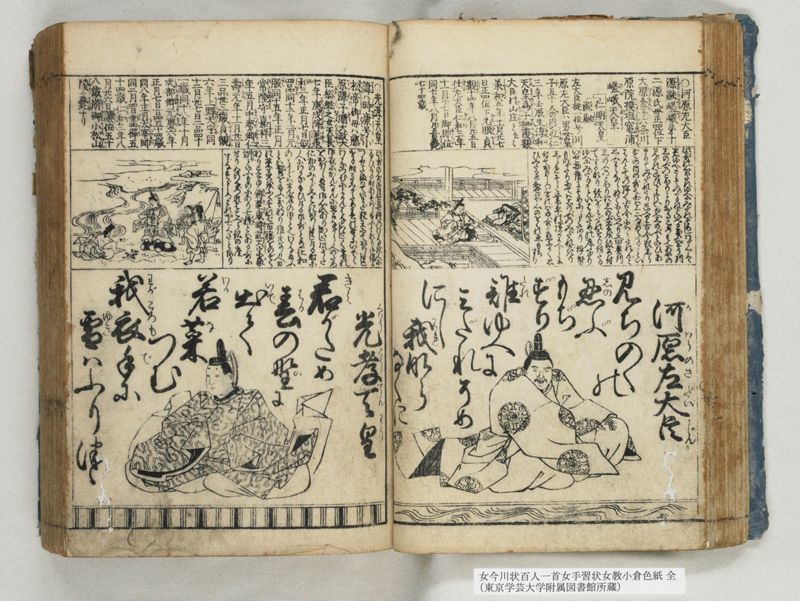
翻刻
【右丁 上段】
○河原左大臣
源融(みなもとのとをる)嵯峨(さが)第十
二源氏母正四位下
大 原金子(はらきんご)六条川
原院 摸(うつす)_二塩竈浦(しほがまのうらを)_一
嵯峨天皇(さがてんわう)
仁明天皇
源 融(とをる)
左大臣従一位号川
原左大臣は男女 皇(わう)
子(じ)五十人の内也 弘仁(こうにん)
三年壬辰生 淳和(じゆんわ)
天皇(てんわうの)為(すと)_レ子(こと)栖霞観(せいかくわん)
大臣の山庄(さんしやう)と云々
承和(しやうわ)五年十一月廿七
日正四位下 元服(げんぶく)貞(でう)
観(くわん)十四年八月廿五日
任(にんず)_二左大臣【一点脱】 仁和(にんわ)三年
十一月十七日御 即位(そくい)
同七年八月廿五日 薨(こうす)
七十四歳
【同 中段】
此哥の心はたれゆへにみだれそめしわが心は
君ゆへにこそみだるれといへる義也をう州
しのぶのこほりよりおるころも也あやの
みだれにいひよそへしゆへしのぶといひあ
まりてみだれたりといへり古今題しら
ずの内の哥也心は上二句はみだるゝとい
はんとての序也古今にはみたれんと
思ふわかならなくにといへり又曰奥州
しのぶのこほりにしのぶ草を紋に付
てするなり紋をみだれすり付たる
ゆへにみだるゝといはんための序なり
いせ物語にそめにしとあり伊勢
ものがたりにてはしのぶのみだれかぎり
しられそ【ママ】と業平の読るかへしに
付ておもしろければ返歌○恋にかく思
ひみたると知せはや心のをくの忍もちすり
【同 下段】
河原左大臣(かはらのさだいじん)
みちのくの
忍(しの)ぶ
もぢ
ずり
誰(たれ)ゆへに
みだれそめ
にし
我(われ)なら
なくに
【左丁 上段】
○光孝天皇
諱(いみな)は時康(ときやす)号(こうす)_二小(こ)
松帝(まつのみかとゝ)_一御 母(はゝ)は藤(ふぢ)
原沢子(はらのさはご)贈(そう)大政大
臣 総継(ふさつぐ)之 女(むすめ)天長(てんちやう)
七年 庚戌(かのへいぬ)降誕(こうたん)承(しやう)
和(わ)三年正月七日 叙(しよす)_二
四品(しほん)【一点脱】同十二年二月 元(けん)
服(ぶく)同十五年正月
常陸守(ひたちのかみ)嘉祥(かしやう)三
年五月 中務卿(なかつかさきやう)仁(にん)
寿(じゆ)元(けん)年十一月廿一日
三品卅三歳 貞観(じやうぐわん)
六年 上野大守(かうつけのたいしゆ)同
十二月廿七日二品四十
一歳同十八年十月
式部卿(しきぶきやう)元慶(けんけい)六年
正月七日一品五十四歳
同八年正月 太宰帥(だざいのそつ)
同二月四日 画禅(ぐはせん)五
十四歳 仁和(にんわ)三年八
月廿六日 譲位(しやうい)五十
八歳 崩御(ほうぎよ)小松山(こまつさん)
陵(りやう)ニ薨(かうす)ナリ
【同 中段】
此哥の心は正月七日七種のわかなを人に
給ひける時あそばし給ふとなり御位に
つかせたまはていまだ親王にておはしまし
ける時きみがため春の野にいでゝ
わかなつむによかんはなはたしく雪の
御衣にかんなんに思召ながら人のため
をおぼしめす御心入ありかたし此うた
仁和のみかどみこにおはしましたる時に
人にわかな給ひける御哥と有仁和
のみかどは光孝の御こと也わかな給ふ
とは賀(が)を給ふ義なり誰共なし人日
に菜羹をふくすれば百病をのぞく
なりと云事 荊楚歳時記(けいそさいじき)大宗家(たいさうか)
訓(くん)といふものにあり七 種(くさ)とはある哥に
せり五行なづなはこべら仏の座
すゞなすゞしろこれや七くさとあり
【同 下段】
光孝天皇(くわうこうてんわう)
君(きみ)がため
春(はる)の野(の)に
出(いで)て
若菜(わかな)
つむ
我(わが)衣手(ころもで)に
雪はふりつゝ
現代語訳
【右丁 上段】
○河原左大臣
源融は嵯峨天皇の第十二皇子。母は正四位下大原氏。六条川原院で塩竈浦を模して造営した。
嵯峨天皇
仁明天皇
源融
左大臣従一位、川原左大臣と号する。男女皇子五十人の内の一人である。弘仁三年壬辰生まれ。淳和天皇の皇子とする。栖霞観大臣の山荘という。
承和五年十一月二十七日正四位下で元服。貞観十四年八月二十五日左大臣に任じられる。仁和三年十一月十七日御即位。同七年八月二十五日薨去、七十四歳。
【同 中段】
この歌の心は「誰のために乱れ始めたのか、わが心は。君のためにこそ乱れるのだ」という意味である。奥州信夫郡より織る衣である。模様の乱れに言い寄せたので「しのぶ」と言い余って「乱れたり」と言っている。『古今集』の題知らずの歌である。心は上二句は「乱れる」と言わんとしての序である。『古今集』には「みだれんと思ふ我ならなくに」とある。また曰く、奥州信夫郡で忍草を文様に付けて摺るのである。文様を乱れ摺り付けたので「乱れる」と言わんための序なり。『伊勢物語』に「そめにし」とある。『伊勢物語』では「しのぶの乱れ限り知られず」と業平の詠んだ返しに付けて面白ければ返歌○恋にかく思い乱れると知らせばや心の奥の忍摺り
【同 下段】
河原左大臣
みちのくの
忍ぶ
もじ
摺り
誰ゆえに
乱れ初め
にし
我なら
なくに
【左丁 上段】
○光孝天皇
諱は時康、小松帝と号する。御母は藤原沢子、贈大政大臣総継の女。天長七年庚戌降誕。承和三年正月七日四品に叙せられる。同十二年二月元服。同十五年正月常陸守。嘉祥三年五月中務卿。仁寿元年十一月二十一日三品三十三歳。貞観六年上野大守。同十二月二十七日二品四十一歳。同十八年十月式部卿。元慶六年正月七日一品五十四歳。同八年正月太宰帥。同二月四日画禅五十四歳。仁和三年八月二十六日譲位五十八歳。崩御、小松山陵に葬られる。
【同 中段】
この歌の心は正月七日七種の若菜を人に給った時にお詠みになったということである。御位につかれる前、まだ親王でいらっしゃった時「君がため春の野に出でて若菜摘む我が袖に雪は降りつつ」寒さが激しく雪の御衣に寒さを思し召しながら人のためを思し召す御心入れは有り難い。この歌は仁和の帝が皇子でいらっしゃった時に人に若菜を給った御歌とある。仁和の帝は光孝のことである。若菜を給うとは賀を給う意味である。誰でも人日に菜羹を服すれば百病を除くという事。『荆楚歳時記』『大宗家訓』というものにある。七種とはある歌に「芹五行薺菜繁縷仏の座鈴菜蘿蔔これや七草」とある。
【同 下段】
光孝天皇
君がため
春の野に
出でて
若菜
摘む
我が衣手に
雪は降りつつ
英語訳
【Right Page - Upper Section】
○Minister of the Left Kawara
Minamoto no Tōru was the twelfth imperial prince of Emperor Saga. His mother was of Fourth Lower Rank, from the Ōhara clan. At Rokujō Kawara-in, he created a reproduction of Shiogama Bay.
Emperor Saga
Emperor Ninmyō
Minamoto no Tōru
Minister of the Left, Junior First Rank, called Minister of the Left Kawara. He was one among fifty male and female imperial children. Born in Kōnin 3, year of the Metal Dog. Considered a son of Emperor Junna. Called the mountain villa of Minister Seikakukan.
On the twenty-seventh day of the eleventh month of Jōwa 5, he came of age with Fourth Lower Rank. On the twenty-fifth day of the eighth month of Jōgan 14, he was appointed Minister of the Left. Imperial accession on the seventeenth day of the eleventh month of Nin'na 3. Died on the twenty-fifth day of the eighth month of the same seventh year, at age seventy-four.
【Same Page - Middle Section】
The meaning of this poem is: "For whose sake did my heart begin to become disordered? It is only for you that it becomes disordered." This refers to cloth woven from Shinobu District in Ōshū. Because it alludes to the disorder of the pattern, it says "shinobu" and continues with "disordered." This is a poem from the "topic unknown" section of the Kokinshū. The meaning is that the first two lines serve as a preface to say "disordered." The Kokinshū has "I am not one who thinks to become disordered." Also said: In Shinobu District of Ōshū, they rub shinobu grass into patterns. Because the pattern is rubbed in a disordered way, this serves as a preface to say "disordered." The Ise Monogatari has "someishi." In the Ise Monogatari, because it was interesting in connection with Narihira's reply "the disorder of shinobu knows no limit," it became a response poem ○ How I wish to let it be known that love makes me think in such disorder, the shinobu-rubbing of the heart's depths
【Same Page - Lower Section】
Minister of the Left Kawara
From Michinoku's
shinobu
pattern
rubbing—
for whose sake
did it begin
to become
disordered,
not I
【Left Page - Upper Section】
○Emperor Kōkō
His personal name was Tokiyasu, called Emperor Komatsu. His mother was Fujiwara no Sawako, daughter of Grand Minister Fusatsugu. Born in Tenchō 7, year of the Metal Dog. On the seventh day of the first month of Jōwa 3, granted Fourth Rank. In the second month of the same twelfth year, came of age. In the first month of the same fifteenth year, Governor of Hitachi. In the fifth month of Kashō 3, Minister of Central Affairs. On the twenty-first day of the eleventh month of Ninju 1, Third Rank at thirty-three years. In Jōgan 6, Governor-General of Kōzuke. On the twenty-seventh day of the twelfth month of the same year, Second Rank at forty-one years. In the tenth month of the same eighteenth year, Minister of Ceremonial. On the seventh day of the first month of Gangyō 6, First Rank at fifty-four years. In the first month of the same eighth year, Governor-General of Dazaifu. On the fourth day of the second month of the same year, received imperial succession at fifty-four years. On the twenty-sixth day of the eighth month of Nin'na 3, abdicated at fifty-eight years. Passed away and was buried at Komatsuyama Mausoleum.
【Same Page - Middle Section】
The meaning of this poem is that on the seventh day of the first month, when giving people the seven herbs of young greens, he composed this. Before ascending to the throne, when he was still a prince: "For you, my lord, I go out to spring fields to pick young greens, while snow keeps falling on my sleeves." Despite the severe cold and snow on his robes, his considerate heart thinking of others while enduring the cold is admirable. This poem is said to be composed when the Emperor Nin'na was a prince and gave young greens to people. Emperor Nin'na refers to Emperor Kōkō. "Giving young greens" means giving celebration. Anyone who takes herb soup on Jinjitsu (the seventh day) will ward off a hundred illnesses. This is found in works called "Jingchu Suishiji" and "Taisōka-kun." The seven herbs are mentioned in a poem: "Water dropwort, turnip, shepherd's purse, chickweed, Buddha's seat, turnip, radish—these are the seven herbs."
【Same Page - Lower Section】
Emperor Kōkō
For you, my lord,
I go out to
spring fields
picking young
greens—
snow keeps falling
on my sleeves