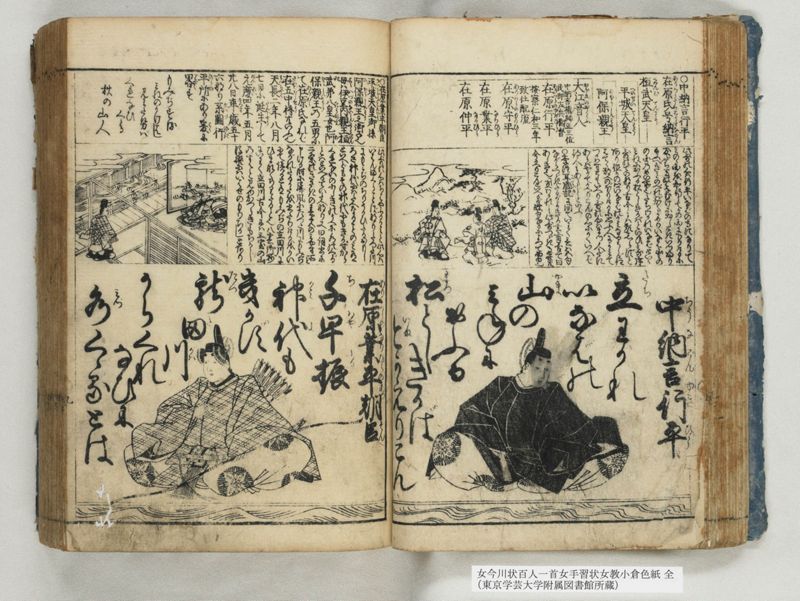
翻刻
【右丁 上段】
○中納言行平
在原氏(ありわらうち)ノ号(こうす)納言(なごん)
桓武天皇(くわんむてんわう)
平城天皇(へいせいてんわう)
阿保親王(あほうしんわう)
大江音人(おほゑのおとゝふ)【ママ コマ29左丁には同人を「おとふど」とあり】
《割書:中納言権帥正三位|民部左兵衛督》
在原行平(ありわらのゆきひら)
《割書:按察仁和三年|致士配流》
在原守平(ありわらのもりひら)
在原 業平(なりひら)
在原 仲平(なかひら)
【同 中段】
此哥の心は行平いなばの守になりて
みのゝ国を知行してかの国に下りけるに
友だち馬のはなむけに出しときいつ帰り
給ふべきとのべればかくよめりいなは山みの
の国のめい所也たちわかれいなばといゝ
みねにおふる松としきかばといひみな序
哥のていなり古今には題しらずと
あり但かの卿いなばのかみなりしが住
はてゝ都へのぼりけるに思ふ人によみて
つかはすともいへり哥の心はまつ人だに
あらばやがてかへりこんの心にかくいへば
待人もあらじといふ
○季注 耳底記(にていき)に問ていわく言は五句
ながらつゞきたるがよきか其旨答て曰
あしき也〽立わかれし此哥つゞき過せ共
今かへりこんといへるが疎句なるによつて面白也
【同 下段】
中納言行平(ちうなごんゆきひら)
立(たち)わかれ
いなばの
山(やま)の
みねに
おふる
松(まつ)としきかば
今(いま)かえりこん
【左丁 上段】
○在原業平朝臣
平城天皇(へいしやうてんわう)御孫
阿保親王(あほうしんわう)之御子也
母(はゝ)は伊豆内親王(いづのないしんわう)桓(くわん)
武(む)第八 皇女(くわうぢよ)也 阿(あ)
保(ほう)親王(しんわう)の五男に
て在原(ありわら)氏なれば
在五中将(さいごちうせう)共いふ也
天長(てんちやう)二年八月
七日に誕生(たんじやう)して
元慶(げんけい)四年五月
廿八日 卒(そつす)歳五十
六なり系図(けいづ)行(ゆき)
平(ひらの)所にあり爰(こゝ)に
略(りやく)す
もみぢする
みねのかけはし
見わたせば
くれなひ
くゝる
秋の山人
【同 中段】
此哥の心はちはやふるかみと此心は
いはんまくらことばなりたつた川
にもみぢのちりうかひたるおもし
ろさ神代にはたへなることのみ有
といへどもその神代にもきかずから
くれないのにしきのうへに水のくゞる
とはといへるていたへなり又曰詞書に
二条のきさきの春宮のみやす所と
申ける時に屏風にたつた川にもみぢ
ながれたるかたを書たりけるをか【ママ 「た」の誤】い
にて読ると有もみぢの立田川に
ひまなくちりたると也八雲御抄
にいわく立田川古今には三室の山
のすえと見ゆかつらきもちかし
後撰にはいはせのもりちかしとあり
【同 下段】
在原業平朝臣(ありわらのなりひらのあつそん)
千早振(ちはやふる)
神代(かみよ)も
きかず
龍(たつ)
田(た)
川(がは)
からくれ
なひに
水(みづ)くゞるとは
現代語訳
【右丁 上段】
○中納言行平
在原氏、号は納言
桓武天皇
平城天皇
阿保親王
大江音人
《割書:中納言権帥正三位|民部左兵衛督》
在原行平
《割書:按察仁和三年|致仕配流》
在原守平
在原業平
在原仲平
【同 中段】
この歌の心は、行平が因幡守となって美濃国を知行してその国に下った時、友達が馬の餞別に出てきて「いつお帰りになるでしょうか」と言うので、このように詠んだのである。因幡山は美濃国の名所である。「立ち別れ」「いなば」と言い、「峰に生える松」「としきかば」と言い、皆序歌の体である。『古今集』には題知らずとある。ただしその卿が因幡守であったが任期が終わって都へ上った時、思う人に詠んで送ったとも言っている。歌の心は、待つ人でもいるならばすぐに帰って来ようという心で、このように言えば、待つ人もいないだろうということである。
○季注『耳底記』に問うて言うことには「言葉は五句すべて続いているのが良いのか」その趣旨を答えて曰く「悪い。〽立ち別れし、この歌は続きすぎているが、今帰り来んと言っているのが疎句であることによって面白い」
【同 下段】
中納言行平
立ち別れ
いなばの
山の
峰に
生える
松としきかば
今帰り来ん
【左丁 上段】
○在原業平朝臣
平城天皇の御孫、阿保親王の御子である。母は伊都内親王、桓武第八皇女である。阿保親王の五男で在原氏なので在五中将とも言う。天長二年八月七日に誕生して元慶四年五月二十八日に卒去、歳五十六である。系図は行平の所にある。ここでは省略する。
もみじする
峰の桟橋
見渡せば
紅
潜る
秋の山人
【同 中段】
この歌の心は「ちはやぶる神」とこの心は言わんまくら言葉なり。竜田川に紅葉が散り浮かんでいる面白さ。神代には絶えてないことばかりあると言うけれども、その神代にも聞かない。からくれないの錦の上に水が潜るとはという体は絶えて無い。また曰く、詞書に「二条の后の春宮の御息所と申した時に屏風に竜田川に紅葉の流れた方を描いたのを題にして読む」とある。紅葉の竜田川に隙間なく散ったということである。『八雲御抄』に言うことには「竜田川、『古今』には三室の山の末と見え、葛城も近い。『後撰』には石瀬の森近しとある」
【同 下段】
在原業平朝臣
千早振る
神代も
聞かず
竜
田
川
からくれ
ないに
水潜るとは
英語訳
【Right Page - Upper Section】
○Middle Counselor Yukihira
Of the Ariwara clan, called Counselor
Emperor Kanmu
Emperor Heizei
Prince Aho
Ōe no Otodo
《Side note: Middle Counselor, Provisional Governor-General, Senior Third Rank | Minister of Popular Affairs, Left Military Guard Commander》
Ariwara no Yukihira
《Side note: Inspector, Nin'na 3 | Retirement and exile》
Ariwara no Morihira
Ariwara no Narihira
Ariwara no Nakahira
【Same Page - Middle Section】
The meaning of this poem is that when Yukihira became Governor of Inaba and took charge of Mino Province, going down to that province, his friends came out to give him a farewell feast for his horse, and when they asked "When will you return?", he composed this poem. Mount Inaba is a famous place in Mino Province. "Tachi-wakare" (parting), "Inaba" (leaving), "mine ni ouru matsu" (pine growing on the peak), and "to shikikaba" (if I should hear) are all in the style of introductory verses. In the Kokinshū it appears as "topic unknown." However, it is also said that when that lord finished his term as Governor of Inaba and returned to the capital, he composed and sent this to someone he cared for. The heart of the poem is: if there were someone waiting for me, I would return immediately - by saying this, he implies there probably isn't anyone waiting.
○Seasonal Note: In the "Jitei-ki" it asks: "Is it good for all five lines of words to continue?" The answer is: "It is bad. 〽This poem 'Tachi-wakare-shi' continues too much, but it is interesting because 'ima kaeri-kon' (now I will return) is a distant phrase."
【Same Page - Lower Section】
Middle Counselor Yukihira
Parting and leaving
Inaba's
mountain
peak where
grows
a pine - if I should hear of it,
now I will return
【Left Page - Upper Section】
○Ariwara no Narihira Ason
Grandson of Emperor Heizei, son of Prince Aho. His mother was Princess Izu, eighth imperial daughter of Emperor Kanmu. Being the fifth son of Prince Aho and of the Ariwara clan, he is also called Zaigo Chūjō (Fifth Middle Captain). Born on the seventh day of the eighth month of Tenchō 2, died on the twenty-eighth day of the fifth month of Gangyō 4, at age fifty-six. The genealogy is in Yukihira's section. It is abbreviated here.
The autumn leaves
of the peak's suspension bridge
looking out over
crimson
diving
autumn mountain person
【Same Page - Middle Section】
The meaning of this poem is "chihayaburu kami" (mighty gods) - this heart is a makura-kotoba (pillow word) to be spoken. The beauty of autumn leaves scattered and floating on the Tatsuta River. It is said that in the age of gods there were only things that were extraordinary, but even in that age of gods, such a thing was never heard - where water dives beneath Chinese crimson brocade - this form is absolutely unprecedented. Also it says, in the headnote "When the Empress of Nijō was called the Imperial Consort of the Crown Prince, a folding screen depicted the Tatsuta River with autumn leaves flowing, and this was composed on that topic." It means autumn leaves scattered thickly without gaps on the Tatsuta River. In "Yakumo Gyoshō" it says: "Tatsuta River - in the Kokinshū it appears as the end of Mount Mimuro, and Katsuragi is also near. In the Gosenshū it says Iwase Forest is near."
【Same Page - Lower Section】
Ariwara no Narihira Ason
In the mighty
age of gods
never heard
Tatsu-
ta
River
Chinese crimson
beneath
water diving through