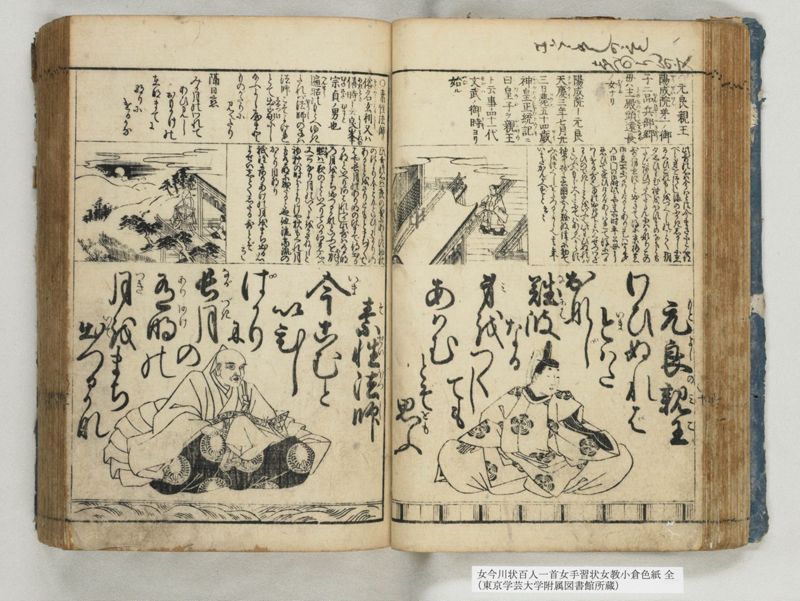
翻刻
【右丁 上段】
○元良親王
陽成院(やうぜいいん)第一ノ御
子二 品(ほん)兵部卿(ひやうぶきやう)
母ハ主殿頭(とのものかみ)遠長(とをなが)
ノ女(むすめ)ナリ
陽成院ー元良
天慶(テンケイ)三年七月廿
三日 薨(コウス)五十四 歳(サイ)
神皇正統記(シンクワウシヤウトウキ)ニ
曰 皇子(ワウジ)ヲ親王(シンワウ)
ト云事四十一代
文武(モンム)ノ御 時(トキ)ヨリ
始(ハジ[マ])ル
【同 中段】
此哥の心は今はとは今まさにと心得
べし身をつくし海のふかきしるしに立
るくひこれもみをつくしのごとく朝
夕思ひわび袖をほすまのなくとも
一たびあひつたへたらんにはかなりこの
哥詞書にこと出きて後に京極の
御息所につかはしたるとあり是は宇多
の御門の御時此みやす所時平公母に
忍びて通ひけるがあらはれて後につか
はしける哥也事の出きてとはくせつわざ
わひのできしことをいふ也此わびぬれば
といふ五もじ大かたにてはあるべからす
袖中抄に云国史には難波津に初て
みをつくしをたつるよし也其年
いまだかんがへずと《割書:云々》
【同 下段】
元良親王(もとよしのみこ)
わびぬれば
今(いま)はた
おなじ
難波(なには)
なる
身(み)をつくし
ても
あはむ
とぞ
思(をも)ふ
【頭部欄外の手書きの筆文字】
もとよしのみこ
しんのう■の文
【左丁 上段】
○素性法師
俗名(そくめう)玄利(はるとし)又ハ
僐時(あきとき)ト云 良峯(よしみねの)
宗貞(むねさだ)ノ男(むすこ)也
遍昭(へんせう)のもとへゆき
たれば法師(ほうし)の子は
法師こそよけれ
とて出家(しゆつけ)にし
給ふよしやまと
ものがたりに
見えたり
隔日恋
みか月のわれて
あひ見し
おもかけの
在明まてに
なりに
けるかな
【同 中段】
此哥の心は一夜の義にあらす初秋
の比より今こんといひしはかりの
あることをさりともとまち〳〵て
はや長月のあり明の比まで待出る
かなといへりあはれふかし此哥は有明
の月をまち出つるかなといふを顕(あきら)
照(かなる)は一夜のこといへりていか卿の心は
又一ツなり月のいくよをかさねしと
初秋の時分よりはや秋もくれ月
も有明に成たると也他流当流の
かはり目なり
祇注にありあけの月をまち出る心
よせはしとくしたる哥とぞ
云々
【同 下段】
素性法師(そせいほつし)
今(いま)こむと
いひし
ばかり
に
長月(ながづき)
の
有明(ありあけ)の
月(つき)をまち
出(いて)つるかな
現代語訳
【右丁 上段】
○元良親王
陽成院の第一の御子で二品兵部卿。母は主殿頭遠長の娘である。
陽成院ー元良
天慶三年七月二十三日に薨去、五十四歳。
『神皇正統記』に曰く「皇子を親王と言うことは四十一代文武天皇の御時より始まる」
【同 中段】
この歌の意味は、「今は」を「今まさに」と理解すべきである。身を尽くし海の深い印に立てる杭、これも「身を尽くし」のように、朝夕思い悩んで袖を干す間もなくとも、一度会い伝えることができたならばという意味である。この歌の詞書に「事が露見して後に京極の御息所に遣わした」とある。これは宇多天皇の御時、この御息所が時平公の母に隠れて通っていたが露見した後に遣わした歌である。「事の出来て」とは不祥事・困った事態が起きたことを言うのである。この「わびぬれば」という五文字は大雑把に扱ってはいけない。『袖中抄』に云く、国史には難波津に初めて澪標を立てる由である。その年はまだ考えていないという。
【同 下段】
元良親王
わびぬれば
今はた
同じ
難波
なる
身を尽くし
ても
逢わん
とぞ
思う
【左丁 上段】
○素性法師
俗名は玄利又は僐時という。良峯宗貞の男子である。
遍昭のもとへ行ったところ、「法師の子は法師こそよい」として出家させたという由が『大和物語』に見えている。
隔日恋
三日月の割れて
逢い見し
面影の
有明まで
なりに
けるかな
【同 中段】
この歌の意味は一夜の義ではなく、初秋の頃より「今来よう」と言ったばかりのことを、それでもと待ち続けて、早や長月の有明の頃まで待ち出したことよと言っている。哀れ深い。この歌は有明の月を待ち出したことよという意味で、顕昭は一夜のこととして言っているが、定家卿の心はまた別である。月の幾夜を重ねたかと、初秋の時分より早や秋も暮れ月も有明になったということである。他流と当流の相違点である。
祇注に「有明の月を待ち出る心を詠み込んだ巧妙な歌である」とある。
【同 下段】
素性法師
今来んと
言いし
ばかり
に
長月
の
有明の
月を待ち
出でつるかな
英語訳
【Right Page - Upper Section】
○Prince Motoyoshi
First prince of Emperor Yōzei, holding the rank of Second Prince and Minister of War. His mother was the daughter of Tonomo-no-kami Tōnaga.
Emperor Yōzei → Motoyoshi
Died on the 23rd day of the 7th month of Tengyō 3, aged 54.
The "Jinnō Shōtōki" states: "The practice of calling imperial sons 'princes' began during the reign of the 41st emperor, Emperor Monmu."
【Same Page - Middle Section】
The meaning of this poem: "ima wa" should be understood as "now indeed." Like the stakes planted as deep markers in the sea where one exhausts oneself, resembling "mi wo tsukushi" (exhausting oneself), though there may be no time to dry one's sleeves while lamenting morning and evening, if one could meet and communicate just once. The poem's headnote states it was "sent to the Kyōgoku Imperial Consort after the affair was exposed." This was during Emperor Uda's reign, when this consort was secretly visiting Minister Tokihira's mother, but after the affair was discovered, this poem was sent. "Koto no dekite" refers to when a scandal or troublesome situation arose. These five syllables "wabinureba" should not be treated carelessly. The "Shūchūshō" states that according to national histories, this refers to the first placing of channel markers at Naniwa Bay. The specific year has not yet been determined.
【Same Page - Lower Section】
Prince Motoyoshi
Wabinureba
ima hata
onaji
Naniwa
naru
mi wo tsukushi
temo
awan
to zo
omou
【Left Page - Upper Section】
○Priest Sosei
His secular name was Harutoshi, also called Akitoki. He was the son of Yoshimine no Munesada.
When he went to Henjō, [Henjō] said "A priest's son should indeed be a priest" and had him enter the priesthood. This account appears in the "Yamato Monogatari."
Love at Intervals
The crescent moon split
when we met and saw
each other's face
has become
the dawn moon
indeed
【Same Page - Middle Section】
The meaning of this poem is not about a single night, but rather: from early autumn when you said "I will come now," I have been waiting hopefully, and now I have waited until the dawn moon of the ninth month. How deeply moving. This poem means "I have waited for the dawn moon to appear." Akisho interprets this as referring to a single night, but Lord Teika's interpretation is different. It asks how many nights of the moon have accumulated - from early autumn, autumn has already ended and the moon has become the dawn moon. This represents a difference between other schools and our school.
The Gi commentary states: "This is a skillfully composed poem that captures the heart of waiting for the dawn moon to appear."
【Same Page - Lower Section】
Priest Sosei
Ima kon to
iishi
bakari
ni
Nagatsuki
no
ariake no
tsuki wo machi
idetsuru kana