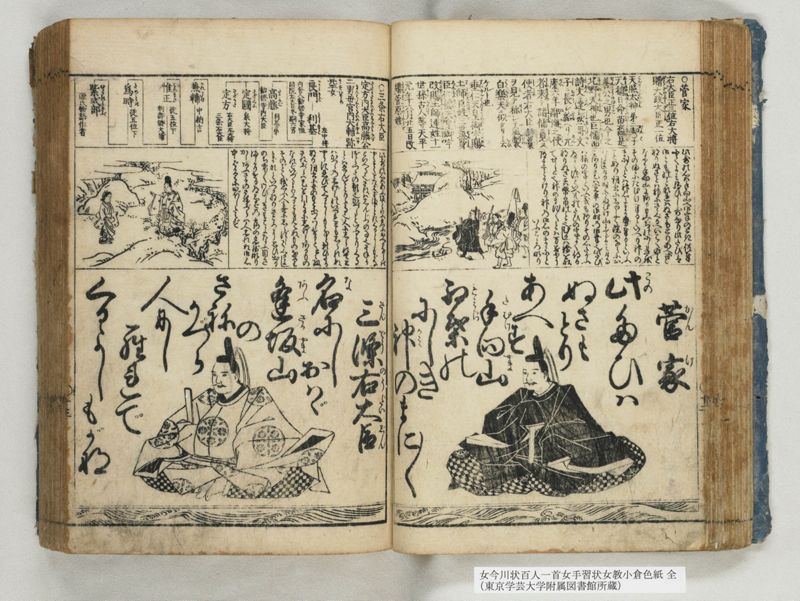
翻刻
【右丁 上段】
○菅家
右大臣正三位右大将
贈大政大臣(ぞうだいじやうだいじん)正一位
天照太神(てんせうだいじん)第二 御子(おんこ)
天穂日命(あまのほひのみことの)苗裔(ひやうゑい)是(ぜ)
善公(せんこう)之(の)男(むすこ)也今之
北野(きたの)天神(てんじん)也 巨儒(こじゆ)而(にして)
詩文(しぶん)ニ達(たつ)シ然(しかも)哥文(うたふん)
子(し)ニ長(ちやう)シ給(たま)ヘリ元(けん)
慶(けい)六年 鄙海(ひかい)之 使(し)
者(しや)来(きたつ)テ諸儒(しよじゆ)ニ見(まみへ)又
使者(ししや)右大臣ノ詩藁(しこう)【豪の誤ヵ】
ヲ見(ミ)テ称(せう)シテ風製(ふうせい)
白楽天(はくらくてん)ニ似(に)タリト云(いひ)
ケルト也
垂仁天皇(すいにんてんわうの)御宇(きよう)賜(たまふ)_二
土師臣姓(はじのしんのせうを)【一点脱】三世 孫身(そんしん)
臣(しん)仁徳天皇(にんとくてんわう)御宇
改(あらためて)賜(たまふ)_二土師連姓(はじのむらじのせうを)十一
世 孫(まご)古人(ふるひと)等天平
元年六月廿五日改
賜(たまふ)_二菅原姓(すがわらのしやうを)_一
【同 中段】
此哥の心は手向山へ御幸のとき供奉
にてよみ給ひし哥なり此たびは
御とものことなれはぬさもとりあへずと
なりぬさとは神にさゝぐるへいはくのこと
なり手向山にあるもみぢのにしきを
そのまゝにたむけ奉るといへり神の
まに〳〵とは神心にまかせ奉るといふ
ことなり詞書にしゆしやく院のならにお
はしましける時にたむけ山にてよみける
とあり是は寛平の御時の御幸也此たび
は旅の字といふ義もありその心たがふ
べからずといへ共猶たひの字よく侍る
なりぬさとは幣帛のこと也むかしは錦を以
てせしと也神のまに〳〵とは万葉に
随意とかけり神の御心のまゝにと
いふところなり
【同 下段】
菅家(かんけ)
此(この)たびは
ぬさも
とり
あへ
ず
手向山(たむけやま)
紅葉(もみぢ)の
にしき
神(かみ)のまに〳〵
【左丁 上段】
○三条右大臣
定方(さたかた)内大臣(ないだいしん)高藤(たかふぢ)公
二 男(なん)母(はゝは)宮内大輔(ぐないのたゆふ)弥(いや)
益(ます)女(むすめ)
良門(よしかど)ー利基(としもと)
《割書:内舎人勸修寺家恒|閑院左大臣冬嗣六男》
高藤《割書:利基弟》
《割書:勸修寺内大臣》
定国(さだくに)《割書:泉大将》
定方(さだかた)《割書:右大臣左大将|三条右大臣》
兼輔(かねすけ)《割書:中納言》
惟正(これまさ)《割書:従五位下|刑部卿大輔》
為時(ためとき)《割書:従五位下》
紫式部(むらさきしきぶ)
《割書:源氏物語作者》
【同 中段】
此哥の心はあふ坂といふ名におへるならば
やくそくをたがへずまことにくるよしもがな
といへる也さねはしんじつの事也さねか
づらつたの類也かづらといふよりくる
とはゑんをとりたる也人にしられてと
はかつらのしげみのいづれともしられぬ
やうに忍びてくるよしもかなと願ひたる
なり詞書に女のもとにつかはしけると《割書:云々》扨
さねかづらは是を引とるにしげみあるもの
なればいづくよりくるとも見えぬものなり
そのごとく我思ふ人も世にしらずしてくるよし
もがなといへるなりさこ[ゝ]ろに思ひ出る
のち中〳〵わびしきもこよなふ目さ
ましかりける道しばの露の名残なり
かしあふさかのさねかづらは人しれぬ御心
中ばかりにおぼしたえず
【同 下段】
三条右大臣(さんでうのうだいじん)
名(な)にし
おはゞ
逢坂山(あふさかやま)
の
さね
かづら
人にし
られで
くるよしもがな
現代語訳
【右丁 上段】
○菅家(菅原道真)
右大臣正三位右大将
贈大政大臣正一位
天照大神の第二の御子である天穂日命の子孫である。是善公の息子である。今の北野天神である。大儒者であり、漢詩文に通じ、しかも和歌にも長けておられた。元慶六年、渤海の使者が来て諸学者に面会し、また使者は右大臣の詩稿を見て称賛して「風格は白楽天に似ている」と言ったということである。
垂仁天皇の御世に土師臣姓を賜り、三世の孫身臣は仁徳天皇の御世に改めて土師連姓を賜った。十一世の孫古人等は天平元年六月二十五日に改めて菅原姓を賜った。
【同 中段】
この歌の心は、手向山への御幸の時に供奉してお詠みになった歌である。この度は御供のことであるから幣も取り合えずということになる。幣とは神に捧げる幣帛のことである。手向山にある紅葉の錦をそのまま手向け奉ると言っている。「神のまにまに」とは神の御心にお任せ申し上げるということである。
詞書に「朱雀院の奈良におはしました時に手向山にて詠んだ」とある。これは寛平の御時の御幸である。「この度は」の「度」の字という意味もあり、その心は違うべきではないと言うものの、やはり「たび」の字がよいのである。幣とは幣帛のことである。昔は錦を以てしたということである。「神のまにまに」とは万葉集に「随意」と書かれている。神の御心のままにということである。
【同 下段】
菅家
この度は
幣も
取り
合えず
手向山
紅葉の
錦
神のまにまに
【左丁 上段】
○三条右大臣
定方 内大臣高藤公の次男 母は宮内大輔弥益の娘
良門―利基(内舎人 勧修寺家恒、閑院左大臣冬嗣の六男)
高藤(利基の弟)
(勧修寺内大臣)
定国(泉大将)
定方(右大臣左大将、三条右大臣)
兼輔(中納言)
惟正(従五位下、刑部卿大輔)
為時(従五位下)
紫式部(源氏物語作者)
【同 中段】
この歌の心は、逢坂という名に負うならば約束を違えず、まことに来る方法があればよいのにと言っているのである。「さね」は真実のことである。さねかずらは蔦の類である。かずらということから「来る」は縁を取ったのである。「人に知られで」とはかずらの茂みのいずれとも知られぬように忍んで来る方法があればと願ったのである。
詞書に「女のもとに遣わした」とある。さてさねかずらはこれを引き取るのに茂みのあるものであるから、どこから来るとも見えないものである。そのように我が思う人も世に知らずして来る方法があればと言っているのである。
そのように心に思い出る後は、かえって侘しいのも、この上なく興ざめしたのは道芝の露の名残である。あの逢坂のさねかずらは人知れぬ御心中ばかりに思し絶えず。
【同 下段】
三条右大臣
名にし
負わば
逢坂山
の
さね
かずら
人に
知られで
来るよしもがな
英語訳
【Right Page - Upper Section】
○Kanke (Sugawara no Michizane)
Minister of the Right, Senior Third Rank, General of the Right
Posthumously Great Minister of State, Senior First Rank
He was a descendant of Ame no Hohi no Mikoto, the second divine child of Amaterasu Omikami. He was the son of Lord Koreyoshi. He is the present Kitano Tenjin. He was a great Confucian scholar who mastered Chinese poetry and prose, and was also skilled in Japanese poetry (waka). In the sixth year of Genkei, envoys from Balhae came and met with various scholars. When the envoys saw the Minister's poetry manuscripts, they praised them, saying "The style resembles that of Bai Juyi."
During Emperor Suinin's reign, he was granted the surname Haji no Omi. His third-generation descendant Miomi received the reformed surname Haji no Muraji during Emperor Nintoku's reign. The eleventh-generation descendant Furuhito and others were granted the reformed surname Sugawara on the 25th day of the 6th month of the first year of Tempyo.
【Same Page - Middle Section】
The meaning of this poem: This was composed when he accompanied the imperial procession to Tamuke-yama. Since this journey was in service to His Majesty, there was no time to prepare proper offerings. "Nusa" refers to the sacred offerings presented to the gods. He says that he offers the brocade of autumn leaves at Tamuke-yama just as they are. "Kami no manimani" means "according to the will of the gods."
The headnote states it was "composed at Tamuke-yama when Emperor Suzaku visited Nara." This was during the imperial procession of the Kanpyo era. While "kono tabi" could use the character meaning "time," and though the meaning should not differ, the character for "journey" (tabi) is still preferable. "Nusa" refers to sacred offerings. In ancient times, brocade was used for these. "Kami no manimani" is written as "at will" in the Man'yoshu, meaning "according to the gods' divine will."
【Same Page - Lower Section】
Kanke
Kono tabi wa
nusa mo
tori
aezu
Tamuke-yama
momiji no
nishiki
kami no manimani
【Left Page - Upper Section】
○Minister of the Right of Sanjo
Sadakata, second son of Interior Minister Takafuji, his mother was the daughter of Palace Interior Assistant Iyamasu
Yoshikado - Toshimoto (Palace Attendant, Kajuji Ietune, sixth son of Kanin Minister of the Left Fuyutsugu)
Takafuji (younger brother of Toshimoto)
(Kajuji Interior Minister)
Sadakuni (Izumi General)
Sadakata (Minister of the Right, General of the Left, Sanjo Minister of the Right)
Kanesuke (Middle Counselor)
Koremasa (Junior Fifth Rank Lower Grade, Assistant in the Ministry of Justice)
Tametoki (Junior Fifth Rank Lower Grade)
Murasaki Shikibu (author of The Tale of Genji)
【Same Page - Middle Section】
The meaning of this poem: If it lives up to the name "Osaka" (Meeting Hill), then may there be a way to come truly without breaking our promise. "Sane" means truth or reality. Sanekazura is a type of vine like ivy. From the word "kazura" (vine), "kuru" (to come) creates a word association. "Hito ni shiraredе" means he wishes there were a way to come secretly, like a vine's dense growth where one cannot tell from which direction it comes.
The headnote states "sent to a woman." Now, sanekazura, when pulled, has thick growth, so one cannot see from where it comes. Similarly, he says he wishes his beloved could come without the world knowing.
When one recalls such feelings afterward, the resulting melancholy and extreme disappointment are remnants of the morning dew on the roadside grass. That sanekazura of Osaka Hill lives on ceaselessly only in one's secret heart.
【Same Page - Lower Section】
Sanjo Minister of the Right
Na ni shi
owaba
Osaka-yama
no
sane
kazura
hito ni
shirade
kuru yoshi mogana