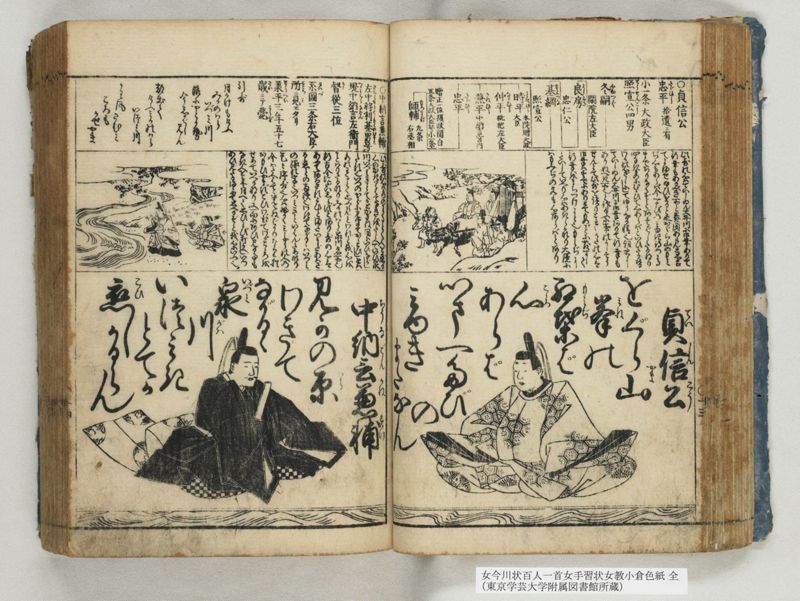
翻刻
【右丁 上段】
○貞信公
忠平(たゞひら)《割書:拾遺ニ有》
《割書:小一条大政大臣|照宣公(せうせんこう)四男》
冬嗣(ふゆつぐ)
《割書:閑院左大臣》
良房(よしふさ)
《割書:忠仁公》
基綱(もとつな)
《割書:照宣公》
時平(ときひら)《割書:本院贈大政|大臣》
仲平(なかひら)《割書:枇杷左大臣》
兼平(かねひら)《割書:中納言宮内》
忠平(ただひら)
《割書:贈正一位摂政関白|五条大政大臣号小一条》
師輔(もろすけ)《割書:九条|右丞相》
【同 中段】
此哥の心はていしゐん大井川に御幸ありて
行幸もあるべき所と奏聞あらんと思召
てよませ給ひけると也おぐら山のもみ
ぢ心もあらば今一たびのみゆき待つる
までちりなくぞとあそばしたるなり
心なきものにむかひて心あらばといひたる皆
わかの心ざしにしてゆうなる情也詞書に
ていしゐん大井川に御幸ありて行幸も
ありぬへき所也と仰給ふに事のよしそう
せんとて此哥を読りと云々うたの心は
御幸はすでにありとてものごとに散すして
行幸をまちつけよと也もみぢに
たいしていへり心はあきらかなり大鏡に
はもみぢの文も心あらばとあり
【同 下段】
貞信公(ていしんこう)
をぐら山(やま)
峯(みね)の
紅葉(もみぢ)ば
心(こゝろ)
あらば
いま一たび
の
みゆき
またなん
【左丁 上段】
○中納言兼輔
左中将(さちうせう)利基(としもとの)男(むすこ)号_二
堤中納言(つゝみちうなごん)【一点脱】左衛門
督(かみ)従三位
系図(けいづ)三条右大臣ノ
所ニ見(み)エタリ
承平(せうへい)三年五十七
歳(さい)ニテ薨(こうず)
引哥
月かけもけふ
みかのはら
浪にやとりせ
今しばし
見ん
都出て
けふみかのはら
いつみ川
かわ風さむみ
ころも
かせ
やま
【同 中段】
此哥の心は水のわくことく人を恋る
心のかきりはてなきをたとへていひ泉
川いづみきとてかとかさね河にいひながし
たる也いつのほどに見聞てかくこひしとは
水のわくことく思ふらんとわれと我心を
ことはりたるなりみかのはら泉川名所也
新古今にだいしらずとあり哥の心は
あふてあはさるこひとまたいまだあはざ
る恋との両様也わきてながるゝはいづみ
の縁の字也いつみきといはんためなり
是も序哥也心はふかくみしやうの人の
今はたへはてゝ覚えぬばかりなり猶
おもひやまずこひわびてわがこゝろを
せめていへるなり又一向にあひ見る事も
なき人を年月へて思ひわび打かへしいつ
あひ見たるまゝにて思へるぞと我心にいふ也。
【同 下段】
中納言(ちうなごん)兼輔(かねすけ)
みかの原(はら)
わきて
ながるゝ
泉(いづみ)
川(がは)
いつみき
とてか
恋(こひ)しかるらん
現代語訳
【右丁 上段】
○貞信公
忠平(拾遺集に載る)
(小一条大政大臣、照宣公の四男)
冬嗣(閑院左大臣)
良房(忠仁公)
基経(照宣公)
時平(本院贈大政大臣)
仲平(枇杷左大臣)
兼平(中納言宮内)
忠平
(贈正一位摂政関白、五条大政大臣、小一条と号す)
師輔(九条右丞相)
【同 中段】
この歌の意味は、醍醐院が大井川に御幸なさって、行幸もあるべき所だと奏上しようと思し召してお詠みになったということである。小倉山の紅葉よ、心があるならば、今一度の御幸を待つまで散らないでいてほしいと詠まれたのである。
心ないものに向かって「心あらば」と言ったのは、皆和歌の心意気によるもので、優雅な情趣である。詞書に「醍醐院が大井川に御幸なさって、行幸もあるべき所であると仰せになるので、そのことを奏上しようとしてこの歌を詠んだ」とある。
歌の心は、御幸は既にあったが、もののたちまち散らずして行幸を待ち受けよということである。紅葉に対して言ったものである。意味は明らかである。『大鏡』には「紅葉の文も心あらば」とある。
【同 下段】
貞信公
小倉山
峰の
紅葉葉
心
あらば
今一度
の
御幸
待たなん
【左丁 上段】
○中納言兼輔
左中将利基の息子 堤中納言と号す 左衛門督 従三位
系図は三条右大臣の所に見えている
承平三年五十七歳にて薨去
引歌
月影も今日
三室の原
波に宿りせ
今しばし
見ん
都出でて
今日三室の原
和泉川
川風寒み
衣
かせ
山
【同 中段】
この歌の心は、水が湧くように人を恋う心の限りがないことを譬えて言い、泉川を「いづみき」といって「いつ」と重ね、川に言い流したのである。いつの頃に見聞きしてこのように恋しいと思うのか、水が湧くように思うのだろうと、自分で自分の心を理屈づけたのである。
三室の原、泉川は名所である。『新古今和歌集』に「題知らず」とある。歌の心は、会って別れた恋人、またはまだ会ったことのない恋人との両様である。「わきて流るる」は「泉」の縁語である。「いづみき」と言うためである。
これも序歌である。心は深く見初めた人が今はもうすっかり絶えてしまって覚えないほどである。それでも思いやまずに恋い侘びて、自分の心を責めて言ったのである。また一向に逢い見ることもない人を年月を経て思い侘び、振り返っていつ逢い見たままでそう思っているのかと自分の心に言うのである。
【同 下段】
中納言兼輔
三室の原
分けて
流るる
泉
川
いつ見き
とてか
恋しかるらん
英語訳
【Right Page - Upper Section】
○Teishin-kō (Lord Teishin)
Tadahira (included in the Shūi-shū anthology)
(Koichijō Daijō-daijin, fourth son of Shōsen-kō)
Fuyutsugu (Kanin Minister of the Left)
Yoshifusa (Chūjin-kō)
Mototsune (Shōsen-kō)
Tokihira (posthumously Daijō-daijin of this house)
Nakahira (Biwa Minister of the Left)
Kanehira (Middle Counselor, Palace Ministry)
Tadahira
(posthumously Senior First Rank, Regent and Chancellor, Gojō Daijō-daijin, called Koichijō)
Morosuke (Kujō Minister of the Right)
【Same Page - Middle Section】
The meaning of this poem: Emperor Daigo made an imperial excursion to the Ōi River, and thinking to report that it would be a suitable place for an imperial progress, he composed this poem. "O autumn leaves of Mount Ogura, if you have feelings, please do not scatter until we await one more imperial visit," he composed.
Addressing heartless things with "if you have heart" is all due to the spirit of waka poetry, expressing elegant sentiment. The headnote states: "When Emperor Daigo made an imperial excursion to the Ōi River and declared it a suitable place for imperial progress, he composed this poem intending to report the matter."
The poem's meaning is: though the excursion has already taken place, do not scatter immediately but wait for the imperial progress. This is addressed to the autumn leaves. The meaning is clear. In the Ōkagami, it says "if even the maple leaves had feelings."
【Same Page - Lower Section】
Teishin-kō
Ogura-yama
mine no
momiji-ba
kokoro
araba
ima hitotabi
no
miyuki
matanam
【Left Page - Upper Section】
○Middle Counselor Kanesuke
Son of Left Middle Captain Toshimoto, called Tsutsumi Middle Counselor, Left Gate Guard Captain, Junior Third Rank
His genealogy appears in the section on the Sanjō Minister of the Right
He died at age fifty-seven in the third year of Shōhei
Reference poems
Tsukikage mo kyō
Mimuro no hara
nami ni yadori se
ima shibashi
min
Miyako idete
kyō Mimuro no hara
Izumi-gawa
kawa-kaze samumi
koromo
kase
yama
【Same Page - Middle Section】
The meaning of this poem: he likens the endless nature of loving someone to water bubbling up, calling Izumi River "izumi-ki," overlapping "itsu" (when) and letting it flow into the river reference. When did I see and hear of you to become so lovesick? Like bubbling water, I must be thinking this way - he rationalizes his own heart to himself.
Mimuro no Hara and Izumi River are famous places. In the Shin Kokin Wakashū it appears as "topic unknown." The poem's meaning works both ways: for a lover met and parted from, or for one never yet met. "Wakite nagaruru" (flowing separately) is a related word to "izumi" (spring). This is to say "izumi-ki."
This too is a prefatory poem. The heart deeply fell in love with someone who has now completely faded from memory. Still, unable to stop these feelings, suffering from love, he blames his own heart in speaking thus. Or having suffered in love for years over someone he could never meet, looking back he asks his own heart when he saw her that made him think this way.
【Same Page - Lower Section】
Middle Counselor Kanesuke
Mimuro no hara
wakite
nagaruru
Izumi
gawa
itsu mi ki
tote ka
koishikaruran