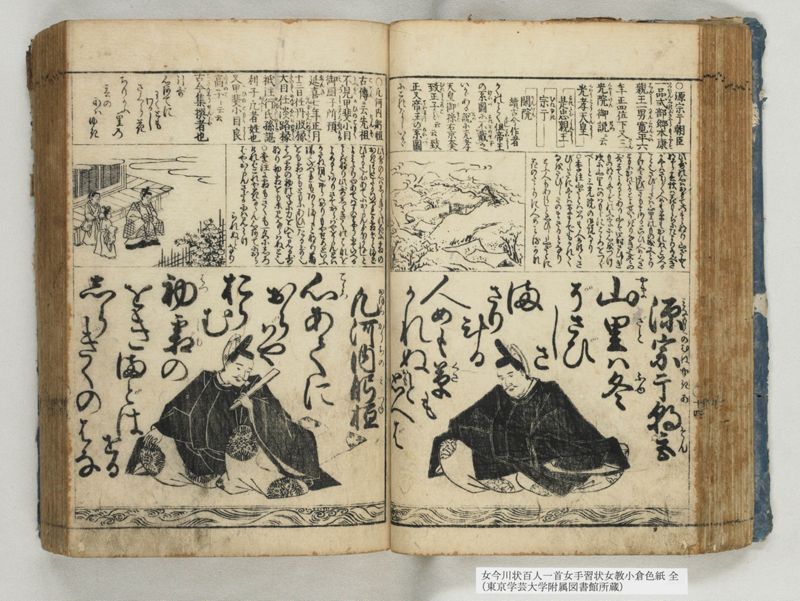
翻刻
【右丁 上段】
○源宗于朝臣
一品(いつほん)式部卿(しきぶきやう)本康(もとやす)
親王(しんわう)一 男(なん)寛平(くわんへい)六
年正四位下又 三(さん)
光院(くわういん)御 説(せつ) ̄ニ云
光孝天皇(くわうこうてんわう)
是忠親王(これたゞしんわう)
宗于(むねゆき)
閑院(かんいん)
《割書:続古今作者》
かくのことく但(たゞし)帝王(ていわう)
の系図(けいづ)に《振り仮名:不_レ載_レ之|これをのせず》
いかゞある説(せつ)に光孝
天皇 御孫(みまご)右京大夫
致正(むねまさの)子(こ)と《割書:云| 云》致
正又 帝王(ていわう)の系図(けいづ)
にこれなしいかゞ
【同 中段】
此哥の心はおもてのまゝなり山ざと
ながら春秋は花もみぢにたより有べき
が冬はさう〳〵人めも草もかれぬといへる
こと也さびしさは山里のもの成又とり
わけ冬さびしさもまさるといひ人めくさ
ともにかれたるとよせいかぎりなき也冬の
哥とてよめるとあり山は四時さひしき
ものなり冬ぞの文字に心をつけ
次に山里はのはもじにこゝろをつく
べしと三光院の御説なり
○季注山ざとはいつも人めなくさ
びしきに冬は草までもかれて
なをさびしさのまさるとなり
とふ人もあらしと思ひし山ざとに
花のたよりに人めみるかな
【同 下段】
源宗于朝臣(みなもとのむねゆきあそん)
山里(やまざと)は冬(ふゆ)
ぞさび
しさ
ま
さり
ける
人めも草(くさ)
も
かれぬと
思(おも)へば
【左丁 上段】
○凡河内躬恒
古伝(こでん)ニ云 先祖(せんぞ)
《振り仮名:不_レ見|みへず》甲斐小目(かひのこもく)
御厨子所(みづしところ)預(あづかり)
延喜(ゑんき)七年正月
十三日 任(にんず)_二丹波掾(たんばのぜうに)_一
大目(たいもく)任(にんず)_二淡路掾(あはぢのぜうに)_一
祇注 行氏(ゆきうじの)孫(まご)諶
利子 凡(おふし)者姓也
又 甲斐小目(かひのこもく)良(よし)
高(たかの)子(こ)ト云云
古今集撰者(こきんしうせんじや)也
引哥
心あてに
わくとも
わかし
さくら花
ちりかふ
里の
春の
あは
ゆき
【同 中段】
此哥の心はしらきくの花に霜の
おきわたしたるはいづれか霜ぞとまど
ひたる也心あてにおらんよりほかなしと
よみたり心あてはすいりやうにていへる
ことばなり此哥しらきくのはなを
よめるとありさておらばやをらんとは
かさね詞也おらはおりもやせめといふ
場也いづれもあらましことなり菊
をも霜をもともにあひしたる哥也
はつ霜の初の字に力を入て見る哥
なり初霜をも未見ならはぬと也
○季注に霜もきくも一色にしろ
ければこれや花ならん心あてにおら
ばやおらんさだかには見わけ
られぬとなり
【同 下段】
凡河内躬恒(おほちかうちのみつね)
心(こゝろ)あてに
おらばや
おら
む
初霜(はつしも)の
をきまどは
せる
しらぎくのはな
現代語訳
【右丁 上段】
○源宗于朝臣
一品式部卿本康親王の長男 寛平六年正四位下 また三光院の御説によると
光孝天皇
是忠親王
宗于
閑院
(続古今集撰者)
このようであるが、ただし帝王の系図には載せられていない
いかがあるか 説に光孝天皇の御孫 右京大夫致正の子という(説もある) 致正もまた帝王の系図にはこれがない いかがか
【同 中段】
この歌の意味は表面の通りである。山里ながら春秋は花や紅葉に趣があるだろうが、冬はいかにも人の気配も草も枯れてしまったということである。寂しさは山里のものである。またとりわけ冬の寂しさも勝るといい、人の気配も草もともに枯れたと寄せて、限りないのである。冬の歌として詠んだとある。山は四季とも寂しいものである。「冬ぞ」の文字に心をつけ、次に「山里は」の「は」の文字に心をつけるべしと三光院の御説である。
○季注 山里はいつも人気がなく寂しいが、冬は草までも枯れて、なお寂しさが勝るということである
訪う人もないと思っていた山里に
花の便りに人目を見るかな
【同 下段】
源宗于朝臣
山里は冬
ぞ寂し
さ
まさり
ける
人目も草
も
枯れぬと
思えば
【左丁 上段】
○凡河内躬恒
古伝に言う 先祖は見えず 甲斐小目 御厨子所預
延喜七年正月十三日 丹波掾に任ず
大目 淡路掾に任ず
祇注 行氏の孫 諶利の子 凡河内は姓である
また甲斐小目良高の子という説もある
古今集撰者である
引歌
心あてに
折くとも
分かじ
桜花
散りかう
里の
春の
淡
雪
【同 中段】
この歌の意味は白菊の花に霜が置き渡したのは、いずれが霜かと迷ったのである。当て推量で折るよりほかないと詠んだ。「心あて」は推量にて言った言葉である。この歌は白菊の花を詠んだとある。さて「折らばや折らん」は重ね言葉である。「折らば」は「折りもやせん」という場合である。いずれも仮定のことである。菊をも霜をもともに愛した歌である。初霜の「初」の字に力を入れて見る歌である。初霜をもまだ見慣れないということである。
○季注に霜も菊も一色に白いので、これが花であろうかと当て推量で折ってみよう、確かには見分けられないということである
【同 下段】
凡河内躬恒
心あてに
折らばや
折ら
ん
初霜の
置きまどわ
せる
白菊の花
英語訳
【Right Page - Upper Section】
○Minamoto no Muneyuki Ason
Eldest son of First Prince Shikibu-kyō Motoyasu Shinnō, Junior Fourth Rank Lower in the sixth year of Kanpyō, also according to the explanation of Sankō-in
Emperor Kōkō
Koretada Shinnō
Muneyuki
Kan-in
(Compiler of Shoku Kokin-shū)
It is like this, but he is not recorded in the genealogy of emperors
How is this? According to one theory, he was the grandson of Emperor Kōkō, son of Ukyō-no-daibu Munemasa (there is such a theory) Munemasa also does not appear in the imperial genealogy - how is this?
【Same Page - Middle Section】
The meaning of this poem is exactly as it appears on the surface. Though it is a mountain village, spring and autumn would have their charm with flowers and autumn leaves, but winter is indeed when both human presence and grass have withered away. Loneliness belongs to mountain villages. Also saying that winter loneliness especially surpasses others, both human presence and grass have withered together, making it limitless. It says this was composed as a winter poem. Mountains are lonely in all four seasons. Pay attention to the characters "fuyu zo" (winter indeed), and next pay attention to the particle "wa" in "yamazato wa" (as for the mountain village) - this is Sankō-in's explanation.
○Seasonal note: Mountain villages are always devoid of people and lonely, but in winter even the grass withers, making the loneliness even greater
In this mountain village where I thought no one would visit
I see people coming with news of flowers
【Same Page - Lower Section】
Minamoto no Muneyuki Ason
Yamazato wa fuyu
zo sabi-
shisa
masa-
ri
keru
hitome mo kusa
mo
karenu to
omoeba
【Left Page - Upper Section】
○Ōshikōchi no Mitsune
According to ancient records: ancestors unknown, Kai no Komoku, Mizushidokoro Azukari
Seventh year of Engi, first month, thirteenth day: appointed to Tanba no Jō
Daimoku: appointed to Awaji no Jō
Gi-chū: grandson of Yukiuji, son of Shinri, Ōshikōchi is a surname
Also said to be the son of Kai no Komoku Yoshitaka
He was a compiler of the Kokin-shū
Reference poem:
Kokoro ate ni
oru tomo
wakaji
sakura hana
chiri kau
sato no
haru no
awa
yuki
【Same Page - Middle Section】
The meaning of this poem is about being confused as to which is frost when frost has settled across white chrysanthemum flowers. He composed that there is nothing but to pick them by guesswork. "Kokoro ate" (by guesswork) is a word spoken in conjecture. This poem is said to be about white chrysanthemum flowers. Now "orabaya oran" (shall I pick, I will pick) are repeated words. "Oraba" is a case of saying "ori mo ya sen" (might I perhaps pick). Both are hypothetical matters. This is a poem that loves both chrysanthemums and frost together. It is a poem to be viewed with emphasis on the character "hatsu" (first) in "hatsushimo" (first frost). It means even the first frost is not yet familiar.
○In the seasonal note: since both frost and chrysanthemums are white in the same way, wondering if these might be flowers, I shall try picking them by guesswork, as I cannot distinguish them clearly
【Same Page - Lower Section】
Ōshikōchi no Mitsune
Kokoro ate ni
orabaya
ora-
n
hatsushimo no
oki madowa-
seru
shiragiku no hana