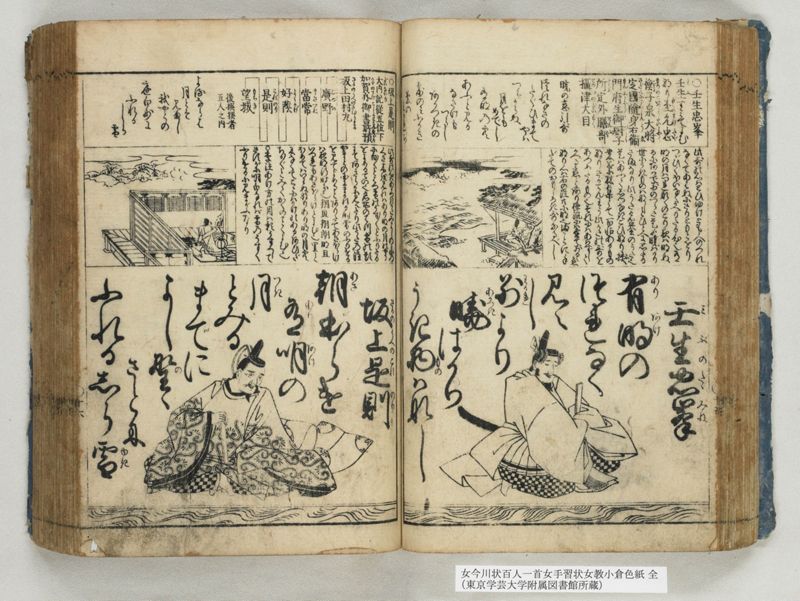
翻刻
【右丁 上部】
○壬生忠峯
壬生(みふ)すみてよむ
なり杢介(もくのすけ)忠(たゞ)
衡(もりの)子(こ)泉大将(いづみたいしやう)
定国(さだくに)随身(ずいしん)右衛(うゑ)
門(もん)府生(ふしやう)御厨子(みづし)
所(ところ)定外 膳部(せんぶ)
摂津大目(せつつのだいもく)
暁の恋引哥
つれなさの
たぐひまて
やは
つらからぬ
月をも
めでし
有明の空
あふと見る
なさけも
つらし
あかつきの
露のみふかき
夢の
わかれぢ
【同 中段】
此哥の心はとひゆけとも人のつれ
なくてあはぬにさりともとをり
つゞひくほいなくかへりたる心也有
明の月はつれなくのこり夜は明ぬ
るにあはで別のつらさ是より暁はかり
世にうきものはなしとひとへに思ひたる
さまなり此うた名誉のうた也
是はあふてじつなきこひなり扶(ふ)
桑葉林集とて百帖あるもの
なりさがてんわう此かたの哥を
あつめたるもの也それにはあはずして
かへる恋とあり他流には逢て別るゝ恋
なり心は右の注共に明也まことに手
だてのおもしろき哥なるべし
【同 下段】
壬生忠峯(みぶのたゝみね)
有明(ありあけ)の
つれなく
見え
し
別(わかれ)より
暁(あかつき)
ばかり
うき物(もの)はなし
【左丁 上段】
○坂上是則
大内記(だいないき)従五位下
加賀介(かがのすけ)御書所預(こしよところあづかり)
坂上田村丸(さかのうへたむらまる)
広野(ひろの)
当常(まさつね)
好蔭(よしかげ)
是則(これのり)
望城(もちき)
《割書:後撰撰者|五人之内》
よるならは
月とそ
見まし
我やとの
庭白妙に
ふれる
しら
雪
【同 中段】
此哥の心はあかつきかたみよしのゝ山の
くさ木をみれはあり明の月のやう
に白〳〵とはつ雪のうす〳〵とふりたる
をよめるてい也名所のはつ雪の題
にてあきらかに見えたり此うたの注
やまとの国にまかれるとき雪のふりける
を見てよめるとありたてあさぼらけ
は夜明行時分也朝旦朝朗明旦
いつれもあさほらけとよむ也里と
ほめてはいわぬなりあり明の月空
になくてこゝにはかけのあるあひだ
ちか〴〵とみてかくのことくよむ也
○季注あけ方の月は影うすくして
さすがに明白なれば雪のうすく
ふりけるに見まがふなり
【同 下段】
坂上是則(さかのうへのこれのり)
朝(あさ)ぼらけ
有明(ありあけ)の
月(つき)
とみる
までに
よし野(の)ゝ
さとに
ふれるしら雪(ゆき)
現代語訳
【右丁 上部】
○壬生忠峯
壬生に住んで詠むのである。杢介忠衡の子、泉大将定国の随身、右衛門府生、御厨子所の定外、膳部、摂津大目
暁の恋の引歌
つれなさの
類までも
や
辛からぬ
月をも
愛でし
有明の空
逢うと見る
情けも
辛し
暁の
露のみ深き
夢の
別れ路
【同 中段】
この歌の意味は、訪ねて行ったけれども、人がつれなくて逢えず、それでもと思って通い続けるが、甲斐もなく帰ってきた心境である。有明の月はつれなく残り、夜は明けるのに逢えずに別れの辛さ、これより暁ほど世に辛いものはないと、ひとえに思った様子である。この歌は名誉ある歌である。これは逢って実のない恋である。扶桑葉林集という百帖あるものである。嵯峨天皇この方の歌を集めたものである。それには逢わずして帰る恋とある。他流には逢って別れる恋である。意味は右の注とともに明らかである。まことに手法の面白い歌であるに違いない。
【同 下段】
壬生忠峯
有明の
つれなく
見え
し
別れより
暁
ばかり
憂きものはなし
【左丁 上段】
○坂上是則
大内記従五位下、加賀介、御書所預
坂上田村丸
広野
当常
好蔭
是則
望城
(後撰集撰者五人の内)
夜ならば
月とぞ
見まし
我が宿の
庭白妙に
降れる
白
雪
【同 中段】
この歌の意味は、暁方に吉野の山の草木を見れば、有明の月のように白々と初雪が薄々と降ったのを詠んだ体である。名所の初雪の題で、明らかに見えている。この歌の注に、大和の国に下ったとき雪の降ったのを見て詠んだとある。ところで朝ぼらけは夜明け行く時分である。朝旦、朝朗、明旦、いずれも朝ぼらけと読むのである。里と褒めてはいわないのである。有明の月が空になくて、ここには影があるので、近々と見てこのように詠むのである。
○季注 明け方の月は影薄くして、さすがに明白なので、雪が薄く降ったのに見間違うのである。
【同 下段】
坂上是則
朝ぼらけ
有明の
月
と見る
までに
吉野の
里に
降れる白雪
英語訳
【Right Page - Upper Section】
○Mibu no Tadamine
He lived in Mibu and composed poetry. Son of Moku-no-suke Tadamori, retainer of Izumi-taishō Sadakuni, Right Gate Guard Bureau clerk, Mizushidokoro official, Zenbu, Settsu-no-daimoku
Dawn love reference poems:
The coldness
and even its
kind are
not harsh
I also admired
the moon
in the dawn sky
Meeting in sight
even kindness
is painful
at dawn
where dew alone is deep
in dreams
of parting
【Same Page - Middle Section】
The meaning of this poem is about visiting someone but being met with coldness and unable to meet them, yet continuing to visit hoping "perhaps this time," but returning without success. The dawn moon remains coldly, and night breaks but without meeting there is the pain of parting - from this, nothing in the world is as painful as dawn, thinking this single-mindedly. This poem is a renowned one. This is about love that meets but lacks substance. There is a hundred-volume work called Fusō Yōrin-shū. It is a collection of poems from Emperor Saga's time onward. In it, this is listed as "love that returns without meeting." In other schools, it is "love that meets and parts." The meaning is clear along with the commentary on the right. This must truly be a poem with interesting technique.
【Same Page - Lower Section】
Mibu no Tadamine
Ariake no
tsurenauku
mie-
shi
wakare yori
akatsuki
bakari
uki mono wa nashi
【Left Page - Upper Section】
○Sakanoue no Korenori
Senior Secretary, Junior Fifth Rank Lower, Kaga-no-suke, Imperial Library Keeper
Sakanoue no Tamuramaro
Hirono
Masatsune
Yoshikage
Korenori
Mochiki
(One of the five compilers of the Gosen-shū)
If it were night
I would see it
as the moon
in my dwelling's
garden, pure white
falling
white
snow
【Same Page - Middle Section】
The meaning of this poem is about viewing the plants and trees of Mount Yoshino at dawn, seeing the first snow falling thinly, white like the dawn moon. This clearly appears as a famous place's first snow theme. The commentary on this poem says it was composed when he went down to Yamato Province and saw snow falling. Now, asaborake is the time when night is breaking into dawn. Asatan, asarō, meitan - all are read as asaborake. One does not praise by calling it a village. Since the dawn moon is not in the sky but its light is here, seeing it closely, one composes like this.
○Seasonal note: The dawn moon has a faint reflection, yet is distinctly bright, so one mistakes it for thinly falling snow.
【Same Page - Lower Section】
Sakanoue no Korenori
Asaborake
ariake no
tsuki
to miru
made ni
Yoshino no
sato ni
fureru shirayuki