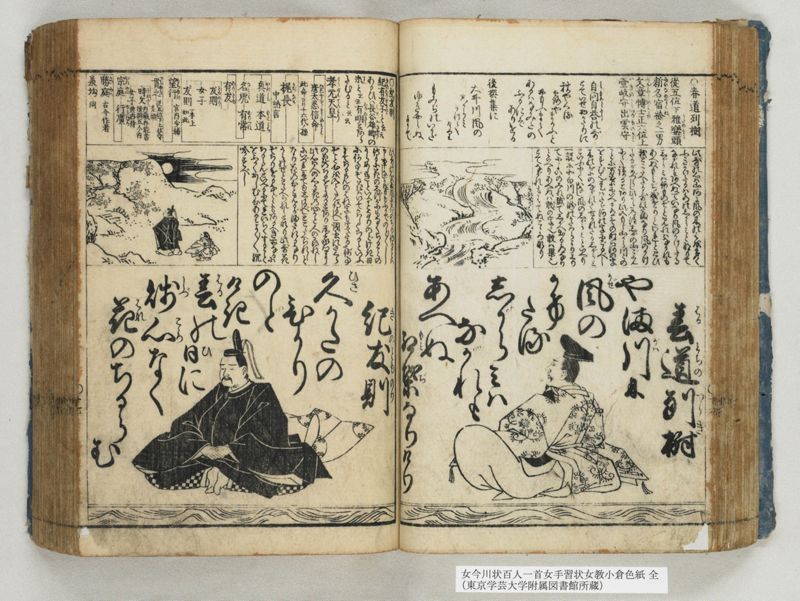
翻刻
【右丁 上段】
○春道列樹
従五位下 雅楽頭(うたのかみ)
新名宿祢(にいなのすくね)之一男
文章博士(ぶんしやうのはかせ)正六位上
壱岐守(いきのかみ)出雲守(いづものかみ)
自問自答(しもんしたう)の哥
とていせ物かたりに
秋やくる
つゆや
まかふと
おもふまて
あるはなみたの
ふるにぞ
ありける
後撰集に
大井川風の
しからみ
かけて
けり
もみぢのいかだ
ゆきやらぬ
まで
【同 中段】
此哥の心は山河に風の木のはを多く
ふきかけたるは水のしからみとなりて
ながれもあへぬていなり風のかけたる
しがらみは何ものぞと見れはなかれも
あへぬもみぢ成けりとわれととひ
われとこたへる哥のさまなり風のかけ
たるがめづらし此うたの注しがの山ごえ
にて読るとあり此五もじ山から川との
ことに万葉にいへる有その時は河の字
をすむ也是はたゞ河の字にごるべし
木の葉のながれてせかれたるしがらみ
といふにてはなし風のしがらみといへり
一説に北白川の滝のかたはらより上り
てによいのみね越てしがへ出る道なり
といへりあへぬは敢(かん)の字也敢は果也
とてながれもはてぬこゝろなり
【同 下段】
春道列樹(はるみちのつらき)
やま川(がは)に
風(かぜ)の
かけ
たる
しがらみは
ながれも
あへぬ
紅葉(もみぢ)なりけり
【左丁 上段】
○紀友則
紀有友(きのありともの)子(こ)と云云
あるひは長谷雄卿(はせおきやう)の
末(すへ)と云云 有明(ありあきら)とあら
たむると云云
孝元天皇(こうけんてんわう)
彦太忍信命(ひこふとをしまことのみこと)
《割書:此命ヨリ十六代ノ孫》
梶長(かぢなが)
《割書:中納言》
興道(おきみち)ー本道(もとみち)
名虎(なとら)ー有常(ありつね)
有友(ありとも)
友則(とものり)
女子
友則《割書:一本上|如此》
望行(もちゆき)《割書:宮内少輔》
貫之(つらゆき)《割書:従五位下土佐守|杢頭》
時文(ときふみ)《割書:内藏内能書|御撰五人ノ内》
女子《割書:典内侍》
宗庭(むねには)ー行広(ゆきひろ)
勝庭(かつには)《割書:古今作者》
承均《割書:同》
【同 中段】
此哥の心は雨風に花のちり侍ることは
申事なしかぜもふかでのと〳〵し
侍るに花のしづかにもなくちることの
うらめしきといふことなりのどけき日
に何事ぞ花はいそかはしくちるといふ
にてちるらんのはね字も聞えたる也何事
ぞと心を入て見侍るべし詞書にさくら
の花のちるをよめるとあり為家卿に
此心は人の心か花の心かと人の尋ねし
にいづれにてもしかるべしとこたへられしと
なり花の心と見るがまされるなり
うらのせとこたへられしとなり此哥花
ぞちりけるなどゝもあるへき所なるに
ちるらんといへるにてれいらくすること
をふかくおしむ心ありよく〳〵沈
吟すべし
【同 下段】
紀友則(きのとものり)
久(ひさ)かたの
ひかり
のど
けき
春(はる)の日(ひ)に
賎心(しづこゝろ)なく
花(はな)のちるら
む
現代語訳
【右丁 上段】
○春道列樹
従五位下、雅楽頭
新名宿祢の一男
文章博士、正六位上
壱岐守、出雲守
自問自答の歌
として伊勢物語に
秋や来る
露や
混じると
思うまで
ある涙の
降るぞ
ありける
後撰集に
大井川風の
柵
掛けて
けり
紅葉の筏
流れやらぬ
まで
【同 中段】
この歌の意味は、山川に風が木の葉を多く吹きかけたのが水の柵となって、流れも止まっている様子である。風が掛けた柵とは何だろうと見れば、流れも止まるほどの紅葉であったと、自ら問い自ら答える歌の形である。風が掛けたというのが珍しい。この歌の注に、滋賀山越えで詠んだとある。この「しが」という五文字は、山から川へのことで、万葉集に言うところがある。その時は川の字を澄む。これはただ川の字を濁るべきである。木の葉が流れて堰き止められた柵ということではなく、風の柵と言っている。一説に、北白川の滝の傍から上って、比叡の峰を越えて志賀に出る道であると言っている。「あへぬ」は「敢」の字である。敢は果という意味で、流れも終わらない心である。
【同 下段】
春道列樹
山川に
風の
掛け
たる
柵は
流れも
あへぬ
紅葉なりけり
【左丁 上段】
○紀友則
紀有友の子と言われる、
あるいは長谷雄卿の
末裔と言われる。有明と荒為という。
孝元天皇
彦太忍信命
(この命から十六代の孫)
梶長
(中納言)
興道-本道
名虎-有常
有友
友則
女子
友則(一本では上記の通り)
望行(宮内少輔)
貫之(従五位下土佐守、杢頭)
時文(内蔵書能書、御撰五人の内)
女子(典内侍)
宗庭-行広
勝庭(古今作者)
承均(同じく)
【同 中段】
この歌の意味は、雨風に花が散ることは当然のことだが、風も吹かずのどかであるのに、花が静かにしていることなく散ることが恨めしいということである。のどかな日に、何事か花は忙しく散るということで、「散るらん」の「らん」の字も聞こえている。何事かと心を入れて見るべきである。詞書に桜の花の散るのを詠んだとある。為家卿にこの意味は人の心か花の心かと人が尋ねたところ、いずれでもよろしいと答えられたという。花の心と見るのが優れている。「心の背戸」と答えられたという。この歌は「花ぞ散りける」などとも言えるところを、「散るらん」と言ったことで、零落することを深く惜しむ心がある。よくよく深く考えるべきである。
【同 下段】
紀友則
久方の
光
のど
けき
春の日に
静心なく
花の散るら
ん
英語訳
【Right Page - Upper Section】
○Harumichi no Tsuraki
Junior Fifth Rank Lower, Head of Court Music
First son of Niina-no-sukune
Doctor of Literature, Senior Sixth Rank Upper
Governor of Iki, Governor of Izumo
Self-questioning and answering poem
as found in the Tales of Ise
Does autumn come?
Does dew
mix with it?
I wonder, until
there are tears
falling
indeed
In the Gosen-shū:
On the Ōi River, the wind has
built a dam
of branches
so that the raft of autumn leaves
cannot flow
away
【Same Page - Middle Section】
The meaning of this poem is that the wind has blown many leaves onto the mountain stream, forming a natural dam in the water, so that the flow is also blocked. Wondering what this dam that the wind has built might be, one sees it is autumn leaves so thick that even the flow cannot pass - this is the form of a poem that asks itself and answers itself. The expression "built by the wind" is unusual. The commentary on this poem says it was composed while crossing Mount Shiga. These five syllables "shiga" refer to the transition from mountain to river, as mentioned in the Man'yōshū. At that time, the character for river is read clearly. Here, the river character should be voiced. This is not about a dam of leaves that have flowed and been blocked, but rather calls it "the wind's dam." One theory says this is the path that goes up from beside the waterfall at Kitashirakawa, crosses Hiei peak, and emerges at Shiga. "Ahenu" uses the character "kan" (敢). "Kan" means "to complete," so it conveys that the flow does not finish.
【Same Page - Lower Section】
Harumichi no Tsuraki
Yama-gawa ni
kaze no
kake-
taru
shigarami wa
nagare mo
ahenu
momiji nari keri
【Left Page - Upper Section】
○Ki no Tomonori
Said to be the son of Ki no Aritomo,
or said to be a descendant of
Haseo-kyō. Also called Ariakira and Aratame.
Emperor Kōgen
Prince Hikofutoshi-miko
(Sixteen generations descended from this prince)
Kajinaga
(Middle Counselor)
Okimichi - Motomichi
Nadora - Aritsune
Aritomo
Tomonori
A daughter
Tomonori (According to one text)
Mochiyuki (Junior Assistant in the Palace Ministry)
Tsurayuki (Junior Fifth Rank Lower, Governor of Tosa, Head of Carpenters)
Tokifumi (Palace Treasury calligrapher, one of the five imperial anthology compilers)
A daughter (Imperial attendant)
Muneniwa - Yukihiro
Katsuni wa (Kokin-shū poet)
Shōkin (Same)
【Same Page - Middle Section】
The meaning of this poem is that flowers scattering in rain and wind is natural, but when no wind blows and the day is peaceful, it is regrettable that the flowers do not remain quiet but scatter anyway. On a peaceful day, why do the flowers scatter so busily - the "ran" in "chiru ran" can also be heard. One should look carefully, wondering what is happening. The headnote says this was composed about cherry blossoms scattering. When someone asked Lord Tameie whether this referred to human feelings or the flower's feelings, he reportedly answered that either interpretation would be appropriate. Seeing it as the flower's feelings is superior. He reportedly answered "the heart's inner thoughts." Where this poem could have said "hana zo chiri keru" (the flowers have scattered), by saying "chiru ran" (probably scatter), there is a heart that deeply regrets this decline. One should contemplate this deeply.
【Same Page - Lower Section】
Ki no Tomonori
Hisakata no
hikari
nodo-
keki
haru no hi ni
shizu-kokoro naku
hana no chiru ra-
n