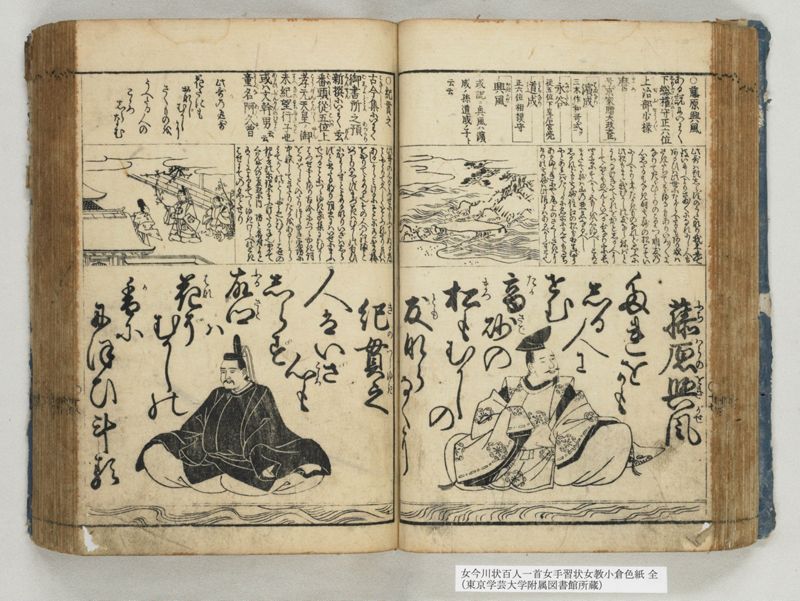
翻刻
【右丁 上段】
○藤原興風
ある説にいわく
下総権守(しもふさこんのかみ)正六位
上 治部少掾(ぢぶせう〴〵)
麿(まろ)
《割書:号 ̄ス_二京家贈大政大臣 ̄ト_一》
浜成(はまなり)
《割書:三木作_二和哥式 ̄ヲ_一》
永谷(ながたに)
《割書:従五位下皇后宮亮》
道成(みちなり)
《割書:正六位相模守》
興風(おきかぜ)
《割書:或説ニ興風ハ浜成ノ孫道成ノ子ト
云云》
【同 中段】
此哥は題しらずのうたなり我年老て
後いにしへよりさま〳〵になれにし人も
あるひは此世にながらへたるもあり或は
さきたちてとゞまるもありいろ〳〵に
なりてたゞひとりのこりつゝ朋友の
心したるもなき時高砂の松こそい
にしへより年たかきものなれど思ふに
此松もまた我むかしの友ならねばと
うちなけきてたれをかもしる人に
して心をものべんといへる心なり宗長
聞書にすへから五もしを心得べしと有
また高砂は山の総【惣】名なるべし
しかれども高砂住江の松も相生のやう
にとあればたしかに名所に見ても過ち
あるまじきにや尾上のさくらさきに
けりの高砂は此限にはあるべからずと也
【同 下段】
藤原興風(ふちはらのをきがせ)【「かぜ」とあるところ】
たれをかも
しる人に
せむ
高(たか)
砂(さご)の
松(まつ)もむかしの
友(とも)なら
なくに
【左丁 上段】
○紀貫之
古今集(こきんしう)にいわく
御書所(ごしよところ)之 預(あづかり)
新撰(しんせん)にいわく玄(げん)
番頭(ばのかみ)従五位(しうこいの)上
孝元天皇(こうげんてんわう)ノ御(おん)
末(すへ)紀望行(きのもちゆきが)子(こ)也
或(あるひ)ハ文幹(ぶんかんの)男(むすこ)云云
童名(わらべな)阿久曽(あくそ)
此哥の返歌
花たにも
おなじ
むかし
に
さくものを
うへたる人の
こゝろ
しら
なむ
【同 中段】
此哥の心ははつせにもふてゝぬる度
ことやとりて久しくをとつれさりけれは
あるしうらみけるにそこに有ける梅
をおりてよめる也その人の心のまこと
いつわりはしらずまづ花はむかしの匂ひ
にかわらずとよめるなりいざはしら
ずと書たるなり詞書にはいせにまふ
でつることにつらゆき家集にはむかし
はつせにとあり古今にはつらゆき詞
をなをして入たりつらゆき宿坊に
中絶してきたりたるをあるじうら
みてかくのごとし貫之はむかしはせの
観音の示現にまふけたる子也やがて
くわんおんの夢想に内 坊と名付よと
有しによりてつらゆきわらべのとき
はせにての名とせり
【同 下段】
紀貫之(きのつらゆき)
人はいざ
心(こゝろ)も
しらず
故郷(ふるさと)
は
花(はな)ぞ
むかしの
香(か)に
にほひける
現代語訳
【右丁 上段】
○藤原興風
ある説によれば
下総権守、正六位上、治部少掾
麿
(京家と号し、贈大政大臣)
浜成
(三木、和歌式を作る)
永谷
(従五位下皇后宮亮)
道成
(正六位相模守)
興風
(ある説に興風は浜成の孫、道成の子という)
【同 中段】
この歌は題知らずの歌である。自分が年老いた後、昔からさまざまに親しんだ人も、ある人はこの世に生き長らえている者もあり、ある人は先立って亡くなる者もあり、いろいろになって、ただ一人残りながら、友情を理解してくれる人もいない時、高砂の松こそ昔から年高いものであるけれど、思うにこの松もまた自分の昔の友ではないのでと嘆いて、誰を知人として心を述べようかと言った心である。宗長聞書に「すべからく五文字を心得るべし」とある。また高砂は山の総名であろう。しかしながら高砂住江の松も相生のようにとあれば、確実に名所と見ても間違いはないだろうか。尾上の桜咲きにけりの高砂は、この限りにはないだろうということである。
【同 下段】
藤原興風
誰をかも
知る人に
せん
高砂の
松も昔の
友なら
なくに
【左丁 上段】
○紀貫之
古今集によれば
御書所の預かり
新撰によれば玄番頭、従五位上
孝元天皇の御末裔、紀望行の子である
あるいは文幹の息子という
童名は阿久曽
この歌の返歌
花だにも
同じ
昔に
咲くものを
植えた人の
心
知ら
なん
【同 中段】
この歌の心は、初瀬に参詣して寝泊まりするたびごとに立ち寄って、久しく音信が絶えていたので、主人が恨んでいたところ、そこにあった梅を折って詠んだものである。その人の心の真偽のほどは知らず、まず花は昔の香りに変わらずと詠んだのである。さあ知らずと書いたのである。詞書には伊勢に参詣することについて、貫之家集には昔初瀬にとあり、古今集には貫之が詞を直して入れたものである。貫之が宿坊に久しく来なくなったのを主人が恨んで、このようになった。貫之は昔初瀬の観音の示現に授かった子である。すぐに観音の夢想に「内坊」と名付けよとあったことにより、貫之の幼名の時、初瀬での名としたのである。
【同 下段】
紀貫之
人はいざ
心も
知らず
故郷は
花ぞ
昔の
香に
匂いける
英語訳
【Right Page - Upper Section】
○Fujiwara no Okikaze
According to one theory:
Provisional Governor of Shimōsa, Senior Sixth Rank Upper, Junior Secretary of the Ministry of Civil Affairs
Maro
(Called Kyōke family, posthumously granted Grand Minister of State)
Hamanari
(Compiled the Waka Style in three volumes)
Nagatani
(Junior Fifth Rank Lower, Assistant to the Empress's Household)
Michinari
(Senior Sixth Rank, Governor of Sagami)
Okikaze
(According to one theory, Okikaze was Hamanari's grandson and Michinari's son)
【Same Page - Middle Section】
This is a poem of unknown topic. After I grew old, among the various people I had been familiar with since long ago, some continue to live in this world, while others have departed before me, things have changed in various ways, and I remain alone with no one who understands friendship. The pine of Takasago has been ancient since old times, but thinking about it, this pine is also not a friend from my past - lamenting thus, he asks whom he should make an acquaintance to express his feelings to. In Sōchō's recorded teachings, it says one should understand the five syllables thoroughly. Also, Takasago is probably the general name of the mountain. However, since it says the pines of Takasago and Sumie are like Aioi (twin pines), there would probably be no mistake in seeing this as a famous place. The Takasago of "the cherry blossoms on the peak have bloomed" would not be limited to this instance.
【Same Page - Lower Section】
Fujiwara no Okikaze
Tare wo ka mo
shiru hito ni
sen
Takasago no
matsu mo mukashi no
tomo nara-
naku ni
【Left Page - Upper Section】
○Ki no Tsurayuki
According to the Kokin-shū:
Custodian of the Imperial Library
According to the Shinsen: Head of Palace Guards, Junior Fifth Rank Upper
A descendant of Emperor Kōgen, son of Ki no Mochiyuki
Or according to some, son of Bunkan
Childhood name: Akuso
A reply poem to this:
The flowers at least
bloom in the same
way as in
the past
But the heart of the one
who planted them
I would
know
not
【Same Page - Middle Section】
The meaning of this poem is that every time he made pilgrimages to Hatsuse and stayed overnight, he would stop by, but since correspondence had ceased for a long time, the host was resentful, so he picked a plum blossom that was there and composed this poem. Not knowing whether that person's heart was true or false, he first composed that the flowers are unchanged from their fragrance of old. He wrote "I wonder, I do not know." In the preface it mentions going on pilgrimage to Ise; in Tsurayuki's personal collection it says "long ago to Hatsuse," and in the Kokin-shū Tsurayuki revised the words before including it. Tsurayuki had stopped coming to the lodging temple for a long time, and the host resented this, leading to this situation. Tsurayuki was a child granted through a divine manifestation of Hatsuse Kannon long ago. Immediately in Kannon's divine dream vision, it was said to name him "Naibō," so Tsurayuki's childhood name was made the name from Hatsuse.
【Same Page - Lower Section】
Ki no Tsurayuki
Hito wa iza
kokoro mo
shirazu
furusato wa
hana zo
mukashi no
ka ni
nioi keru